
· For research use only. Not for human consumption.
For research use only. Not for human consumption.
If you have ever wondered how a peptide holds itself together, the answer comes down to peptide bonds explained in one sentence: a peptide bond is the chemical connection that links one amino acid to the next. Every peptide and every protein in existence is built on this one type of link. Without it, amino acids would just be loose building blocks floating around with nothing holding them together.
The concept is straightforward once you strip away the chemistry jargon. Two amino acids meet. They form a bond. A molecule of water gets released in the process. Repeat that reaction over and over, and you build a chain — a dipeptide (two amino acids), a tripeptide (three), and eventually a full peptide or protein with dozens or hundreds of links.
This guide covers peptide bonds explained for people with no science background at all. Think Lego bricks, not organic chemistry. For a broader look at what peptides are and how they compare to proteins, see our peptide vs protein guide or browse our research compound catalog.
TL;DR: A peptide bond is the chemical link between two amino acids, formed when a water molecule is released (condensation reaction). These bonds create the backbone of every peptide and protein. Each chain has an N-terminus (start) and C-terminus (end). The bonds are strong, planar, and partially rigid — giving peptide chains their characteristic structure. For research use only. Not for human consumption.
Peptide bonds explained: What Is a Peptide Bond? The Lego Brick Explanation
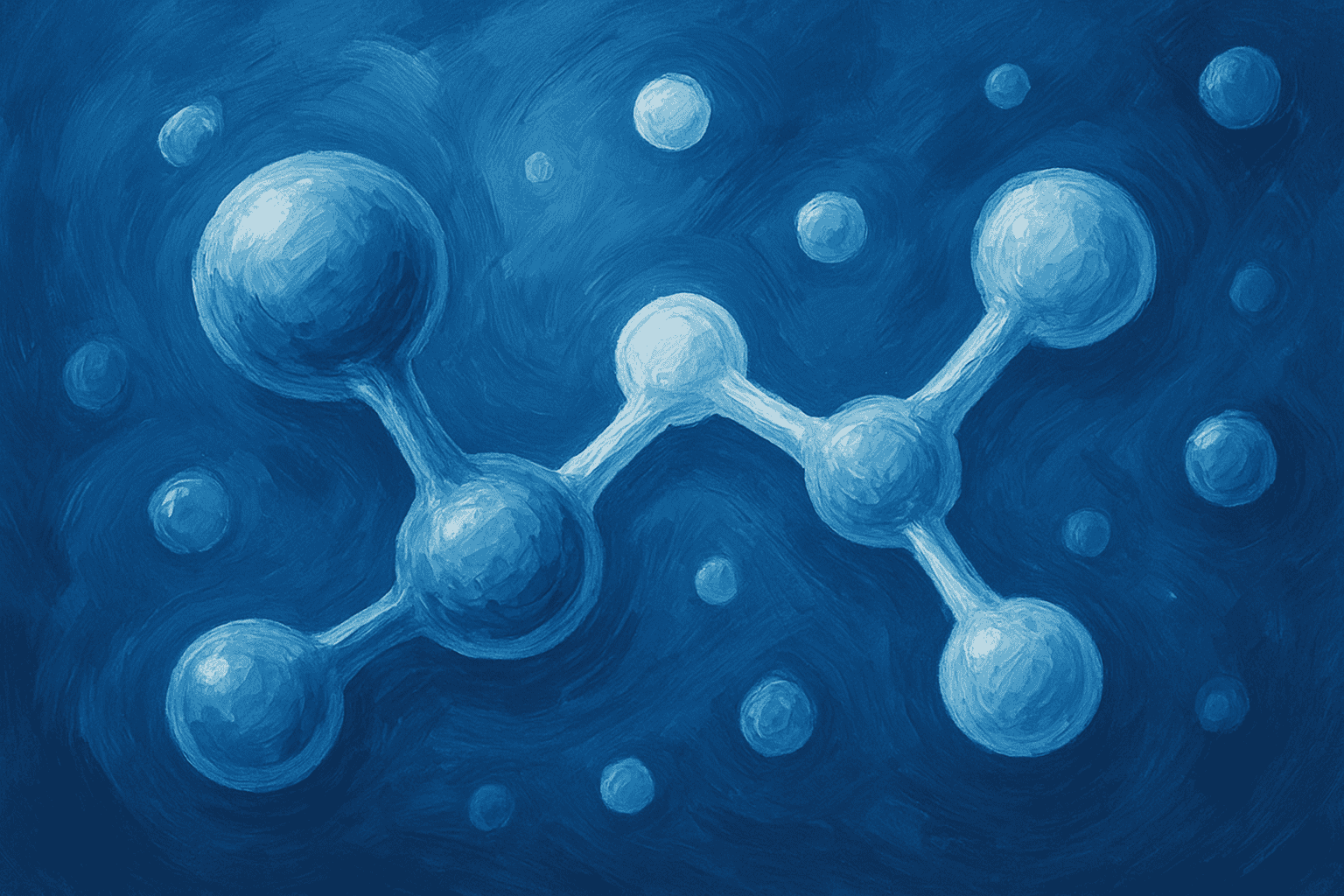
Imagine you have a box of Lego bricks. Each brick is an amino acid. To build something, you have to snap the bricks together. The snap connection between two bricks is the peptide bond. One brick connects to the next, and then the next, forming a chain. The more bricks you connect, the longer the structure.
In chemical terms, a peptide bond forms between the amino group (the -NH2 end) of one amino acid and the carboxyl group (the -COOH end) of another. During this reaction, a molecule of water (H2O) is released. Scientists call this a condensation reaction or a dehydration synthesis — “dehydration” because water leaves, “synthesis” because something new is built.
Every single peptide in the research catalog was built this way. BPC-157 has 14 peptide bonds connecting its 15 amino acids. MOTS-c has 15 peptide bonds linking its 16 amino acids. SS-31 has just 3 peptide bonds holding its 4 amino acids together. The number of bonds is always one fewer than the number of amino acids in the chain.
How Does the Condensation Reaction Work?
The condensation reaction is the actual moment when a peptide bond forms. It is surprisingly simple in concept, even though the chemistry behind it involves precise atomic interactions.
Here is what happens step by step. Amino acid A has a carboxyl group (-COOH) at one end. Amino acid B has an amino group (-NH2) at its other end. When these two groups come close enough together, the oxygen and hydrogen atoms rearrange. The -OH from one side and the -H from the other side combine to form a water molecule (H2O). What remains is a direct bond between the carbon of amino acid A and the nitrogen of amino acid B. That carbon-nitrogen connection is the peptide bond.
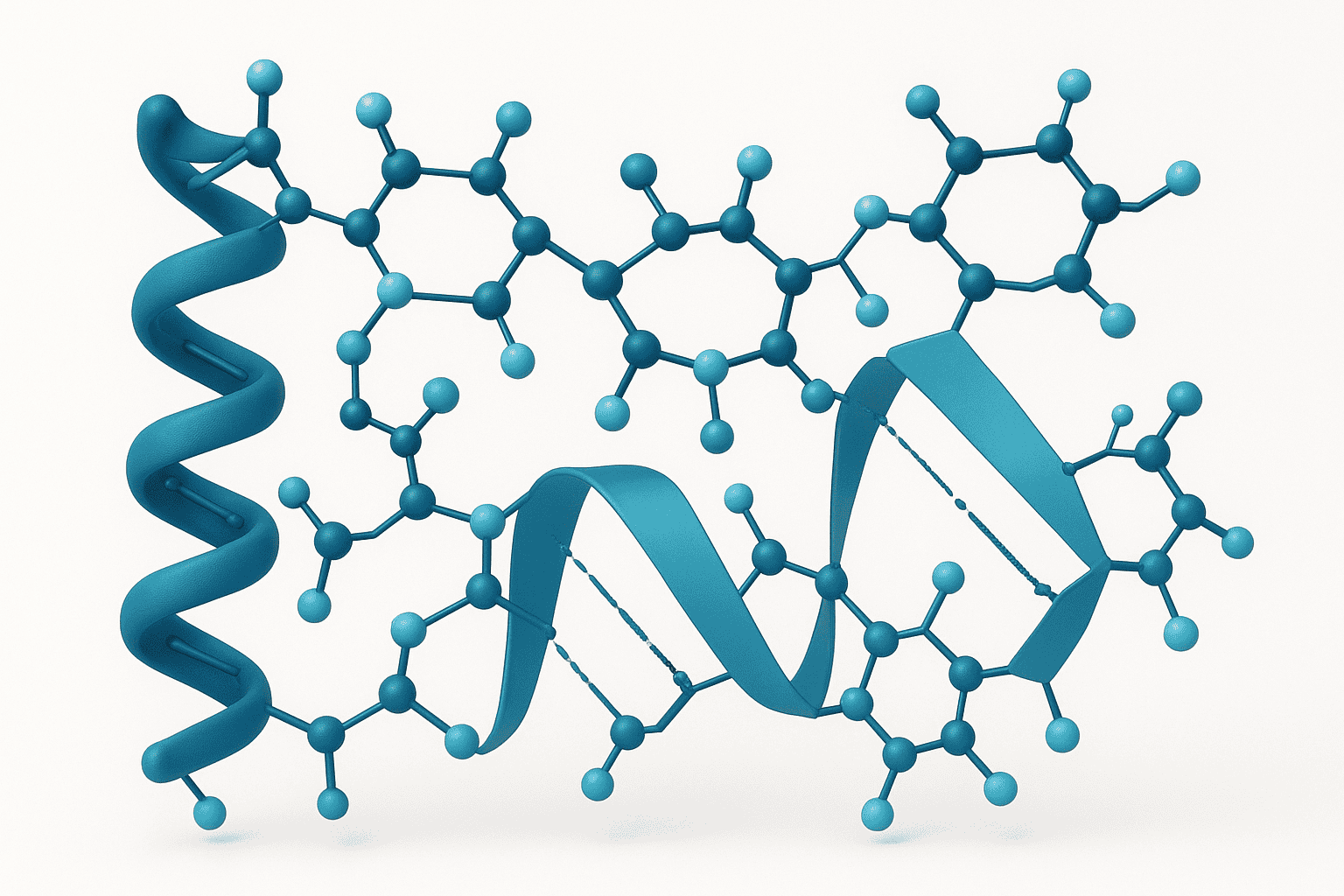
Think of it like two puzzle pieces clicking together. A small tab breaks off during the connection (that is the water molecule leaving), and the two pieces lock firmly into place. This reaction happens at room temperature in living cells with the help of enzymes. In the laboratory, scientists use chemical reagents to drive the same reaction during solid-phase peptide synthesis.
The reverse reaction — breaking a peptide bond by adding water back — is called hydrolysis. This is how enzymes in the body break down peptides during digestion. The bond that was formed by removing water can be broken by adding water back in. Simple, elegant chemistry.
Why Are Peptide Bonds So Strong?
Peptide bonds are remarkably stable under normal conditions. They do not break apart on their own at room temperature. In fact, without enzymes to help, a peptide bond can last for hundreds of years in a dry environment. That stability is why ancient proteins have been recovered from fossils.
The strength comes from a property called resonance. The peptide bond is not a simple single bond between carbon and nitrogen. It has partial double-bond character, which means the electrons are shared in a way that makes the bond shorter and stronger than a typical carbon-nitrogen single bond. This also makes the bond planar — the six atoms surrounding it all sit in the same flat plane, like cards lying flat on a table.
That planarity matters. It means the peptide bond does not rotate freely. The backbone of a peptide chain has rigid, flat sections (the peptide bonds) connected by more flexible hinges (the points between bonds where rotation is possible). This combination of rigid and flexible sections is what gives peptide chains their characteristic shapes and behaviors.

For researchers handling lyophilized peptides, this bond stability is good news. It means properly stored research peptides maintain their structural integrity over time. The bonds holding the chain together are not going to spontaneously break down at freezer temperatures.
The N-Terminus and C-Terminus: Front and Back of the Chain
Every peptide chain has a beginning and an end, and scientists have specific names for each. The beginning is called the N-terminus (or amino terminus). The end is called the C-terminus (or carboxyl terminus). These names come from the chemical groups that are exposed at each end of the chain.
At the N-terminus, the first amino acid still has its free amino group (-NH2) sticking out, because it has not been used to form a peptide bond with anything upstream. At the C-terminus, the last amino acid still has its free carboxyl group (-COOH) exposed, because nothing is connected downstream.
By convention, scientists always write peptide sequences from N-terminus to C-terminus, left to right. When you see a sequence like “Thr-Lys-Pro-Arg-Pro-Gly-Pro” (which is Selank), threonine is at the N-terminus and proline is at the C-terminus. This directionality matters because the same amino acids in a different order would create a completely different peptide with different properties.
The N-terminus and C-terminus also play roles in how peptides interact with biological systems. Many enzymes that break down peptides (proteases) attack from one end or the other. Researchers sometimes modify the N-terminus or C-terminus with protective groups to make a peptide more resistant to these enzymes — a strategy used in the design of several research compounds.
Backbone vs Side Chains: What Makes Each Peptide Unique
When amino acids link together through peptide bonds, they form a repeating pattern called the backbone. The backbone is the same in every peptide — it is just a chain of nitrogen-carbon-carbon units repeating over and over. What makes each peptide different is the side chains.
Every amino acid has a side chain (also called an R group) that sticks out from the backbone like a branch from a tree trunk. There are 20 standard amino acids, and each one has a different side chain. Some side chains are small (glycine’s is just a single hydrogen atom). Others are large and complex (tryptophan’s includes a double-ring structure).

The side chains determine everything about a peptide’s personality. They control whether it dissolves in water or prefers oily environments. They determine which receptors it can bind to. They influence how enzymes interact with it. Two peptides with the same length but different side chain sequences will behave completely differently in research.
This is why the amino acid sequence is so important in peptide research. Gwyer et al. (2019) reviewed studies on BPC-157, a 15-amino-acid peptide whose specific side chain arrangement has been linked to its documented preclinical effects across multiple tissue types (PMID: 30915550). Change one side chain in that sequence, and you potentially change everything about how the compound behaves.
Gwyer et al. (2019) reviewed BPC-157 preclinical literature, documenting effects that researchers attribute to the peptide’s specific 15-amino-acid sequence. The unique arrangement of side chains along BPC-157’s backbone determines its receptor interactions and biological behavior in laboratory models. (PMID: 30915550)
Understanding peptide bonds is foundational for anyone working with research compounds. Alpha Peptides carries research-grade peptides with documented amino acid sequences verified by mass spectrometry. Browse the full research catalog or review third-party testing data on our Certificates of Analysis page.
Frequently Asked Questions
How many peptide bonds are in a typical research peptide?
The number of peptide bonds is always one fewer than the number of amino acids. A peptide with 15 amino acids (like BPC-157) has 14 peptide bonds. A tetrapeptide like SS-31 with 4 amino acids has 3 peptide bonds. The formula is simple: bonds = amino acids minus one.
Can peptide bonds break down over time?
Under proper storage conditions (lyophilized, sealed, at low temperatures), peptide bonds are extremely stable. However, enzymes called proteases can break peptide bonds through hydrolysis — adding water back to reverse the condensation reaction. Heat, extreme pH, and moisture can also accelerate bond breakdown, which is why proper peptide storage is important for research applications.
Is a peptide bond the same as a chemical bond?
A peptide bond is a specific type of chemical bond — specifically, a covalent bond between the carbon atom of one amino acid’s carboxyl group and the nitrogen atom of the next amino acid’s amino group. It is one of many types of chemical bonds, but it is the defining bond that creates peptides and proteins.
Why does the order of amino acids matter if the bonds are all the same?
Because the side chains are different. While the backbone bond between each amino acid pair is the same type (a peptide bond), the side chains sticking out from each amino acid are unique. Different sequences of side chains create different shapes, different charges, and different biological behaviors. The backbone is the scaffolding; the side chains are what make each peptide a distinct molecule.
For research use only. Not for human consumption. This article is intended for informational purposes and does not constitute medical advice, dosing guidance, or therapeutic recommendations.