
· For research use only. Not for human consumption.
For research use only. Not for human consumption.
When it comes to verifying the quality of research peptides, HPLC and mass spectrometry get most of the attention. But there is a third analytical technique that plays an important supporting role: amino acid analysis, or AAA. This method takes a completely different approach to quality control, and understanding it can help you better evaluate the testing claims made by peptide suppliers.
While HPLC tells you how pure a peptide is and mass spectrometry confirms its molecular weight, amino acid analysis answers a different question entirely: does this peptide contain the right amino acids in the right proportions? It is like the difference between weighing a bag of trail mix versus actually sorting through it to confirm the correct ratio of nuts, raisins, and seeds.
In this article, we will explain how amino acid analysis works, what it can and cannot tell you, and why it is a valuable complement to the other tests you should expect from a quality peptide supplier.
TL;DR: Amino acid analysis (AAA) breaks a peptide into its individual amino acids and measures the amount of each one. It confirms that the peptide contains the correct amino acids in the expected ratios. AAA works by acid hydrolysis followed by chromatographic separation. It complements HPLC (purity) and mass spectrometry (molecular weight) by providing compositional verification.
For research use only. Not for human consumption.
What Amino Acid Analysis Actually Does
Amino acid analysis is a laboratory technique that breaks a peptide down into its individual building blocks and measures how much of each amino acid is present. Every peptide is made of a specific sequence of amino acids. A peptide with the sequence Ala-Gly-Leu-Pro should contain one part alanine, one part glycine, one part leucine, and one part proline.
AAA verifies this composition. If the analysis shows the correct amino acids in the expected ratios, it provides strong evidence that the peptide was synthesized correctly. If the ratios are off, or if unexpected amino acids are present, it signals a potential problem with the synthesis or purification.
Think of it this way. If you ordered a pizza with pepperoni, mushrooms, and olives, HPLC would tell you that 98% of what arrived is indeed pizza (versus crumbs and burnt bits). Mass spec would confirm the overall weight matches what a pizza should weigh. But amino acid analysis would check whether the toppings are actually pepperoni, mushrooms, and olives, and whether they are present in the right amounts.
How Amino Acid Analysis Works
The process involves two main steps: breaking the peptide apart and then measuring the pieces.
Step 1: Acid hydrolysis. The peptide is heated in a strong acid (typically hydrochloric acid at around 110 degrees Celsius) for an extended period, usually 24 hours. This breaks all the peptide bonds and releases the individual amino acids into solution. It is like unstringing a necklace and collecting all the beads in a dish.
Step 2: Chromatographic separation and detection. The freed amino acids are then separated and measured using chromatography. Each amino acid has distinct chemical properties that cause it to move through the chromatography system at a different rate. A detector identifies each amino acid as it emerges and measures how much is present.
Modern AAA systems often use a derivatization step, where the amino acids are chemically tagged with a fluorescent or UV-absorbing label to make them easier to detect. Common derivatization reagents include ninhydrin, OPA (o-phthalaldehyde), and PITC (phenylisothiocyanate).
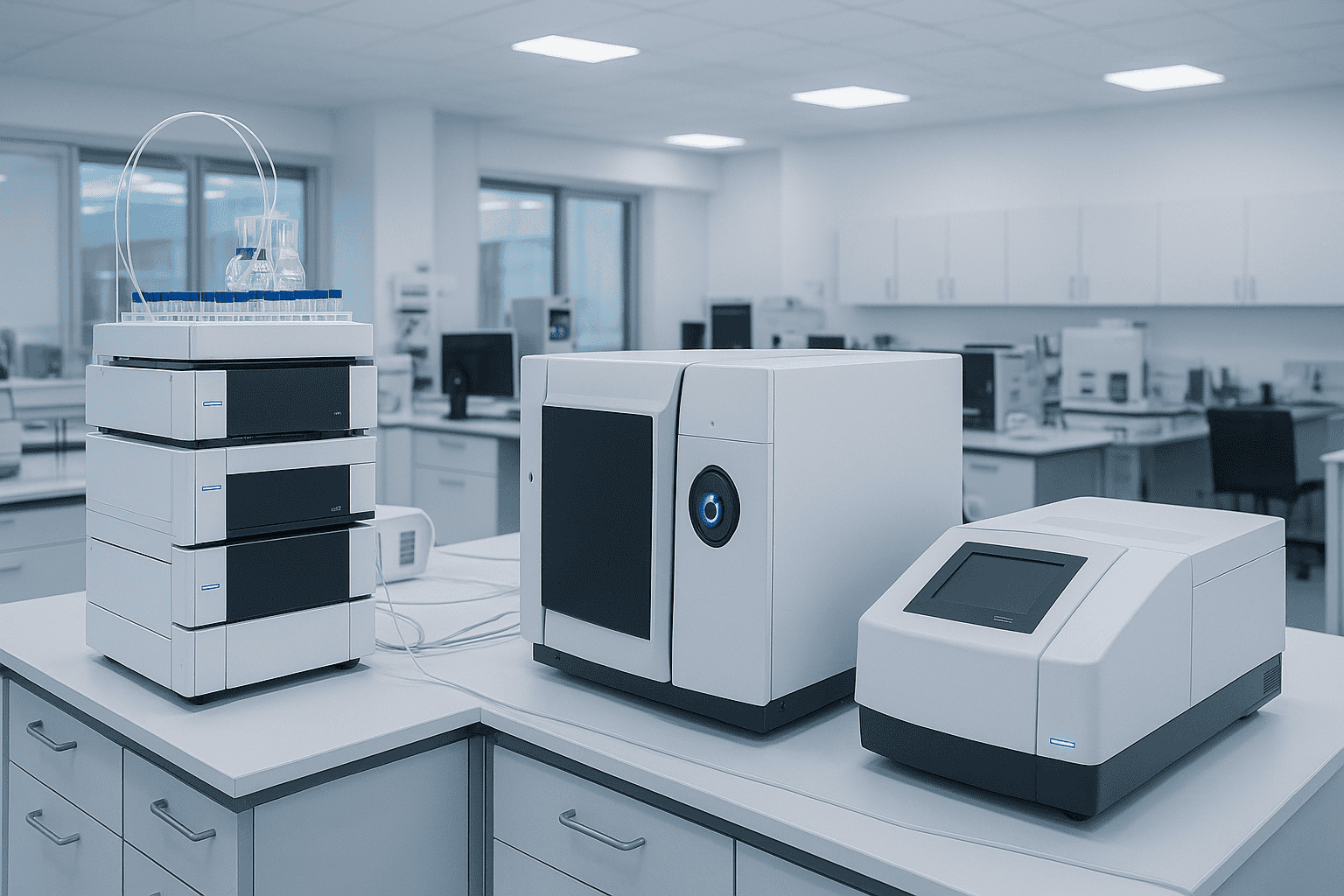
Fountoulakis, M. & Lahm, H.W. (1998) reviewed hydrolysis methods and derivatization techniques for amino acid analysis of proteins and peptides. (PMID: 9729438)
What Amino Acid Analysis Confirms
AAA is particularly good at answering these questions:
- Are all the expected amino acids present? If your peptide should contain eight different amino acids and the analysis only detects seven, there may be a synthesis error.
- Are the ratios correct? If the sequence calls for two lysine residues and one arginine, AAA should show a 2:1 ratio. Deviations from expected ratios can indicate incomplete synthesis or contamination.
- What is the peptide content? AAA can determine how much of the total weight is actual peptide versus salts, moisture, and other non-peptide material. This “net peptide content” is important for researchers who need to prepare accurate concentrations.
This last point is particularly valuable. A vial labeled as containing 5 mg of peptide may actually contain only 3.5 mg of peptide plus 1.5 mg of counter-ions and water. AAA reveals the true peptide content, which is critical for quantitative experiments.

Limitations of Amino Acid Analysis
AAA is a powerful technique, but it has some important limitations:
It does not tell you the sequence. AAA reveals which amino acids are present and in what amounts, but it does not tell you the order. A peptide with the sequence Ala-Gly-Leu and one with Leu-Gly-Ala would give identical AAA results.
Some amino acids are destroyed during hydrolysis. Tryptophan is almost completely destroyed by standard acid hydrolysis, and serine, threonine, and cysteine undergo partial degradation. Special hydrolysis conditions can be used to recover these amino acids, but standard protocols may underreport them.
It cannot detect modifications. Post-translational modifications, D-amino acid substitutions, and many non-standard amino acids may not be accurately measured by standard AAA protocols.
It requires a meaningful sample amount. While modern instruments are sensitive, AAA generally requires more material than mass spectrometry for reliable results.
Because of these limitations, AAA is best used as a complement to HPLC and mass spectrometry, not as a replacement. Together, these three techniques provide a comprehensive quality picture.
What This Means When Evaluating Suppliers
Not every peptide supplier offers amino acid analysis on every product. It is more commonly performed as an additional service or for peptides where accurate quantification is critical. However, a supplier that can perform or arrange AAA on request demonstrates a higher level of analytical capability.
At Alpha Peptides, we are committed to thorough quality verification. Our standard testing includes HPLC purity analysis and mass spectrometry confirmation, with results documented in batch-specific Certificates of Analysis (COAs). For inquiries about additional analytical services, including amino acid analysis, reach out to our team at cs@alpha-peptides.com.
Alpha Peptides is based in Derry, New Hampshire, offering U.S.-sourced research peptides with domestic shipping. Explore our full catalog at alpha-peptides.com/shop.
Frequently Asked Questions
What is amino acid analysis used for?
Amino acid analysis determines the amino acid composition and ratio of a peptide sample. It is used to verify that the correct amino acids are present in the expected proportions and to determine net peptide content.
How is amino acid analysis different from mass spectrometry?
Mass spectrometry measures the molecular weight of a peptide, confirming its overall identity. Amino acid analysis breaks the peptide into individual amino acids and measures their quantities. They answer different questions and are most valuable when used together.
Does amino acid analysis tell you the peptide sequence?
No. AAA reveals which amino acids are present and their relative amounts, but it does not determine the order in which they appear in the chain. Sequencing requires different techniques.
Why is net peptide content important?
The total weight of a lyophilized peptide sample includes not only the peptide itself but also counter-ions (like acetate or TFA salts) and residual moisture. Net peptide content tells you the actual amount of peptide, which is essential for preparing accurate concentrations in research.
Does Alpha Peptides provide amino acid analysis data?
Alpha Peptides provides HPLC and mass spectrometry data as standard with every product. For specific analytical requests, including amino acid analysis, contact our team at cs@alpha-peptides.com.
For research use only. Not for human consumption. This article is provided for educational and informational purposes. Alpha Peptides products are intended solely for in vitro research and laboratory use. Always consult applicable regulations and institutional guidelines before purchasing research materials.