
· For research use only. Not for human consumption.
For research use only. Not for human consumption.
If you’re researching verify coa, you’re in the right place. A Certificate of Analysis (COA) is supposed to be the proof that a research peptide is what the supplier says it is. But not all COAs are created equal, and some are outright fabrications. Knowing how to verify a COA is one of the most important skills any peptide researcher can develop.
Fake or misleading COAs are more common than you might think. Some suppliers use generic templates, recycle data from old batches, or simply invent numbers. If you are spending money on research materials and basing experimental decisions on them, you need to know whether the documentation behind those materials is legitimate.
In this guide, we will walk through what a real COA should contain, what red flags to watch for, and how to cross-check the data to confirm authenticity. Every peptide listed in the Alpha Peptides catalog includes batch-specific COA documentation, and we will explain why that matters.
TL;DR: To verify a COA, check for a unique batch number, actual HPLC chromatogram (not just a purity number), mass spectrometry data confirming molecular weight, testing date, and the name of the testing lab. Red flags include generic templates, missing batch numbers, impossibly perfect purity, and no actual chromatogram data. Always cross-reference the reported molecular weight against known databases.
For research use only. Not for human consumption.
What a Legitimate COA Should Contain: Verify COA Insights
A real Certificate of Analysis for a research peptide should include several key pieces of information. If any of these are missing, you should ask the supplier for clarification, and treat the absence as a yellow flag.
Batch or lot number: Every COA should reference a specific production batch. This number links the document to a particular manufacturing run and allows traceability.
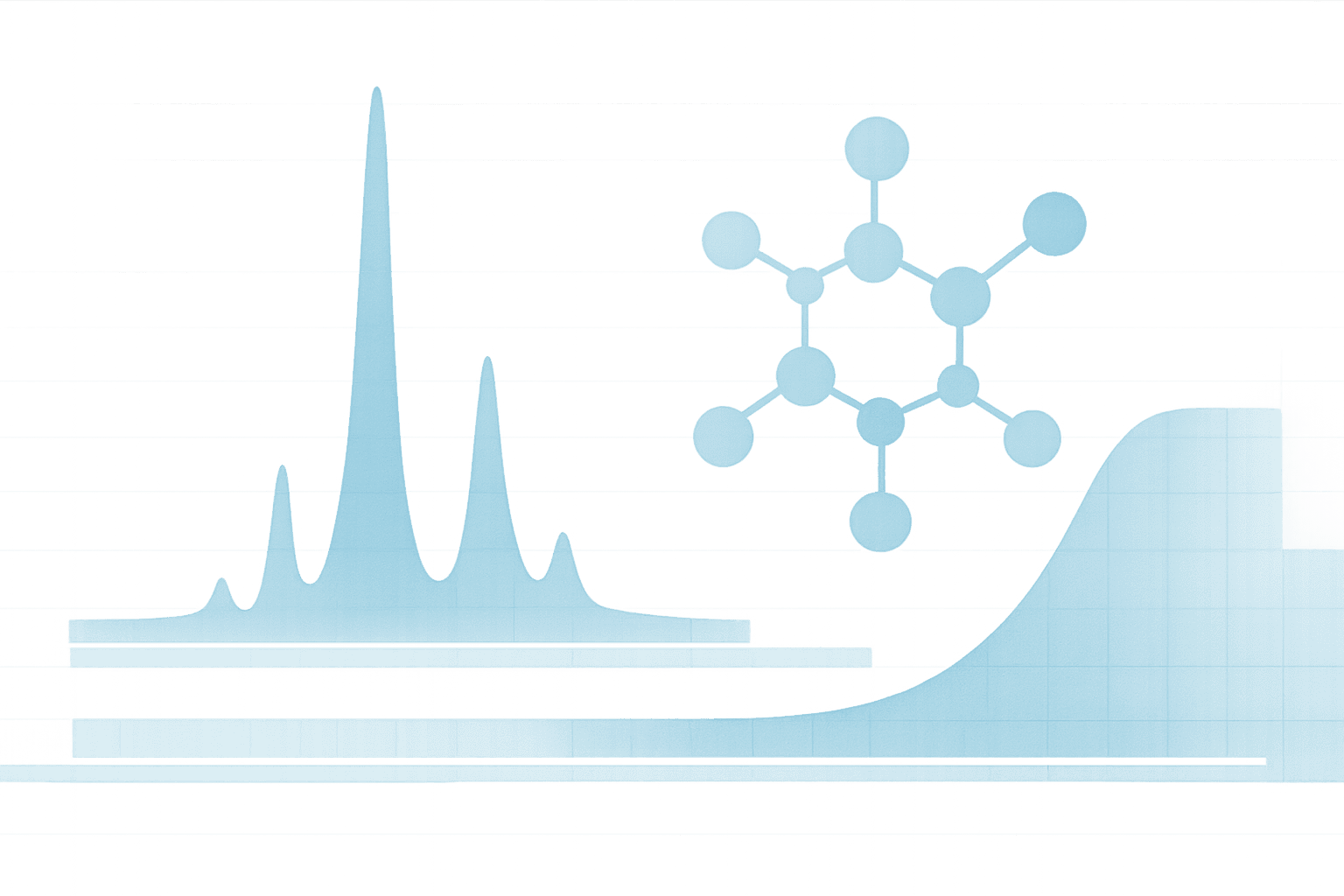
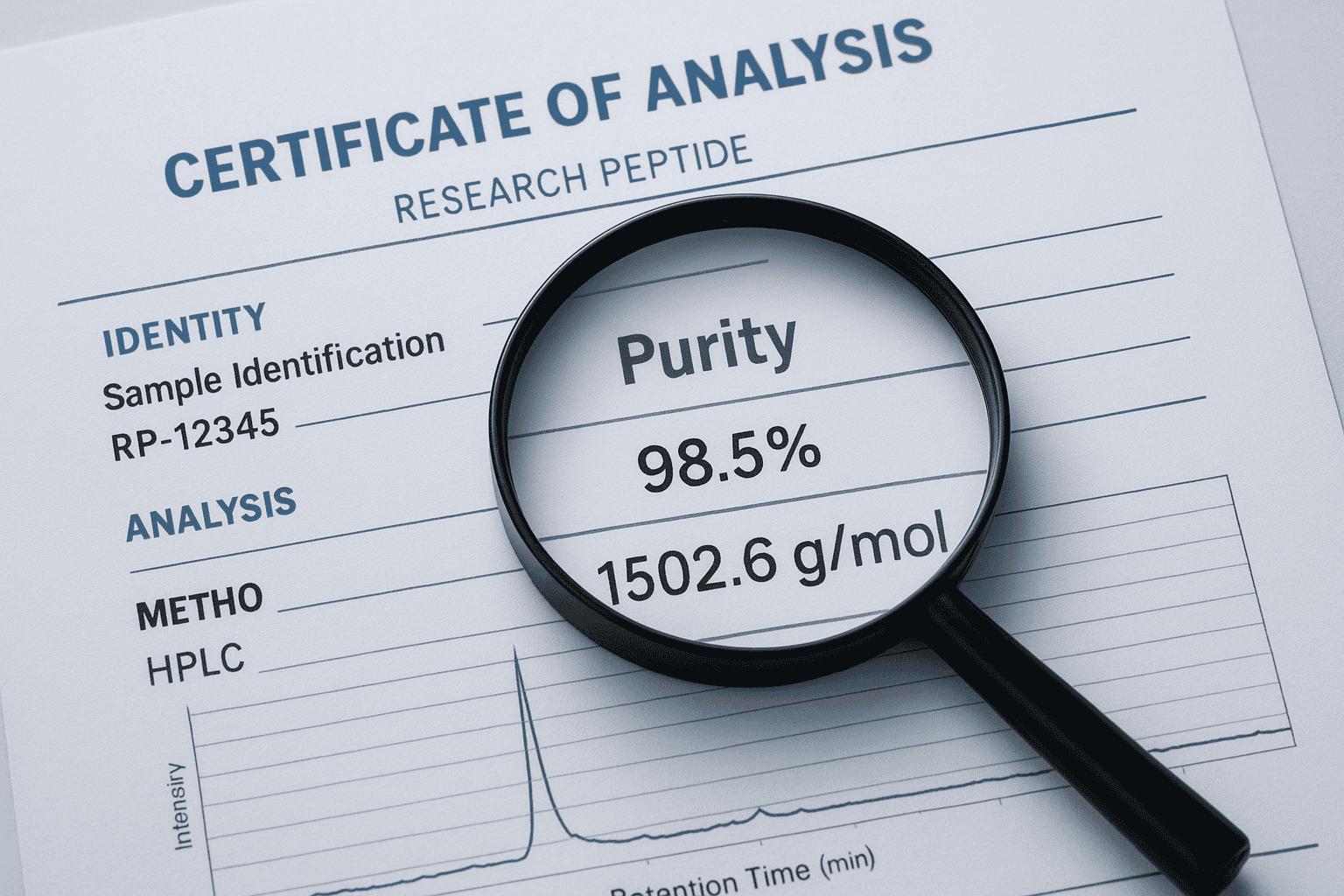
HPLC chromatogram: This is the actual graph showing the separation of the peptide from impurities. It should display a clear main peak with minimal secondary peaks. A COA that lists a purity percentage without showing the actual chromatogram is incomplete at best.
Purity percentage: Calculated from the HPLC data, this number tells you how much of the sample is the target peptide. Look for this number to be consistent with the chromatogram.
Mass spectrometry data: This confirms the molecular weight of the peptide. The observed mass should match the theoretical mass (calculated from the amino acid sequence) within acceptable tolerances.
Sequence information: The amino acid sequence or peptide name should be clearly stated.
Testing date: When the analysis was performed.
Testing laboratory: Ideally, an independent third-party lab. Internal testing is better than nothing, but third-party verification provides an additional layer of credibility.

Red Flags That Suggest a Fake COA
Here are the warning signs that a COA may not be legitimate:
No batch number: If the document does not reference a specific lot, it may be a generic template applied to all products regardless of the actual batch.
No chromatogram: A purity percentage without the underlying HPLC trace is just a number on paper. There is no way to verify it without the actual data.
Impossibly perfect results: A purity claim of 100% or 99.99% should raise immediate suspicion. No synthesis process is perfect, and even the best peptides have trace impurities. Extremely high claims without supporting data are a red flag.
Generic or templated appearance: If every product from a supplier has a COA that looks identical, with the same graph shape, same formatting, and only the product name changed, the documents may be fabricated.
No testing lab identified: Legitimate testing is performed by identifiable laboratories with real addresses and credentials. If the COA does not name the lab, ask why.
Molecular weight mismatch: If the reported molecular weight does not match what you calculate from the peptide sequence, something is wrong. This is one of the easiest checks you can perform.
How to Cross-Check COA Data Yourself
You do not need a chemistry degree to perform basic verification. Here are practical steps anyone can take to verify a COA:
Step 1: Check the molecular weight. Look up the peptide sequence and calculate its theoretical molecular weight using a free online tool (many peptide molecular weight calculators exist). Compare this to the mass spec result on the COA. They should match within one or two mass units.
Step 2: Examine the chromatogram. A real HPLC chromatogram should look like a unique, specific graph with a clear main peak. If it looks like a stock image or the exact same graph appears on every COA from the supplier, be suspicious.
Step 3: Verify the batch number. Contact the supplier and ask them to confirm that the batch number on your COA corresponds to a real production run. A legitimate company will have records.
Step 4: Ask for third-party verification. If you have concerns, ask whether the testing was performed internally or by an independent lab. Request the name of the lab.
Step 5: Compare across orders. If you order the same peptide multiple times and every COA has identical data, including identical chromatograms, that is a strong indicator the documents are not batch-specific.
Why Third-Party Testing Matters
When a supplier tests its own products, there is an inherent conflict of interest. The company has a financial incentive to report favorable results. Third-party testing removes that conflict by having an independent laboratory perform the analysis.
This does not mean that internal testing is worthless. Many reputable companies conduct thorough in-house quality control. But third-party verification adds an extra layer of trust. The ideal scenario is a supplier that performs internal testing and then sends samples to an independent lab for confirmation.
At Alpha Peptides, we use third-party testing via HPLC and mass spectrometry for every batch. The resulting COAs are published on our COA page and include all the elements described above: batch number, chromatogram, purity data, mass spec confirmation, and testing details.

Protect Your Research Investment
Buying peptides without verifying the COA is like buying a used car without checking the vehicle history report. You might get lucky, or you might waste your money on something that does not perform as advertised. A few minutes of verification can save you weeks of wasted experiments and questionable data.
Alpha Peptides is headquartered in Derry, New Hampshire, and is committed to full transparency. Every product ships with batch-specific COA documentation backed by independent testing. Visit alpha-peptides.com/shop to browse our catalog, and explore our COA archive to see our documentation standards firsthand.
Frequently Asked Questions
What is a Certificate of Analysis (COA)?
A COA is a document that reports the results of quality testing performed on a specific batch of product. For peptides, it typically includes HPLC purity data, mass spectrometry confirmation, and batch identification information.
How can I tell if a COA is fake?
Red flags include missing batch numbers, no actual chromatogram, impossibly high purity claims, generic templates used across all products, and no identified testing laboratory. Cross-check the molecular weight against the known sequence as a basic verification step.
Should I always request a COA before buying?
Yes. A reputable supplier should be willing and able to provide batch-specific COA documentation for any product. If a supplier cannot or will not provide a COA, consider it a serious warning sign.
Does Alpha Peptides provide third-party COAs?
Yes. All Alpha Peptides products include batch-specific COAs with HPLC and mass spectrometry data from third-party testing. These documents are accessible at alpha-peptides.com/coas.
Can I verify a COA without lab equipment?
You can perform several checks without any lab equipment: verify the molecular weight using free online calculators, examine the chromatogram for authenticity, confirm the batch number with the supplier, and check whether the testing lab exists and is credible.
For research use only. Not for human consumption. This article is provided for educational and informational purposes. Alpha Peptides products are intended solely for in vitro research and laboratory use. Always consult applicable regulations and institutional guidelines before purchasing research materials.