
· For research use only. Not for human consumption.
For research use only. Not for human consumption.
Your body is constantly rebuilding itself. Old tissue gets broken down and replaced with new tissue in a continuous cycle that never really stops. Scientists call this process “tissue remodeling,” and it is one of the most fundamental aspects of biology. GHK-Cu tissue remodeling research has become a significant area of investigation because this copper-binding peptide appears to influence key parts of this process in laboratory studies.
But what does tissue remodeling actually involve? How do cells decide what to break down and what to build up? And what role does a tiny three-amino-acid peptide play in all of this? In this post, we will explain GHK-Cu tissue remodeling research in plain language, covering the enzymes involved, the balance between building and breaking down, and what preclinical studies have found.
Everything here comes from published laboratory research. No medical claims — just the science, explained simply.
TL;DR: Tissue remodeling involves the coordinated breakdown and rebuilding of structural tissue. GHK-Cu has been studied for its effects on remodeling processes in preclinical models, including influences on matrix metalloproteinases and collagen-related pathways (Pickart L, Margolina A, 2012, PMID: 22782788; Pickart et al., 2014, PLOS ONE). For research use only. Not for human consumption.
What Is Tissue Remodeling?
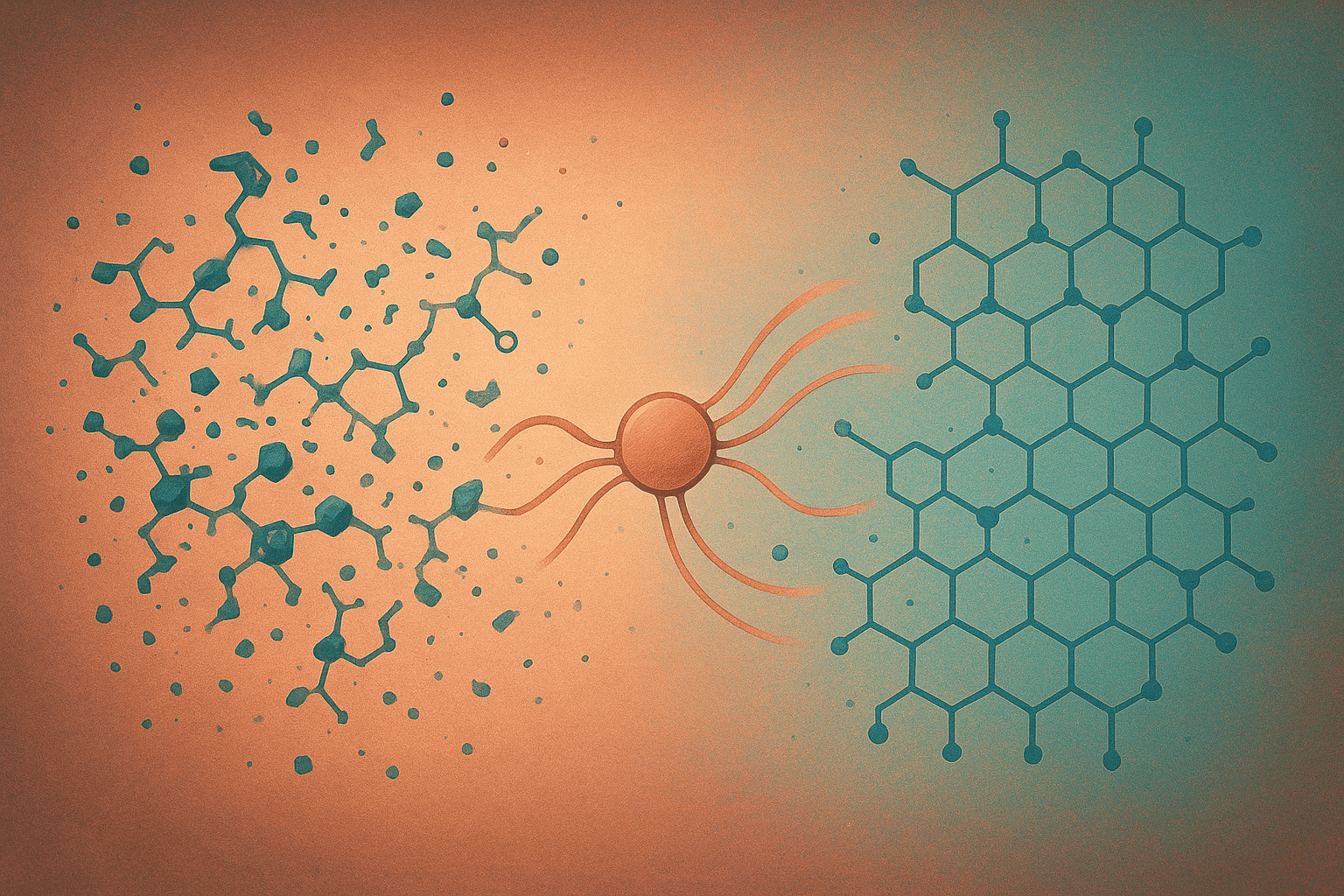
Tissue remodeling is the process of breaking down existing tissue and replacing it with new tissue. It sounds destructive, but it is actually a carefully controlled maintenance program. Think of it like renovating a house — you tear out the old parts so you can put in new ones.
At the cellular level, tissue remodeling involves two coordinated activities happening at the same time:
Breakdown (degradation): Specialized enzymes cut apart old or damaged structural proteins like collagen and elastin. These proteins do not last forever — they accumulate damage over time and need to be replaced.
Building (synthesis): Cells produce new structural proteins to replace the ones that were removed. Fibroblasts — the construction workers of connective tissue — are the main cells responsible for this building phase.
The key to healthy tissue remodeling is balance. If too much tissue gets broken down without being replaced, the structure weakens. If too much is built without proper breakdown of old material, the tissue becomes disorganized. The body — and the cells within it — constantly works to maintain this balance.
Matrix Metalloproteinases: The Demolition Crew
The enzymes responsible for the “breaking down” part of tissue remodeling have a name that sounds complicated but is actually pretty descriptive: matrix metalloproteinases, or MMPs for short.
Let us break that name apart. “Matrix” refers to the extracellular matrix — the structural framework outside cells made of collagen and other proteins. “Metallo” means these enzymes contain a metal atom (usually zinc) that is essential for their function. “Proteinases” means they cut proteins.
So MMPs are metal-containing enzymes that cut the structural proteins in the extracellular matrix. They are the demolition crew of tissue remodeling — they carefully disassemble old tissue so that new tissue can be built in its place.
There are over 20 different types of MMPs, each specialized for cutting different proteins. MMP-1, for example, is particularly good at cutting Type I collagen — the most abundant structural protein in the body. MMP-2 and MMP-9 are known for cutting other matrix components. Together, the MMP family handles the dismantling side of tissue remodeling.
How GHK-Cu Tissue Remodeling Research Has Developed
Research into GHK-Cu tissue remodeling effects has developed over several decades. Early observations noted that GHK-Cu seemed to influence both sides of the remodeling equation — both the breakdown and the building — in laboratory experiments.
In published fibroblast studies, researchers observed that GHK-Cu exposure affected the expression of genes related to both MMPs (the breakdown enzymes) and collagen production (the building process). This dual influence is notable because many compounds studied in the lab affect one side or the other, not both.
The Connectivity Map analysis found that GHK-Cu influenced over 4,000 human genes (Pickart et al., 2014, PLOS ONE), including genes involved in extracellular matrix turnover — the constant cycle of breakdown and rebuilding that defines tissue remodeling. This broad gene expression effect helped explain earlier observations of GHK-Cu’s influence on both degradation and synthesis pathways in cell culture experiments.
Pickart L, Margolina A (2012) reviewed GHK-Cu research findings related to tissue remodeling processes, including observations in fibroblast cultures and wound biology models. (PMID: 22782788)
The Balance Between Building and Breaking Down
One of the most important concepts in tissue remodeling research is the idea of balance. A healthy remodeling process requires the right amount of breakdown (by MMPs and similar enzymes) matched with the right amount of building (by fibroblasts producing new collagen and matrix proteins).
When this balance is disrupted in laboratory models, researchers observe changes in tissue structure and organization. Too much MMP activity without sufficient rebuilding leads to matrix degradation. Too much collagen deposition without proper breakdown leads to excessive, disorganized matrix accumulation. Either extreme results in tissue that does not function normally in experimental settings.
What makes GHK-Cu interesting in this context is that published research suggests it may influence both sides of the balance in preclinical models. Rather than simply boosting one process at the expense of the other, observations in laboratory studies suggest GHK-Cu may help modulate the overall remodeling process — though the exact mechanisms are still being investigated through ongoing research.
The copper component of GHK-Cu is relevant here as well. Copper is a cofactor for lysyl oxidase, the enzyme that cross-links newly deposited collagen fibers. So GHK-Cu’s influence on the building side of remodeling may be partly mediated through its copper delivery function.
Why Tissue Remodeling Research Is Important
Understanding tissue remodeling is relevant to multiple areas of scientific investigation. From biomaterial development to tissue engineering to basic cell biology, the processes of matrix breakdown and rebuilding are central to how tissues maintain themselves.
Research into peptides like GHK-Cu that appear to influence remodeling processes gives scientists tools for studying these fundamental biological mechanisms. Every experiment that examines how GHK-Cu affects MMP expression, collagen production, or matrix organization adds to our foundational understanding of how tissues work at the cellular level.
GHK-Cu’s natural occurrence in human blood plasma — at approximately 200 ng/mL in younger adults, declining with age (Pickart et al., 2015, PMID: 26050778) — adds biological relevance to these laboratory findings. The age-related decline in GHK-Cu levels has led researchers to investigate potential connections to age-related changes in tissue remodeling patterns observed in preclinical models.
Pickart L, Vasquez-Soltero JM, Margolina A (2015) documented the age-related decline in GHK-Cu plasma levels, which provides context for understanding tissue remodeling research findings. (PMID: 26050778)
Current Directions in GHK-Cu Tissue Remodeling Research
Modern tissue remodeling research with GHK-Cu benefits from advanced laboratory tools that were not available in earlier decades. High-throughput gene expression analysis, advanced microscopy, and sophisticated cell culture models allow researchers to examine GHK-Cu’s effects with greater precision and detail than ever before.
Scientists are particularly interested in understanding the specific mechanisms through which GHK-Cu influences the remodeling balance. Which signaling pathways does it activate? How does the copper component contribute? What happens at different concentrations and exposure times? These are the kinds of questions being addressed in current laboratory research.
The answers will continue to build on the foundation of published findings, adding layer after layer of understanding to this complex and fundamentally important biological process.
Alpha Peptides offers GLOW, a proprietary research blend built around GHK-Cu — the copper-binding peptide studied across decades of tissue remodeling research. Every batch is third-party tested for purity and identity — see the latest results on our Certificates of Analysis page. GLOW is designed exclusively for laboratory and research use.
Frequently Asked Questions
What is tissue remodeling?
Tissue remodeling is the continuous process of breaking down old or damaged structural tissue and replacing it with new tissue. It involves coordinated activity between enzymes that disassemble old proteins (like MMPs) and cells that build new structural material (like fibroblasts producing collagen).
What are matrix metalloproteinases (MMPs)?
MMPs are a family of over 20 enzymes that cut structural proteins in the extracellular matrix. They contain a metal atom (usually zinc) and are responsible for the breakdown phase of tissue remodeling. Different MMPs specialize in cutting different matrix proteins.
How does GHK-Cu relate to tissue remodeling?
Published preclinical research has observed that GHK-Cu influences gene expression related to both the breakdown (MMP) and building (collagen synthesis) sides of tissue remodeling. Its copper component is also relevant as a cofactor for lysyl oxidase, which cross-links collagen fibers.
Is GHK-Cu tissue remodeling research done in humans?
The research discussed in this article comes from preclinical models — cell cultures, gene expression analyses, and controlled laboratory experiments. These represent early-stage scientific investigation conducted in laboratory settings, not studies in human subjects.
For research use only. Not for human consumption. This article is intended for educational and informational purposes. It does not constitute medical advice. Always consult qualified professionals for health-related questions.