
· For research use only. Not for human consumption.
For research use only. Not for human consumption.
When you think of copper, you probably think of pennies, electrical wiring, or maybe the Statue of Liberty. But copper is also one of the most important metals in living organisms. Copper biology is a whole field of research dedicated to understanding how this trace element works inside cells, powers critical enzymes, and keeps basic biological processes running.
For anyone interested in peptide research — especially research involving GHK-Cu — understanding copper’s role in biology is essential background knowledge. The reason GHK-Cu is such an interesting research peptide is precisely because it binds copper, and copper itself is deeply woven into the fabric of cellular biology.
In this post, we will cover the basics of copper biology: what copper does inside cells, which enzymes depend on it, why balance matters, and how GHK-Cu fits into the picture as a copper-delivering peptide studied in preclinical research.
TL;DR: Copper is an essential trace element required by key enzymes including lysyl oxidase, superoxide dismutase, and cytochrome c oxidase. GHK-Cu delivers copper in a biologically relevant form and has been studied in preclinical models (Pickart L, Margolina A, 2012, PMID: 22782788). Natural GHK-Cu plasma levels decline with age (Pickart et al., 2015, PMID: 26050778). For research use only. Not for human consumption.
Copper as an Essential Trace Element
The word “essential” in biology has a specific meaning: it refers to something the body needs but cannot make on its own. Copper is an essential trace element — “trace” meaning the body only needs it in very small amounts, but those small amounts are absolutely necessary for normal biological function.
The human body contains approximately 75 to 100 milligrams of copper total. That is less than the weight of a single aspirin tablet, spread across the entire body. Yet without that tiny amount, several critical biological processes would grind to a halt.
Copper works primarily as a cofactor — a helper molecule that enzymes need to do their jobs. Think of a cofactor like a key that an engine needs to start. The engine (the enzyme) has all the parts, but without the key (the copper cofactor), it just sits there doing nothing. Over a dozen enzymes in the human body require copper to function.
Copper-Dependent Enzymes: The Big Three
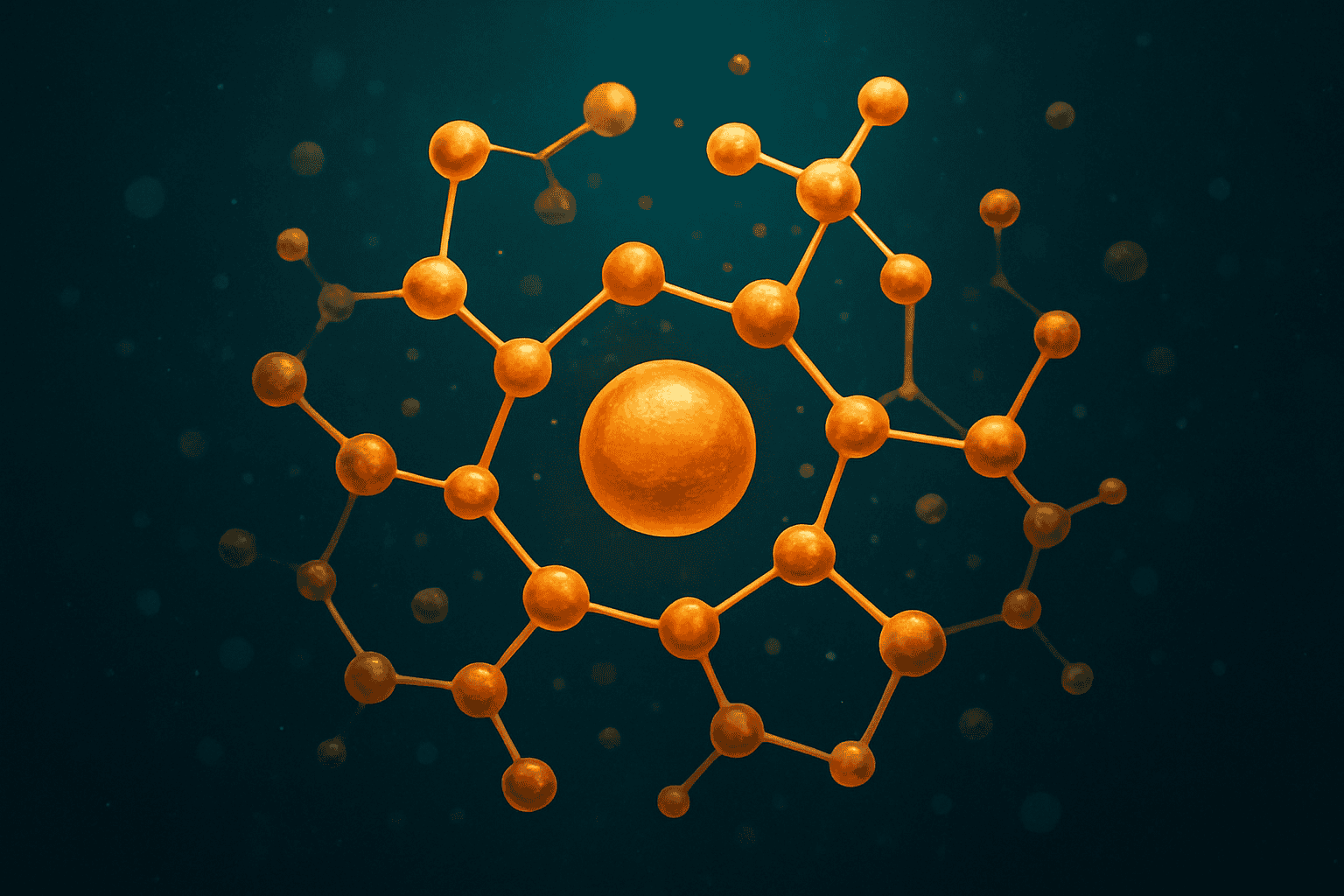
While copper is involved in many enzymatic processes, three copper-dependent enzymes come up most frequently in research literature. Understanding these three gives you a solid foundation in copper biology.
Lysyl Oxidase. This enzyme is responsible for cross-linking collagen and elastin fibers — the structural proteins that give connective tissue its strength and flexibility. Without lysyl oxidase, collagen fibers would be like loose threads instead of woven fabric. Copper is essential for this enzyme to work, which is why copper biology is directly relevant to connective tissue research.
Superoxide Dismutase (SOD). This is one of the body’s key enzymes for managing oxidative stress at the cellular level. Superoxide dismutase converts superoxide radicals — highly reactive molecules that can damage cellular components — into less harmful substances. The copper-zinc form of SOD (Cu/Zn-SOD) is found in nearly every cell.
Cytochrome c Oxidase. This enzyme sits in the mitochondria — the energy-producing compartments of cells — and is part of the chain that generates cellular energy (ATP). Without copper, this final step in energy production cannot occur properly. It is one of the most fundamental processes in cellular biology.
Why Copper Matters for Connective Tissue
Of all the roles copper plays in biology, its involvement in connective tissue is perhaps the most relevant to peptide research. Connective tissue — which includes skin, tendons, ligaments, cartilage, and bone — relies heavily on properly organized collagen and elastin fibers.
The enzyme lysyl oxidase, which requires copper, is responsible for creating the chemical cross-links that hold collagen fibers together in organized bundles. Without these cross-links, collagen would be structurally weak. This is why copper deficiency in laboratory models leads to observable changes in connective tissue structure.
This connection between copper and connective tissue is one reason researchers are interested in copper-binding peptides like GHK-Cu. By delivering copper in a biologically relevant form — bound to a peptide that naturally occurs in human blood plasma — GHK-Cu provides researchers with a tool to study copper’s role in connective tissue biology under controlled laboratory conditions.
Pickart L, Margolina A (2012) reviewed GHK-Cu’s copper-dependent interactions across multiple preclinical models, including observations related to connective tissue processes. (PMID: 22782788)
The Balance Between Too Little and Too Much Copper
One of the fundamental principles of copper biology is that balance matters. Copper is essential, but like many biological necessities, both deficiency and excess can be problematic at the cellular level. Researchers study both extremes to understand the narrow range in which copper functions optimally.
In laboratory models, copper deficiency has been associated with observable changes in enzyme activity and cellular behavior. The copper-dependent enzymes we discussed — lysyl oxidase, SOD, and cytochrome c oxidase — all show reduced function when copper is unavailable.
On the other hand, excess copper can also disrupt cellular processes in laboratory settings. Cells have sophisticated systems for managing copper levels, including specialized transport proteins that move copper where it is needed and storage proteins that sequester excess copper.
This balance question is part of what makes copper-binding peptides like GHK-Cu interesting in research. The peptide delivers copper in a form that is already part of the body’s natural chemistry, which raises research questions about how cells manage copper when it arrives bound to a peptide versus as a free ion.
How GHK-Cu Delivers Copper in Research Contexts
Free copper ions (copper atoms with a positive charge, floating loose in solution) are not how copper typically moves around in biological systems. Instead, copper is usually bound to proteins or peptides — carrier molecules that transport it and deliver it where it is needed.
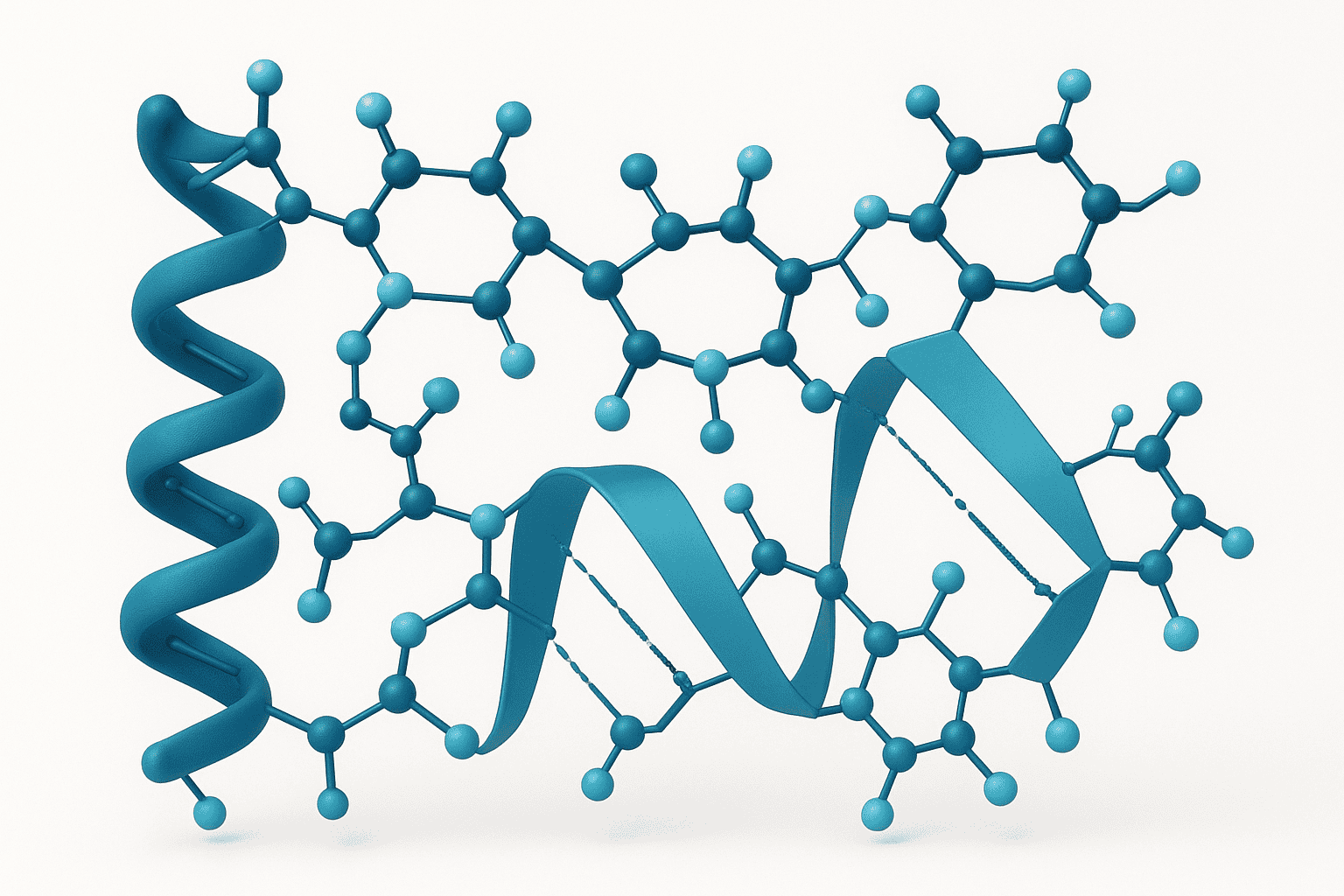
GHK-Cu is one such carrier. The tripeptide (glycine-histidine-lysine) binds copper through its histidine residue, creating a stable coordination complex. This means the copper is not floating free — it is held in a specific chemical arrangement by the peptide.
In the body, GHK-Cu occurs naturally in blood plasma at approximately 200 ng/mL in younger adults, with concentrations declining with age (Pickart et al., 2015, PMID: 26050778). This natural occurrence suggests GHK-Cu is part of the body’s normal copper transport and delivery system.
In laboratory research, scientists use GHK-Cu to study how copper delivery affects various cellular processes. Published analyses have found that GHK-Cu influences over 4,000 human genes (Pickart et al., 2014, PLOS ONE), and researchers continue to investigate how much of this broad effect is driven by the copper component versus the peptide itself.
Pickart L, Vasquez-Soltero JM, Margolina A (2015) documented GHK-Cu concentrations in blood plasma and the age-related decline of this copper-binding tripeptide. (PMID: 26050778)
Copper Biology and the Future of Research
Our understanding of copper’s role in biology continues to grow. Modern research tools — including genomics, proteomics, and advanced imaging — allow scientists to study copper-dependent processes with unprecedented precision. Every new discovery adds to the picture of how this trace element supports fundamental cellular functions.
For peptide researchers, copper biology provides the essential context for understanding why GHK-Cu behaves differently from non-metal peptides. The copper atom is not just an accessory — it is a functional component that connects the peptide to some of the most basic processes in cell biology.
Alpha Peptides offers GLOW, a proprietary research blend featuring GHK-Cu — a copper-binding peptide at the intersection of trace element biology and peptide research. Every batch is third-party tested for purity and identity — review results on our Certificates of Analysis page. GLOW is designed exclusively for laboratory and research use.
Frequently Asked Questions
Why is copper considered an essential trace element?
Copper is essential because the body cannot produce it but needs it for critical enzyme functions. It is a “trace” element because only very small amounts (approximately 75-100 mg total in the human body) are required, but those amounts are necessary for enzymes like lysyl oxidase, superoxide dismutase, and cytochrome c oxidase to function.
How does GHK-Cu relate to copper biology?
GHK-Cu is a naturally occurring tripeptide that binds and delivers copper in a biologically relevant form. It connects peptide research to copper biology because the copper atom in GHK-Cu is a functional component that interacts with copper-dependent cellular processes in laboratory experiments.
What happens when copper levels are out of balance?
In laboratory models, both copper deficiency and excess have been shown to affect cellular processes. Copper-dependent enzymes require adequate copper to function, while cells have transport and storage systems to manage excess copper and maintain balance.
Is copper biology relevant to all peptide research?
Copper biology is most relevant to research involving metal-binding peptides like GHK-Cu. Non-metal peptides operate through different mechanisms (typically receptor binding) and do not directly involve copper-dependent pathways.
For research use only. Not for human consumption. This article is intended for educational and informational purposes. It does not constitute medical advice. Always consult qualified professionals for health-related questions.