
· For research use only. Not for human consumption.
For research use only. Not for human consumption.
If you are exploring research peptides for the first time, you will quickly notice there are many different types. Some are large, some are tiny. Some come from the body naturally, while others are entirely synthetic. One category that stands out is copper peptides — specifically GHK-Cu — because they carry a metal atom as part of their structure. This copper peptide comparison will help you understand what makes them fundamentally different.
In this post, we will compare GHK-Cu to several other well-known research peptides including BPC-157, MOTS-c, and SS-31. We are not ranking them or saying one is “better” than another — each serves a different purpose in laboratory research. Instead, we will focus on the key structural and chemical differences that make each peptide unique.
By the end of this copper peptide comparison, you will have a clear picture of why metal-binding peptides like GHK-Cu occupy their own corner of research chemistry and why scientists find them so interesting to study.
TL;DR: GHK-Cu differs from other research peptides because of its metal coordination chemistry — it binds a copper atom, which changes how it interacts with biological systems in the lab. Published research has examined GHK-Cu across fibroblast cultures and gene expression studies (Pickart L, Margolina A, 2012, PMID: 22782788; Pickart et al., 2014, PLOS ONE). For research use only. Not for human consumption.
Size Matters: Comparing Peptide Length
One of the simplest ways to compare peptides is by their size — specifically, how many amino acids they contain. This matters because size affects how a peptide behaves in laboratory experiments, how stable it is, and how it interacts with cells.
GHK-Cu is a tripeptide — just 3 amino acids. It is one of the smallest peptides actively studied in research. Its tiny size, combined with copper binding, gives it properties you would not expect from such a small molecule.
BPC-157 is a 15-amino-acid peptide. It is sometimes called a pentadecapeptide. It is derived from a larger protein found in gastric juice and has been studied in various preclinical models.
MOTS-c is a 16-amino-acid peptide that is encoded by mitochondrial DNA — the DNA found in the energy-producing compartments of cells, rather than in the cell nucleus. This unusual origin makes it a subject of metabolic research.
SS-31 is a small synthetic tetrapeptide — just 4 amino acids. Like GHK-Cu, it is very compact, but it was designed in the lab rather than discovered in nature.
The takeaway: GHK-Cu is among the smallest naturally occurring peptides under active research investigation.
Origin: Natural vs. Synthetic
Where a peptide comes from — whether it exists naturally in the body or was created in a laboratory — is an important distinction in research. It affects what questions scientists can ask and how they design their experiments.
GHK-Cu is naturally occurring. It has been measured in human blood plasma at approximately 200 ng/mL in younger adults, with levels declining with age (Pickart et al., 2015, PMID: 26050778). This natural presence gives researchers a biological context for studying it.
BPC-157 is derived from a naturally occurring protein in gastric juice, but the specific 15-amino-acid sequence used in research is a synthetic fragment. It does not circulate freely in the body the way GHK-Cu does.
MOTS-c is naturally occurring — it is produced from mitochondrial DNA. Its discovery in 2015 opened up a new category of peptides called mitochondrial-derived peptides.
SS-31 is entirely synthetic. It was designed by researchers to target a specific cellular structure (the inner mitochondrial membrane). It has no natural counterpart in the body.
The Copper Factor: Why Metal-Binding Changes Everything
This is where the copper peptide comparison gets really interesting. GHK-Cu is fundamentally different from BPC-157, MOTS-c, and SS-31 because of one feature: it binds a metal atom.
Most peptides interact with biological systems through receptor binding. They fit into a specific receptor on a cell surface — like a key in a lock — and trigger a signaling cascade inside the cell. This is how the vast majority of peptides work in laboratory research.
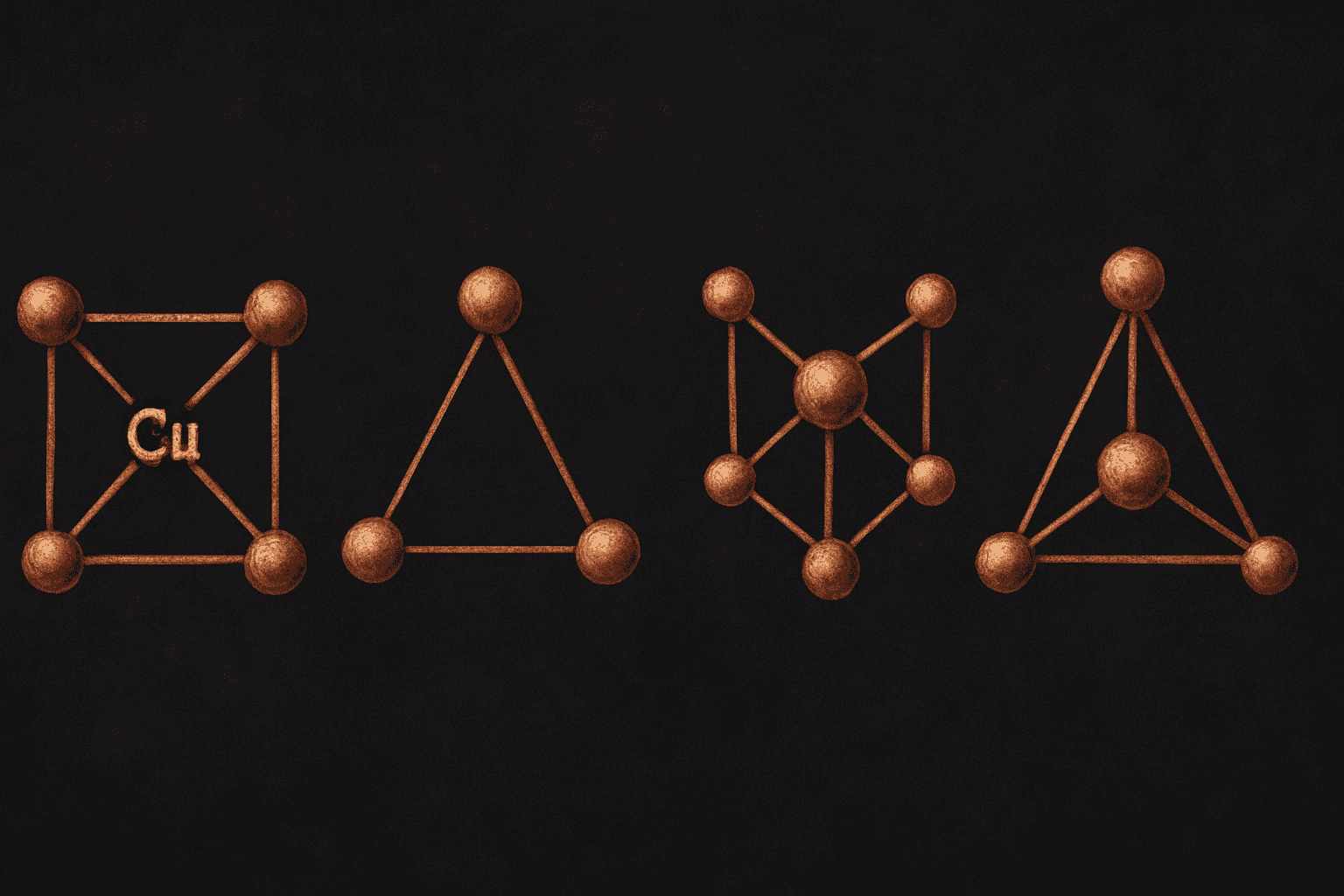
GHK-Cu works differently. The copper atom at its center creates what chemists call a “coordination complex.” The histidine amino acid in GHK has an imidazole ring that grabs onto copper through coordinate bonds. This metal coordination gives GHK-Cu chemical properties that non-metal peptides simply do not have.
For example, copper is a cofactor for several important enzymes in biology, including lysyl oxidase (involved in connective tissue) and superoxide dismutase (involved in managing oxidative stress). A peptide that carries copper can potentially interact with these enzyme systems in ways that copper-free peptides cannot.
Pickart L, Margolina A (2012) reviewed GHK-Cu’s unique copper-binding properties and their relevance across multiple research models, including fibroblast cultures and wound biology studies. (PMID: 22782788)
Mechanism of Action: Different Approaches to Cell Interaction
Each of these research peptides interacts with cells through a different mechanism, which is why they are studied for different purposes in the laboratory.
GHK-Cu works through copper coordination chemistry and has been shown to influence over 4,000 human genes in published analyses (Pickart et al., 2014, PLOS ONE). Its effects in preclinical models span fibroblast activation, gene expression modulation, and extracellular matrix processes.
BPC-157 has been studied in preclinical models for its interactions with growth factor pathways. Research has examined its effects in various tissue models, though its exact mechanism remains under investigation.
MOTS-c has been studied in preclinical metabolic research. As a mitochondrial-derived peptide, it is investigated in the context of cellular energy metabolism in laboratory settings.
SS-31 was designed to target the inner mitochondrial membrane. Research has examined its interactions with cardiolipin, a lipid found in mitochondrial membranes, in preclinical models.
None of these mechanisms are “better” or “worse” — they are simply different. Each peptide answers different research questions in the laboratory.
Why the Copper Peptide Comparison Matters for Research
Understanding how copper peptides differ from other research peptides helps scientists design better experiments. When a researcher chooses GHK-Cu for a study, they are selecting it because of its metal-binding chemistry and the specific biological pathways it has been observed to influence in preclinical work.
The unique position of copper peptides in research chemistry means they cannot simply be swapped out for non-metal peptides. The copper coordination fundamentally changes the peptide’s behavior, solubility, stability, and interactions with biological molecules. This is why copper peptide research remains its own distinct field within the broader peptide science landscape.

Alpha Peptides offers GLOW, a proprietary research blend featuring GHK-Cu, the copper-binding peptide discussed throughout this comparison. Every batch is third-party tested — view results on our Certificates of Analysis page. GLOW is formulated strictly for laboratory and research use.
Frequently Asked Questions
What makes copper peptides different from regular peptides?
Copper peptides like GHK-Cu bind a metal atom (copper) through coordinate bonds. This metal coordination gives them chemical properties and interactions that non-metal peptides do not have, including the ability to interact with copper-dependent enzyme systems.
Is GHK-Cu the smallest research peptide?
GHK-Cu is among the smallest, with just 3 amino acids. Some synthetic peptides like SS-31 (4 amino acids) are similarly compact, but GHK-Cu’s combination of small size, natural occurrence, and metal binding is unique in the research peptide landscape.
Can different peptides be used together in research?
Research protocols vary by laboratory and study design. Each peptide has its own set of research questions and experimental conditions. Researchers designing experiments would consider the specific properties and mechanisms of each peptide in their study design.
Why does peptide origin (natural vs. synthetic) matter?
A peptide’s origin affects its biological context in research. Naturally occurring peptides like GHK-Cu can be studied in the context of the body’s own biochemistry, while synthetic peptides are studied as research tools designed for specific experimental purposes.
For research use only. Not for human consumption. This article is intended for educational and informational purposes. It does not constitute medical advice. Always consult qualified professionals for health-related questions.