
· For research use only. Not for human consumption.
Glucagon receptor research has been a cornerstone of metabolic science for decades, yet it remains one of the least understood receptor systems among non-scientists. Glucagon is often called the “opposite of insulin” — while insulin signals the body to store energy, glucagon signals it to release energy. The glucagon receptor is the protein on cells that receives this signal and translates it into action.
This topic has gained renewed attention because the glucagon receptor is one of the three targets of GLP-3, the triple agonist research compound. For many people, the inclusion of glucagon receptor activity in GLP-3’s design seems counter-intuitive. Why would researchers want to activate a hormone system that raises blood sugar? The answer is more nuanced than you might expect.
This article explains glucagon receptor research in plain language. For the other two receptors GLP-3 targets, see our posts on the GIP receptor and the GLP-1 system. For a complete introduction to GLP-3 itself, start with our GLP-3 beginner’s guide.
[INTERNAL-LINK: “GIP receptor” -> /blog/gip-receptor-explained-glp-3/]
[INTERNAL-LINK: “GLP-1 system” -> /blog/what-is-glp-1-gut-peptide/]
[INTERNAL-LINK: “GLP-3 beginner’s guide” -> /blog/what-is-glp-3-beginners-guide/]
TL;DR: Glucagon receptor research examines how the glucagon signaling pathway influences energy metabolism, particularly energy expenditure and hepatic (liver) function. GLP-3 incorporates glucagon receptor agonism alongside GLP-1 and GIP receptor activity, creating a triple agonist research tool. Published studies by Rosenstock et al. (2023; PMID: 37385280) and Urva et al. (2022; PMID: 36354040) have examined this approach. For research use only. Not for human consumption.
What Is Glucagon? The “Release Energy” Hormone
To understand glucagon receptor research, you first need to understand glucagon itself. It’s simpler than it sounds.
Glucagon is a hormone made by alpha cells in the pancreas. Its primary job is to signal the body — especially the liver — to release stored energy into the bloodstream. When blood sugar drops between meals or during periods without food, glucagon steps in and tells the liver to convert its stored glycogen back into glucose and release it.
Think of glucagon and insulin as a seesaw. Insulin pushes the seesaw down — it signals cells to absorb glucose from the blood and store energy. Glucagon pushes the seesaw up — it signals the liver to release glucose into the blood and mobilize energy. Together, they keep the seesaw balanced.
This balance is fundamental to metabolic research. Scientists have studied both sides of the seesaw for over a century, but the glucagon side has historically received less attention from the general public. That’s changing now, partly because of compounds like GLP-3 that deliberately engage the glucagon receptor.
What the Glucagon Receptor Does
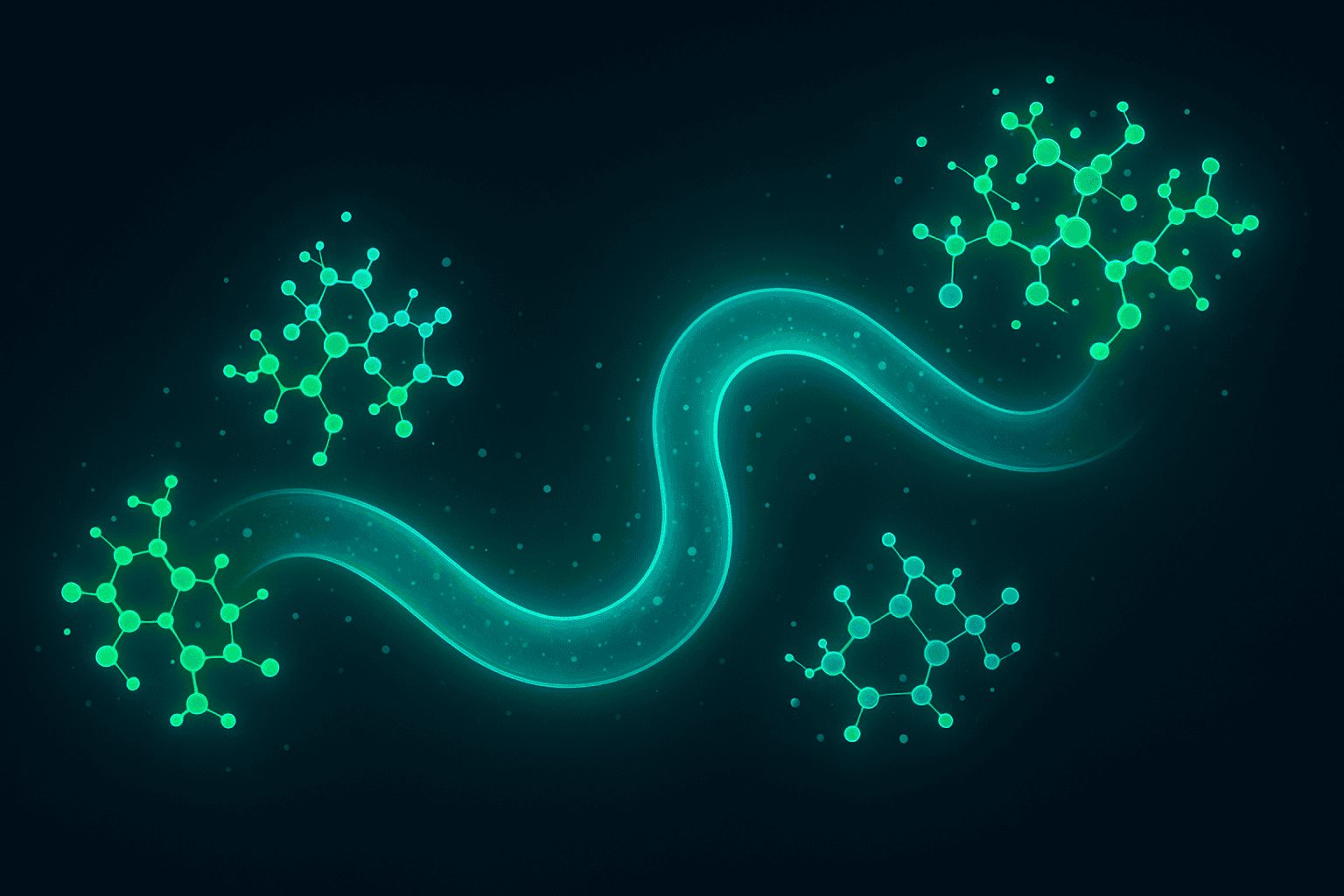
The glucagon receptor is a protein sitting on the surface of cells, primarily in the liver. When glucagon binds to this receptor, it triggers a cascade of events inside the cell. In liver cells, the primary response is glycogenolysis — the breakdown of stored glycogen into glucose, which is then released into the bloodstream.
But the glucagon receptor does more than just manage blood sugar. Glucagon receptor research has revealed that glucagon signaling also influences:
- Energy expenditure: Glucagon receptor activation has been investigated in preclinical models for its relationship to how much energy the body uses, even at rest.
- Lipid metabolism: The glucagon receptor has been studied for its potential involvement in how the liver processes fats. Research has examined connections between glucagon signaling and hepatic lipid handling.
- Amino acid metabolism: Glucagon receptor activation influences how the liver processes amino acids, which are the building blocks of proteins.
This broader metabolic picture is why glucagon receptor research has expanded well beyond the simple “raises blood sugar” description. The receptor sits at a crossroads of multiple metabolic pathways, making it an important research target in its own right.
Why Glucagon Receptor Agonism Seems Counter-Intuitive
Here’s the part that confuses people. If glucagon raises blood sugar, why would researchers deliberately design a compound that activates the glucagon receptor? Wouldn’t you want to block it, not stimulate it?
The answer lies in the complexity of metabolic signaling. Activating the glucagon receptor doesn’t just raise blood sugar — it also stimulates energy expenditure pathways. In preclinical models, glucagon receptor agonism has been investigated for its connection to increased energy utilization by the body. The system is more nuanced than a simple on/off switch.
Think of it like a furnace. Yes, the furnace burns fuel (which “uses up” energy stores). That might seem counterproductive if you’re trying to save fuel. But if the research question is about how the body’s energy-burning systems work, then activating the furnace is exactly what you need to do to study it.
Researchers studying the glucagon receptor are interested in the full picture of how energy metabolism is regulated — not just one aspect of it. The counter-intuitive nature of glucagon agonism is precisely what makes it scientifically interesting. It challenges simple assumptions about metabolic signaling.
How GLP-3 Incorporates Glucagon Receptor Research

GLP-3 was designed to engage three receptors simultaneously: the GLP-1 receptor, the GIP receptor, and the glucagon receptor. This triple agonist approach is what makes GLP-3 unique as a research tool, and the inclusion of glucagon receptor activity is a deliberate design choice, not an accident.
The rationale is straightforward. In the body, these three signaling pathways don’t operate in isolation. GLP-1, GIP, and glucagon are all active after meals, all influence metabolic processes, and all interact with each other’s effects. By creating a single compound that engages all three, researchers can study how these pathways work in concert rather than studying each one separately.
The glucagon receptor component specifically adds the energy expenditure dimension to the research. While GLP-1 and GIP receptor engagement addresses one set of metabolic pathways, glucagon receptor agonism adds a complementary set. The published studies by Urva et al. and Rosenstock et al. have begun characterizing what this triple engagement looks like in controlled research settings.
Urva S et al. (2022) examined GLP-3 as a triple GIP, GLP-1, and glucagon receptor agonist in a multicentre, double-blind, placebo-controlled phase 1b trial. The study provided early characterization data on the compound’s engagement of all three receptor pathways, including the glucagon receptor. (PMID: 36354040)
The Counter-Intuitive Nature Explained Simply
If glucagon receptor research teaches us anything, it’s that biology rarely follows simple either/or logic. The fact that activating a “raise blood sugar” pathway can be a valuable research approach seems contradictory only if you look at each pathway in isolation.
In reality, the body’s metabolic control system is more like a mixing board with dozens of sliders, not a single on/off switch. Glucagon receptor activation is one slider among many. When it’s adjusted alongside GLP-1 and GIP receptor activation (as in GLP-3), the combined output can be very different from what any single slider produces alone.
This is the fundamental insight driving glucagon receptor research and the triple agonist approach: complex systems produce complex results, and understanding those results requires tools that can engage the system at multiple points simultaneously. GLP-3 is one such tool.
All published data on this topic comes from controlled clinical research settings. Glucagon receptor research, including GLP-3’s triple agonist activity, represents active scientific investigation, not conclusions about any application.
Rosenstock J et al. (2023) reported phase 2 data on GLP-3 as a GIP, GLP-1, and glucagon receptor agonist in a randomized, double-blind, placebo-controlled trial. The study examined multi-receptor engagement including glucagon receptor agonism across multiple cohorts and observation parameters. (PMID: 37385280)
Alpha Peptides carries research-grade GLP-3 RT, a triple agonist research tool that engages the glucagon, GLP-1, and GIP receptors simultaneously. Every order includes independent third-party testing and a Certificate of Analysis. For researchers investigating glucagon receptor biology, multi-receptor pharmacology, or metabolic signaling pathways, browse our full catalog on the research peptides shop page or review testing data on our Certificates of Analysis page.

Frequently Asked Questions
What is glucagon?
Glucagon is a hormone produced by alpha cells in the pancreas. It signals the liver to release stored glucose into the bloodstream, functioning as the metabolic opposite of insulin.
Where is the glucagon receptor found?
The glucagon receptor is primarily found on liver cells, though it is also present on other tissues. It mediates glucagon’s effects on glycogen breakdown, energy metabolism, and lipid processing.
Why does GLP-3 activate the glucagon receptor?
GLP-3 was designed as a triple agonist to engage three receptor systems simultaneously (GLP-1, GIP, and glucagon). The glucagon receptor component allows researchers to study the coordinated effects of all three metabolic pathways working together, including the energy expenditure dimension that glucagon signaling provides.
Isn’t activating glucagon counterproductive?
It seems counter-intuitive, but glucagon receptor signaling involves more than just raising blood sugar. It also connects to energy expenditure pathways and lipid metabolism. In the context of triple agonism, glucagon receptor activation adds a complementary dimension to the GLP-1 and GIP receptor effects.
Is GLP-3 available for research purposes?
Alpha Peptides offers GLP-3 RT for laboratory investigation purposes only. It is not sold for human consumption. A Certificate of Analysis is included with every order.
For research use only. Not for human consumption. This article is intended for informational and educational purposes. It does not constitute medical advice, and no therapeutic claims are made. Always consult published peer-reviewed literature for detailed research data.