
· For research use only. Not for human consumption.
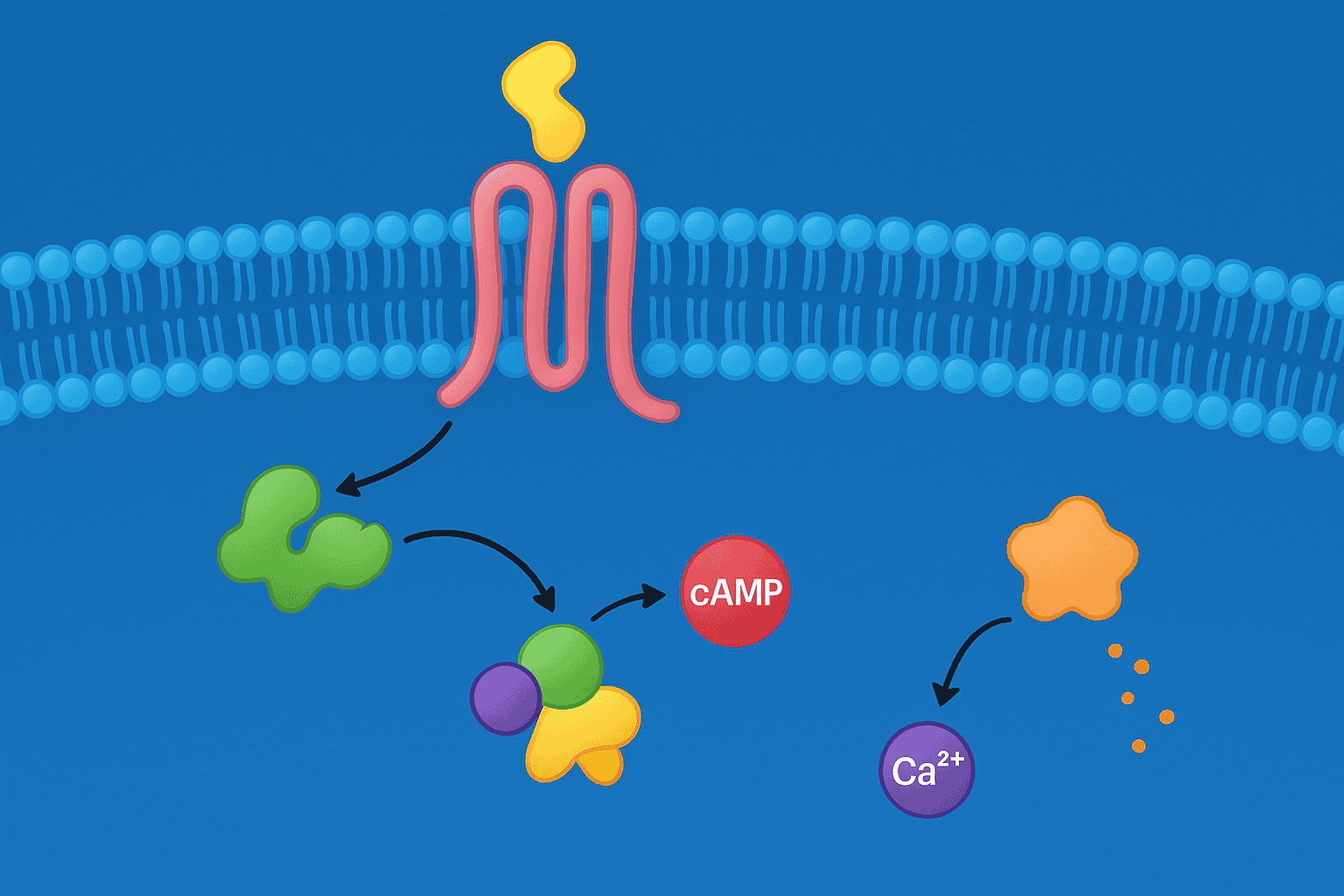
The GIP receptor is one of those scientific terms that sounds complicated but is actually straightforward once you break it down. GIP stands for glucose-dependent insulinotropic polypeptide — which is a mouthful, so researchers typically just say “GIP.” The GIP receptor is the lock on the surface of certain cells that the GIP hormone fits into, triggering a chain of events inside the cell.
Understanding the GIP receptor matters right now because it’s one of the three targets that GLP-3 was designed to engage. While most people have heard of the GLP-1 receptor (thanks to the attention on GLP-1 research), the GIP receptor has been studied for decades in its own right and plays a distinct role in the body’s signaling systems.
This article explains what the GIP receptor is, what it does, and why researchers designed GLP-3 to target it alongside two other receptors. For the complete picture of GLP-3’s triple agonist design, see our GLP-3 beginner’s guide. For the third receptor GLP-3 targets, read our post on the glucagon receptor.
[INTERNAL-LINK: “GLP-3 beginner’s guide” -> /blog/what-is-glp-3-beginners-guide/]
[INTERNAL-LINK: “the glucagon receptor” -> /blog/glucagon-receptor-peptide-research/]
TL;DR: The GIP receptor is a cell-surface protein that responds to glucose-dependent insulinotropic polypeptide (GIP), a gut hormone involved in metabolic signaling. GLP-3 was designed to target the GIP receptor alongside the GLP-1 and glucagon receptors, creating a triple agonist research tool. Published studies by Rosenstock et al. (2023; PMID: 37385280) and Urva et al. (2022; PMID: 36354040) have examined this multi-receptor approach. For research use only. Not for human consumption.
What Is GIP? The Hormone Behind the GIP Receptor
Before understanding the receptor, you need to know about the hormone it responds to. GIP (glucose-dependent insulinotropic polypeptide) is a natural hormone produced by K-cells in the upper part of the small intestine. When you eat — especially carbohydrates and fats — these K-cells release GIP into the bloodstream.
GIP was actually one of the first “incretin” hormones ever identified. Incretins are gut hormones that are released in response to food and play a role in metabolic signaling. GIP was discovered before GLP-1, making it the elder sibling in the incretin family.
Think of GIP as a messenger. When food arrives in the upper gut, K-cells detect it and send GIP out as a signal. That signal travels through the bloodstream to various tissues where GIP receptors are waiting. When GIP binds to its receptor, it triggers events inside those cells. The nature of those events depends on which tissue the receptor is located in.
What the GIP Receptor Does

The GIP receptor is found on several types of cells throughout the body. Its most well-known locations include pancreatic cells, fat tissue (adipocytes), and bone cells. Each location responds to GIP signaling in its own way.
On pancreatic cells, the GIP receptor has been studied primarily for its role in insulin-related signaling. When GIP binds to its receptor on these cells, it influences the cellular pathways involved in insulin release. This is why GIP is classified as an “insulinotropic” polypeptide — the name literally means “acting on insulin.”
On fat tissue cells, the GIP receptor mediates a different set of signals related to lipid (fat) metabolism. The interaction between GIP and adipose tissue has been an active area of research, with scientists investigating how GIP receptor signaling influences fat storage and energy utilization pathways.
On bone cells, GIP receptor signaling has been examined in preclinical models for its potential relationship to bone biology. This is a less widely known aspect of GIP research, but it highlights how the same receptor can have different functions depending on its cellular context.
How GIP Differs From GLP-1 Signaling
Both GIP and GLP-1 are incretin hormones released from the gut after eating, and both interact with cells in the pancreas. But there are important differences that matter for research.
First, they come from different cells. GIP is produced by K-cells in the upper small intestine, while GLP-1 is produced by L-cells in the lower small intestine and colon. This means GIP is released earlier in the digestive process — it responds to food arriving in the first section of the small intestine, while GLP-1 responds later as food moves further along.
Second, they have different receptor distributions. The GLP-1 receptor is found in the pancreas, brain, stomach, and other tissues. The GIP receptor has its own distinct distribution, with notable presence on adipose tissue and bone cells in addition to the pancreas. This means GIP and GLP-1 can influence different sets of tissues.
Third, their signaling effects are not identical even where they overlap. On pancreatic cells, both GIP and GLP-1 influence insulin-related pathways, but they do so through different receptors with different downstream signaling cascades. They’re like two different keys that open two different locks on the same building — both give access, but through different doors.
Why GLP-3 Targets the GIP Receptor

This is where the GIP receptor connects to the broader GLP-3 story. GLP-3 was designed as a triple agonist — a compound that simultaneously activates three different receptors: the GLP-1 receptor, the GIP receptor, and the glucagon receptor.
Why include the GIP receptor? Because researchers wanted to study what happens when all three incretin-related pathways are activated at the same time. For decades, each receptor system was studied individually. Then dual-agonist compounds appeared that could target two receptors. GLP-3 was the logical next step — a tool that lets researchers investigate all three systems working together.
The inclusion of the GIP receptor is particularly interesting because of its unique tissue distribution. By targeting the GIP receptor alongside GLP-1 and glucagon receptors, GLP-3 potentially engages signaling pathways in adipose tissue and other locations that single-receptor or even dual-receptor compounds might not reach.
Published research by Urva et al. (2022) and Rosenstock et al. (2023) has examined GLP-3’s triple agonist activity in controlled clinical research settings, providing the first systematic data on what happens when all three receptor systems are engaged simultaneously by a single compound.
Urva S et al. (2022) examined GLP-3 as a triple GIP, GLP-1, and glucagon receptor agonist in a phase 1b multiple-ascending trial. The study provided early data on the compound’s multi-receptor engagement profile, including its interaction with the GIP receptor pathway. (PMID: 36354040)
Why Multi-Receptor Targeting Is Studied
The idea behind multi-receptor targeting is similar to the difference between listening to one instrument versus a full orchestra. Each individual instrument (or receptor pathway) produces its own distinct sound. But when they play together, the combined effect can be different from — and potentially more complex than — the sum of the individual parts.
Researchers study multi-receptor targeting because biological systems don’t work in isolation. In the body, GIP, GLP-1, and glucagon pathways are all active simultaneously and influence each other. A compound that engages all three allows scientists to study these interactions in ways that single-receptor tools cannot.
The GIP receptor’s inclusion in GLP-3’s design reflects a growing understanding in the research community that metabolic signaling involves coordinated networks of receptors, not just individual pathways. By targeting the GIP receptor alongside its companions, GLP-3 provides a research tool that more closely mirrors the body’s own multi-pathway approach to signaling.
All of this research is conducted in controlled settings and represents the current state of published scientific investigation. GLP-3 is a research compound sold for laboratory purposes only.
Rosenstock J et al. (2023) reported on GLP-3’s activity as a GIP, GLP-1, and glucagon receptor agonist in a randomized, double-blind, placebo-controlled phase 2 trial. The study examined multi-receptor engagement across multiple cohorts, providing data on the compound’s interaction with all three target pathways including the GIP receptor. (PMID: 37385280)
Alpha Peptides offers research-grade GLP-3 RT, a triple agonist research tool targeting the GIP, GLP-1, and glucagon receptors. Every order includes independent third-party testing and a Certificate of Analysis. For researchers investigating incretin receptor biology, multi-receptor pharmacology, or GIP pathway signaling, explore our full catalog on the research peptides shop page or review testing data on our Certificates of Analysis page.

Frequently Asked Questions
What does GIP stand for?
GIP stands for glucose-dependent insulinotropic polypeptide. It is a naturally occurring gut hormone produced by K-cells in the upper small intestine in response to food intake.
What is the GIP receptor?
The GIP receptor is a protein on the surface of certain cells (including pancreatic cells, fat cells, and bone cells) that responds to the GIP hormone. When GIP binds to this receptor, it triggers signaling events inside the cell.
How is GIP different from GLP-1?
GIP and GLP-1 are both incretin hormones released from the gut after eating, but they come from different cell types (K-cells vs. L-cells), have different receptor distributions, and produce distinct signaling effects even where their targets overlap.
Why does GLP-3 target the GIP receptor?
GLP-3 was designed as a triple agonist to engage three receptor systems simultaneously: GLP-1, GIP, and glucagon receptors. Including the GIP receptor allows researchers to study the coordinated effects of all three pathways working together.
Is GLP-3 available for research?
Alpha Peptides carries GLP-3 RT for laboratory research purposes only. It is not sold for human consumption. A Certificate of Analysis is included with every order.
For research use only. Not for human consumption. This article is intended for informational and educational purposes. It does not constitute medical advice, and no therapeutic claims are made. Always consult published peer-reviewed literature for detailed research data.