
· For research use only. Not for human consumption.
For research use only. Not for human consumption.
The term growth hormone secretagogue shows up frequently in peptide research, but it is often used without explanation. If you have encountered this word and been unsure what it means, you are not alone. The concept is actually simpler than it sounds, and understanding it opens the door to a much better grasp of the peptide research landscape.
A secretagogue is any substance that causes another substance to be secreted, or released. A growth hormone secretagogue, then, is anything that causes the body to release growth hormone. Simple as that. But beneath that straightforward definition lies a surprisingly rich area of science, with multiple pathways, different compound families, and decades of published research. Check our research catalog to see growth hormone secretagogues currently available at Alpha Peptides.
This post will explain the different types of growth hormone secretagogues, how they work, and why they represent one of the most active areas in peptide research.
TL;DR: A growth hormone secretagogue is any compound that causes growth hormone to be released. There are two main pathways: the GHRH pathway (used by Tesamorelin, Sermorelin, CJC-1295) and the ghrelin/GHS receptor pathway (used by Ipamorelin, GHRP-6, GHRP-2). Raun et al. (1998) characterized Ipamorelin as the first selective GH secretagogue (PMID: 9849822). Wang & Tomlinson (2009) reviewed Tesamorelin (PMID: 19243281). For research use only. Not for human consumption.
What Does “Secretagogue” Mean?
The word secretagogue comes from two parts: “secret-” (from secretion, meaning to release a substance) and “-agogue” (from the Greek word meaning to lead or drive). Put together, a secretagogue is something that drives secretion. It leads the body to release a specific molecule.
A growth hormone secretagogue specifically drives the release of growth hormone from the pituitary gland. There are different ways to accomplish this, and that is where the science gets interesting. Different secretagogues use different pathways and different receptors, but they all end up at the same destination: growth hormone leaving the pituitary and entering the bloodstream.
You can think of it like different roads that all lead to the same city. The destination is the same (growth hormone release), but the route you take depends on which secretagogue is being studied.
The GHRH Pathway: One Road to Growth Hormone Release
The first major pathway is the GHRH (Growth Hormone Releasing Hormone) pathway. This is the body’s primary, built-in system for triggering growth hormone release. The hypothalamus produces GHRH, which travels to the pituitary and binds to GHRH receptors on somatotroph cells. Those cells then release growth hormone.
Compounds that use this pathway are called GHRH analogs. They mimic the natural GHRH signal. The most well-known examples include:
Tesamorelin: A full-length GHRH analog with all 44 amino acids plus a trans-3-hexenoic acid cap. Wang and Tomlinson (2009) reviewed its design and function.
Sermorelin: A shortened version using only the first 29 amino acids of GHRH.
CJC-1295: A GHRH analog with Drug Affinity Complex technology for extended stability. Alba et al. (2006) published its characterization.
Wang Y, Tomlinson B (2009) reviewed Tesamorelin, a GHRH-pathway growth hormone secretagogue, describing its mechanism and pharmacological profile. (PMID: 19243281)
Alba M et al. (2006) characterized CJC-1295 as a long-acting GHRH analog with sustained growth hormone secretagogue activity. (PMID: 16822960)
The Ghrelin Pathway: A Different Road Entirely
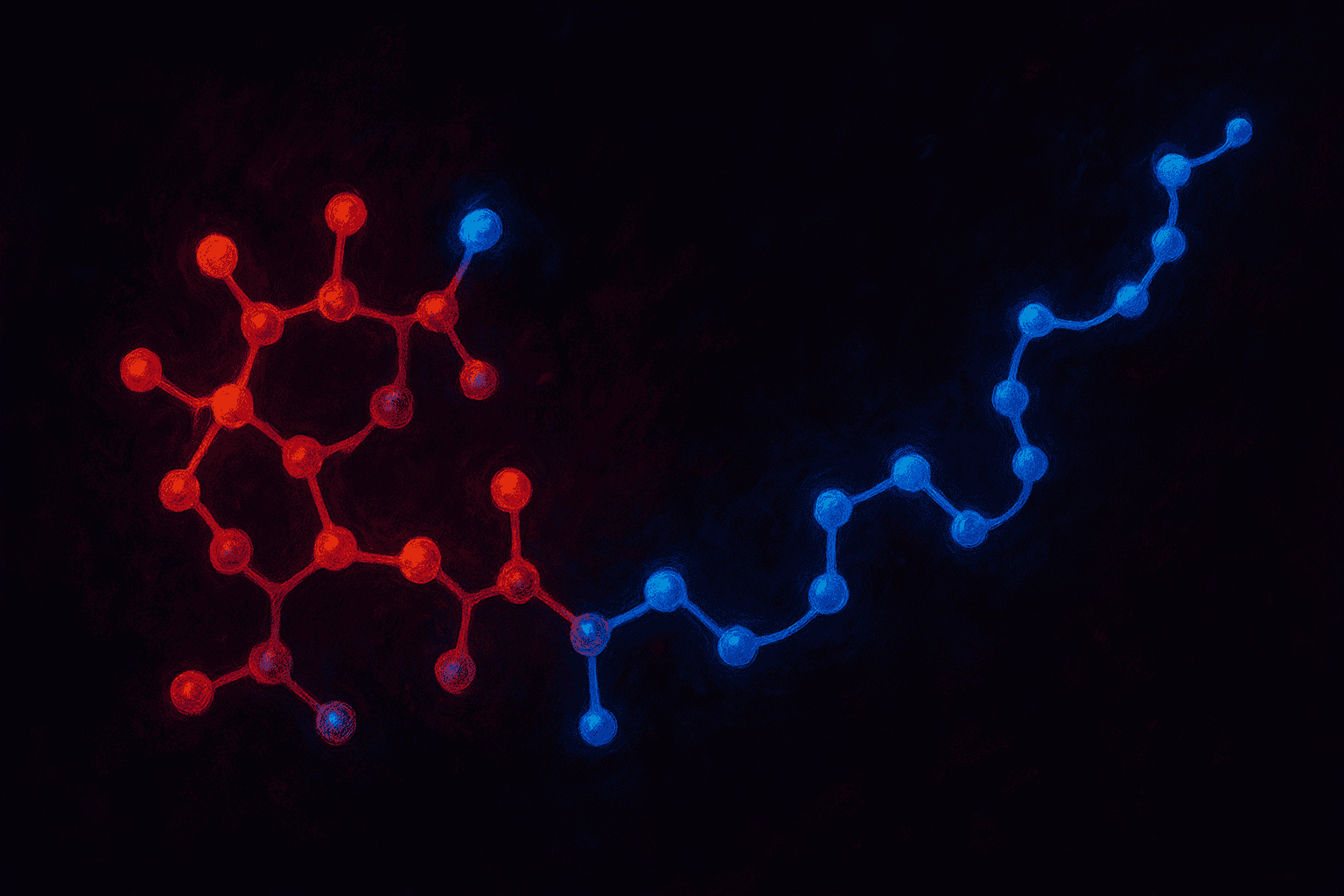
The second major pathway involves a completely different receptor system. In the late 1990s, researchers discovered that the stomach produces a hormone called ghrelin. Among its many functions, ghrelin can stimulate growth hormone release by binding to a receptor called the Growth Hormone Secretagogue Receptor (GHSR), also known as the ghrelin receptor.
This was a major discovery because it revealed a second, independent way to trigger growth hormone release. The GHRH pathway works through the hypothalamus-pituitary connection. The ghrelin pathway works through a completely different receptor on pituitary cells.
Compounds that mimic ghrelin’s effect on the GHS receptor are called Growth Hormone Releasing Peptides (GHRPs). They include GHRP-6, GHRP-2, and Ipamorelin. These are structurally very different from GHRH analogs. Most GHRPs are small peptides, often just 5 to 6 amino acids long, compared to the 44-amino-acid length of GHRH.
The GHRP Family of Growth Hormone Secretagogues

The Growth Hormone Releasing Peptide family includes several compounds, each with slightly different properties. Understanding the differences between them is an important part of growth hormone secretagogue research.
GHRP-6: One of the earliest GHRPs characterized. It effectively stimulates the GHS receptor, but research has shown it also affects other systems in the body, including cortisol and prolactin release. This means it is less specific than some researchers would prefer.
GHRP-2: A more potent version that retains some of the off-target effects seen with GHRP-6, though the profile differs in some respects.
Ipamorelin: The standout of the family. Raun et al. (1998) characterized Ipamorelin as the first selective growth hormone secretagogue, meaning it stimulates growth hormone release without significantly affecting cortisol, prolactin, or other hormones. This selectivity makes it a particularly clean research tool.
Raun K et al. (1998) characterized Ipamorelin as the first selective growth hormone secretagogue, distinguishing it from earlier GHRPs by its minimal effects on cortisol and prolactin. (PMID: 9849822)
Comparing the Two Secretagogue Approaches
The GHRH pathway and the ghrelin pathway represent two fundamentally different approaches to the same goal. Here is how they compare:
Receptor: GHRH analogs bind the GHRH receptor. GHRPs bind the GHS/ghrelin receptor. These are completely different molecular targets.
Signal origin: GHRH is naturally produced in the hypothalamus. Ghrelin is naturally produced in the stomach. They come from different parts of the body.
Compound size: GHRH analogs tend to be large peptides (29-44 amino acids). GHRPs tend to be small peptides (5-6 amino acids).
Selectivity: Both pathways can trigger growth hormone release, but GHRPs vary widely in their selectivity. Ipamorelin is highly selective; GHRP-6 is less so. GHRH analogs are generally specific to the GHRH receptor.
Some researchers study both pathways simultaneously because the GHRH and ghrelin systems can work together. When both pathways are activated at the same time, the resulting growth hormone release can be greater than either pathway alone. This synergy is itself a subject of ongoing investigation.
Why This Is an Active Research Area
Growth hormone secretagogue research remains active for several reasons. The growth hormone axis is central to many biological processes, and having multiple ways to study it gives researchers greater flexibility in designing experiments. Each secretagogue type answers different questions about how growth hormone release is regulated.
Additionally, the discovery of the ghrelin pathway relatively recently (the receptor was identified in 1996, and ghrelin itself was not discovered until 1999) means there is still a great deal to learn about how this system works and how it interacts with the GHRH pathway.
The development of selective compounds like Ipamorelin has also opened new avenues for research by providing cleaner tools that allow scientists to study growth hormone release without confounding effects on other hormone systems.
Alpha Peptides carries research-grade growth hormone secretagogues for qualified investigators. Browse our complete catalog to see available compounds, and review our Certificates of Analysis (COAs) for purity and identity verification on every batch.
Frequently Asked Questions
What is a growth hormone secretagogue?
A growth hormone secretagogue is any substance that causes the pituitary gland to release growth hormone. The word “secretagogue” means something that drives secretion. There are two main pathways: the GHRH pathway and the ghrelin/GHS receptor pathway.
What is the difference between GHRH analogs and GHRPs?
GHRH analogs mimic the natural brain signal GHRH and bind to the GHRH receptor. GHRPs mimic ghrelin and bind to the GHS/ghrelin receptor. They use different receptors and different mechanisms but both result in growth hormone release from the pituitary.
What makes Ipamorelin selective?
Ipamorelin stimulates growth hormone release without significantly affecting other hormones like cortisol or prolactin. Earlier GHRPs like GHRP-6 and GHRP-2 also affect these other systems, making them less selective research tools.
Can the GHRH and ghrelin pathways work together?
Published research suggests the two pathways can have synergistic effects, meaning activating both at the same time may produce a greater growth hormone response than activating either one alone. This interaction is an active area of investigation.
Why are there so many different growth hormone secretagogues?
Different secretagogues have different properties, including selectivity, stability, and mechanism of action. Having multiple tools allows researchers to ask different questions about how the growth hormone system works. Each compound provides a different angle of investigation.
For research use only. Not for human consumption. This material is sold strictly for use in scientific and laboratory research. It is not intended for diagnostic or therapeutic purposes. Alpha Peptides does not endorse or encourage any off-label use.