
· For research use only. Not for human consumption.
For research use only. Not for human consumption.
Published Tesamorelin studies span more than a decade of research and cover a wide range of scientific questions. If you are new to this area, it can be overwhelming to know where to start. This post provides a plain-language overview of the most cited research papers on Tesamorelin, explaining what each study examined, what the researchers found, and what questions remain open for future investigation.
Every study discussed here is available on PubMed, the world’s largest database of biomedical literature. We will provide direct links so you can read the original papers yourself. Our goal is to give you a readable map of the published evidence without the jargon that makes scientific papers hard to approach. You can also explore our research peptide catalog to see the compounds discussed in these studies.
Let us walk through the key publications one at a time.
TL;DR: Three landmark publications define the core Tesamorelin literature: Wang & Tomlinson (2009) provided a comprehensive review (PMID: 19243281), Stanley et al. (2011) examined GH pulsatility effects (PMID: 20943777), and Falutz et al. (2010) contributed controlled research data (PMID: 20554713). Additional studies continue to expand the evidence base. For research use only. Not for human consumption.
Wang and Tomlinson (2009): The Comprehensive Review
One of the best starting points for understanding Tesamorelin studies is the review paper published by Wang and Tomlinson in 2009. A review paper is different from an original research study. Instead of reporting new experimental results, a review gathers together and summarizes the existing evidence on a topic. Think of it as a book report on everything scientists knew about Tesamorelin up to that point.
Wang and Tomlinson described Tesamorelin as a human growth hormone releasing factor analogue. They covered its chemical structure (the full 44-amino-acid GHRH sequence with trans-3-hexenoic acid modification), its mechanism of action (binding to GHRH receptors on pituitary somatotrophs), and the published research on its behavior in laboratory and controlled settings.
This paper is particularly useful for newcomers because it provides context. Rather than diving into a single experiment, it explains why Tesamorelin was developed, how it works, and where it fits in the broader landscape of GHRH research.
Wang Y, Tomlinson B (2009) published a comprehensive review of Tesamorelin as a human growth hormone releasing factor analogue, summarizing structural, pharmacological, and research evidence. (PMID: 19243281)
Stanley et al. (2011): Growth Hormone Pulsatility
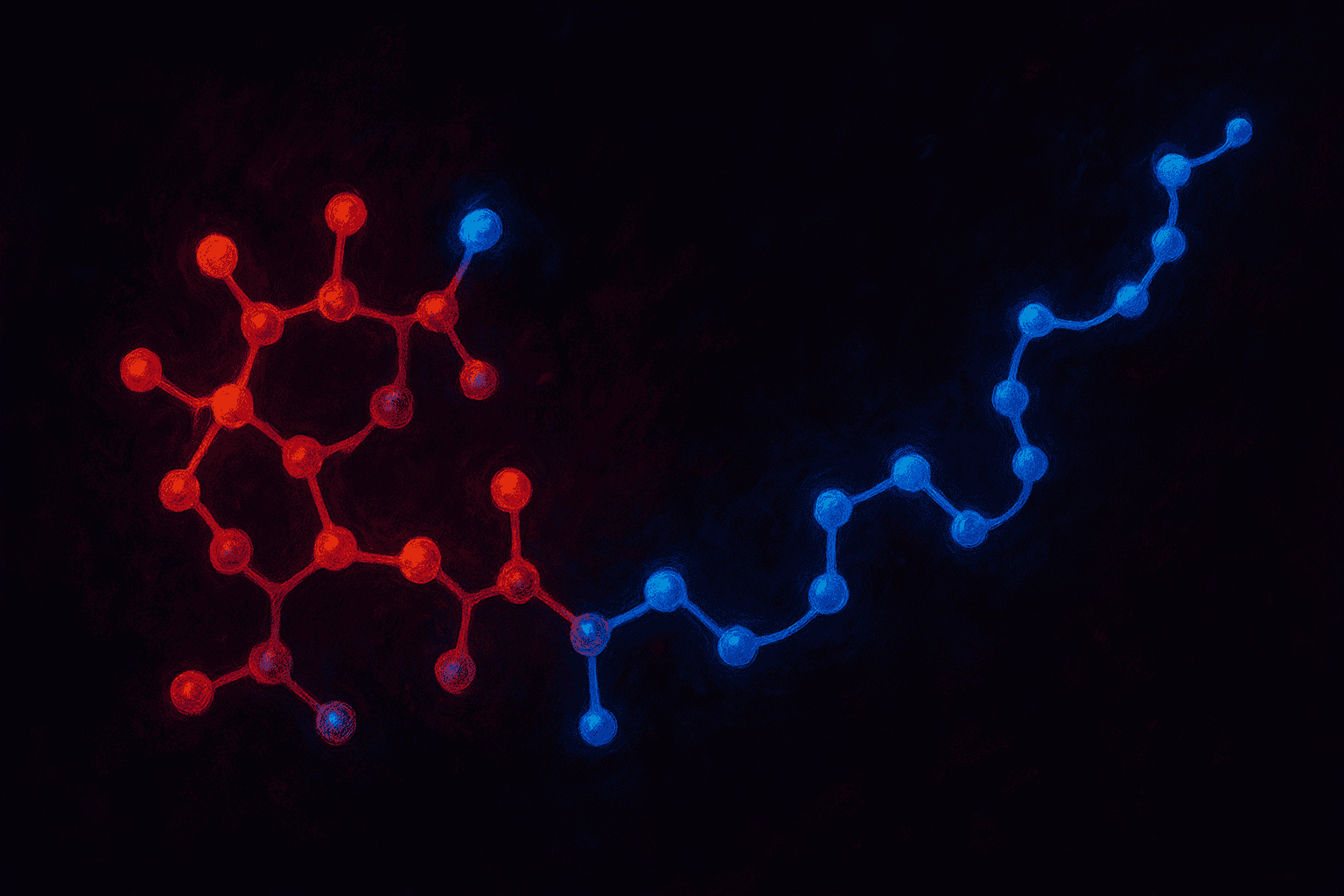
The study by Stanley and colleagues, published in 2011, tackled a specific and important question: how does a GHRH analog affect the natural pulsatile pattern of growth hormone release? Growth hormone is not released in a steady stream. It comes out in bursts, or pulses, with peaks and valleys throughout the day. The largest pulses tend to occur at specific times, and the pattern of these pulses carries biological information.
Stanley et al. examined what happens to this pulsatile pattern when a GHRH analog is present. This is a nuanced question because it gets at whether the analog simply adds more growth hormone to the system or whether it changes the way the pituitary releases growth hormone over time.
Understanding pulsatility matters for research because the pattern of hormone release, not just the total amount, can influence downstream effects. Two scenarios with the same total growth hormone output but different pulse patterns could produce different biological responses. By studying how Tesamorelin affects pulsatility, Stanley et al. provided insights into the mechanism of GHRH analog action at a level of detail that simple concentration measurements cannot capture.
Stanley TL et al. (2011) examined the effects of a GHRH analog on endogenous GH pulsatility, revealing how the compound interacts with the body’s natural growth hormone release patterns. (PMID: 20943777)
Falutz et al. (2010): Controlled Research in a Specific Population
Falutz and colleagues published their study in 2010, examining Tesamorelin in a controlled research setting with a specific study population. This paper is notable for the rigor of its study design and the data it generated on Tesamorelin’s effects under carefully monitored conditions.
In research, controlled studies are considered higher quality evidence than uncontrolled observations because they include comparison groups and standardized protocols. This reduces the chance that the observed effects are caused by something other than the compound being studied. Falutz et al. used this approach to generate reliable data on how Tesamorelin behaves when administered under well-defined conditions.
The study contributed data points that other researchers have cited in subsequent publications, making it one of the foundational papers in the Tesamorelin literature.
Falutz J et al. (2010) conducted a controlled study examining the effects of Tesamorelin in a defined population, generating data that has been widely cited in subsequent research. (PMID: 20554713)
Types of Tesamorelin Studies in the Literature
Beyond the three landmark papers discussed above, the broader literature on Tesamorelin studies includes several different types of research:
Preclinical studies: These are investigations conducted in laboratory settings using cell cultures or animal models. They are typically the earliest stage of research and provide foundational data on how a compound works at the molecular and cellular level.
Pharmacokinetic studies: These examine how Tesamorelin behaves over time — how it is absorbed, distributed, metabolized, and cleared. Pharmacokinetic data helps researchers design better experiments and understand the compound’s stability profile.
Mechanism-of-action studies: These focus on exactly how Tesamorelin interacts with the GHRH receptor, what signaling pathways it activates inside cells, and how those signals translate to downstream effects.
Review articles: These summarize and synthesize the existing evidence, making the literature more accessible and identifying gaps where more research is needed.
What Remains Unknown
Despite the existing body of published work, there are still significant gaps in our understanding of Tesamorelin. This is normal in science. Every answered question tends to raise new ones. Here are some areas where the literature is still developing:
Long-term research profiles: Most published studies have examined Tesamorelin over relatively short time frames. Longer-duration studies would provide additional data on how the compound behaves over extended periods.
Comparison studies: While individual GHRH analogs have been studied separately, there are relatively few head-to-head comparisons of Tesamorelin against other analogs like Sermorelin or CJC-1295 under identical conditions. These comparisons would help clarify the practical differences between the compounds.
Receptor dynamics: The GHRH receptor is part of the GPCR family, and researchers are still investigating how repeated GHRH receptor activation affects receptor expression, sensitivity, and intracellular signaling over time.
Interaction with somatostatin: The interplay between GHRH signaling and somatostatin (the inhibitory signal) is complex, and more research is needed to fully map how these two systems interact when a stable GHRH analog is present.
How to Read Tesamorelin Research on PubMed

If you want to explore Tesamorelin studies yourself, PubMed (pubmed.ncbi.nlm.nih.gov) is the best resource. Here are some tips for navigating it:
Start with reviews. Review articles like Wang and Tomlinson (2009) summarize the field and provide references to the primary studies. Reading a review first gives you a map of the landscape before you dive into individual experiments.
Check the abstract. Every PubMed entry includes an abstract, which is a short summary of the study. Reading the abstract will tell you the study’s purpose, methods, and main findings in a few paragraphs.
Look at the citation count. Papers that have been cited many times by other researchers are generally considered important contributions to the field. The three papers discussed in this post are all well-cited in the Tesamorelin literature.
Follow the references. At the end of each paper, there is a reference list. These references lead you to related studies, allowing you to trace the development of ideas over time.
Alpha Peptides provides Tesamorelin for qualified researchers investigating the topics discussed in these published studies. All products include a third-party Certificate of Analysis (COA). Visit our research catalog for the full selection.
Frequently Asked Questions
Where can I find published Tesamorelin studies?
Published Tesamorelin research is available on PubMed at pubmed.ncbi.nlm.nih.gov. Search for “Tesamorelin” to see the full list of published papers, including reviews, preclinical studies, and controlled research reports.
What is the difference between a review article and an original study?
An original study reports new experimental results. A review article summarizes and synthesizes existing studies on a topic, providing context and identifying areas where more research is needed. Both are valuable for different reasons.
What did Stanley et al. (2011) study?
Stanley and colleagues examined how a GHRH analog affects the natural pulsatile pattern of growth hormone release. Their study focused on the rhythm of GH pulses rather than just the total amount released.
Are there still unanswered questions about Tesamorelin?
Yes. Active areas of investigation include long-term research profiles, head-to-head comparisons with other GHRH analogs, receptor dynamics, and the interaction between GHRH signaling and somatostatin inhibition.
What is growth hormone pulsatility?
Growth hormone is released in bursts or pulses rather than a steady stream. The pattern of these pulses, including their size, frequency, and timing, is itself biologically important and is an active area of research.
For research use only. Not for human consumption. This material is sold strictly for use in scientific and laboratory research. It is not intended for diagnostic or therapeutic purposes. Alpha Peptides does not endorse or encourage any off-label use.