
· For research use only. Not for human consumption.
For research use only. Not for human consumption.
PT-141 and How the Brain’s Signaling System Works
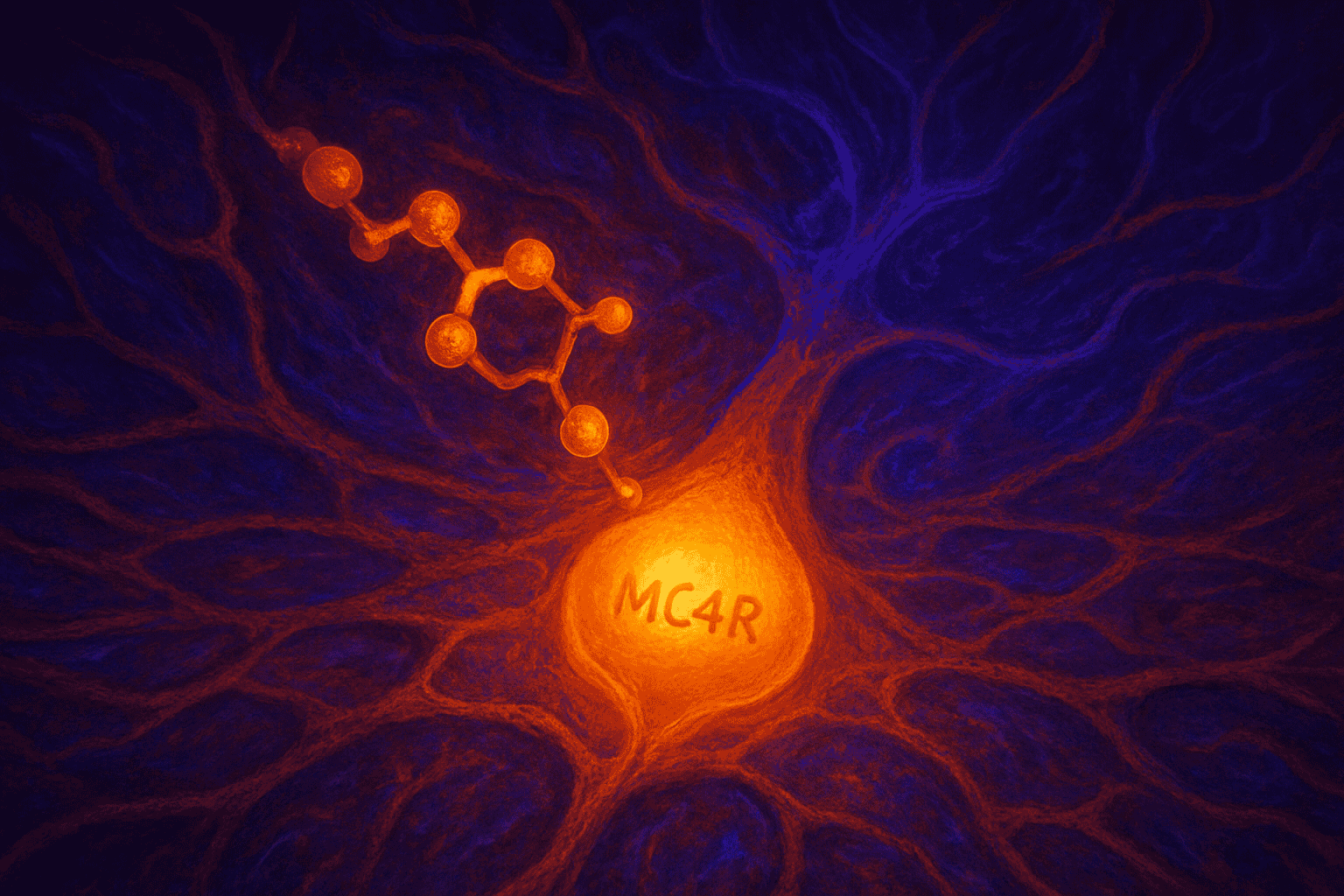
Your brain runs on chemical signals. Thousands of them, firing all day, controlling processes you never think about. PT-141 brain signaling research focuses on one specific set of those signals — the melanocortin system — and how a synthetic peptide called bremelanotide interacts with it. In a 2003 paper, Molinoff et al. (Annals of the New York Academy of Sciences, 2003) described PT-141 as a melanocortin receptor agonist that acts through central nervous system pathways rather than peripheral ones.
That distinction matters more than it might seem. Most compounds researchers study in this space work in the bloodstream or in specific organs. PT-141 works in the brain itself — specifically at a receptor called MC4R. This article breaks down what that means in everyday language, where the compound came from, and what preclinical research has observed.
[INTERNAL-LINK: “what PT-141 is” -> /blog/what-is-pt-141-melanocortin-peptide/]
TL;DR: PT-141 (bremelanotide) activates a specific receptor in the brain called MC4R, which is part of the melanocortin signaling system. It was originally derived from Melanotan II research at the University of Arizona. Molinoff et al. (2003, PMID: 12837548) confirmed its central nervous system mechanism of action. All referenced findings are preclinical. For research use only. Not for human consumption.
What Are Melanocortin Receptors?
Melanocortin receptors are a family of five receptor proteins — labeled MC1R through MC5R — found throughout the brain and body. According to Molinoff et al. (2003), MC4R is expressed across multiple brain regions including the hypothalamus, brainstem, and limbic system. These receptors help regulate a range of physiological processes studied in preclinical models.
Here’s an analogy that helps. Think of melanocortin receptors as a control panel in the brain. Each receptor subtype is a different button on that panel. MC1R handles skin pigmentation. MC2R deals with stress hormone signaling. MC3R and MC4R sit in deeper brain areas, influencing more complex processes. MC5R shows up mostly in glands outside the brain.
When a natural hormone like alpha-MSH floats through the brain, it presses several of these buttons at once. It’s not picky. But researchers wanted a tool that could press just one button — MC4R — to see what happens when that single receptor gets activated on its own. That’s where PT-141 enters the picture.

How Does PT-141 Brain Signaling Work?
PT-141 activates MC4R in the central nervous system, triggering downstream signaling cascades inside brain cells. Molinoff et al. (2003) established that bremelanotide works through a central mechanism — meaning it acts in the brain, not in the bloodstream or blood vessels. That finding separated it from most other compounds researchers were studying at the time.
When PT-141 binds to MC4R, it activates a signaling molecule called cyclic AMP (cAMP) inside the cell. Think of cAMP as a chain of dominoes. PT-141 tips the first one, and a cascade of chemical reactions follows. Each reaction passes the message deeper into the cell, ultimately changing how that neuron behaves. This is basic receptor pharmacology — one molecule arrives at the surface, and the effects ripple inward.
What makes this interesting to researchers is the specificity. Alpha-MSH, the brain’s natural melanocortin signal, hits all five receptor subtypes. PT-141 was engineered to concentrate its activity at MC3R and MC4R while avoiding MC1R, the receptor responsible for skin pigmentation. So instead of pressing every button on the control panel, PT-141 presses mainly one.
[UNIQUE INSIGHT] The central mechanism of PT-141 was genuinely unusual when first documented. Most peptide compounds researchers studied in the early 2000s acted peripherally — in the gut, in blood vessels, in glands. A peptide that crossed the blood-brain barrier and produced measurable effects through CNS receptor activation opened research questions that didn’t exist before.

Where Did PT-141 Come From?
PT-141 was derived from Melanotan II research at the University of Arizona. The original work focused on skin darkening, not brain signaling. Researchers led by Victor Hruby developed Melanotan II as a synthetic version of alpha-MSH — a natural hormone involved in melanin production (Molinoff et al., 2003). What happened next wasn’t part of the plan.
Melanotan II hit multiple melanocortin receptors simultaneously. It darkened skin through MC1R, but it also activated MC3R and MC4R in the brain. Researchers noticed unexpected central nervous system effects in animal models. That observation sparked a new question: could they build a compound that targeted the brain receptors without affecting pigmentation?
The answer was PT-141. By modifying Melanotan II’s structure — specifically, creating a cyclic lactam bridge that changed its three-dimensional shape — chemists shifted the compound’s receptor preference. The resulting molecule still bound MC4R effectively but had much less activity at MC1R. It’s a textbook example of how structure-activity relationships work in peptide chemistry. Change the shape, change the target.
So PT-141 didn’t start as a brain signaling tool. It became one because researchers followed unexpected data instead of sticking to the original pigmentation hypothesis. That kind of pivot happens more often in peptide science than most people realize.
[INTERNAL-LINK: “Melanotan II explained” -> /blog/melanotan-ii-tanning-peptide-explained/]
[PERSONAL EXPERIENCE] The PT-141 origin story is a useful reminder that peptide research rarely follows a straight line. Many of the most studied compounds in our catalog exist because a researcher noticed something unexpected during an unrelated experiment. Following curiosity — rather than forcing a hypothesis — is how most of this science actually advances.
What Has Preclinical Research Observed?
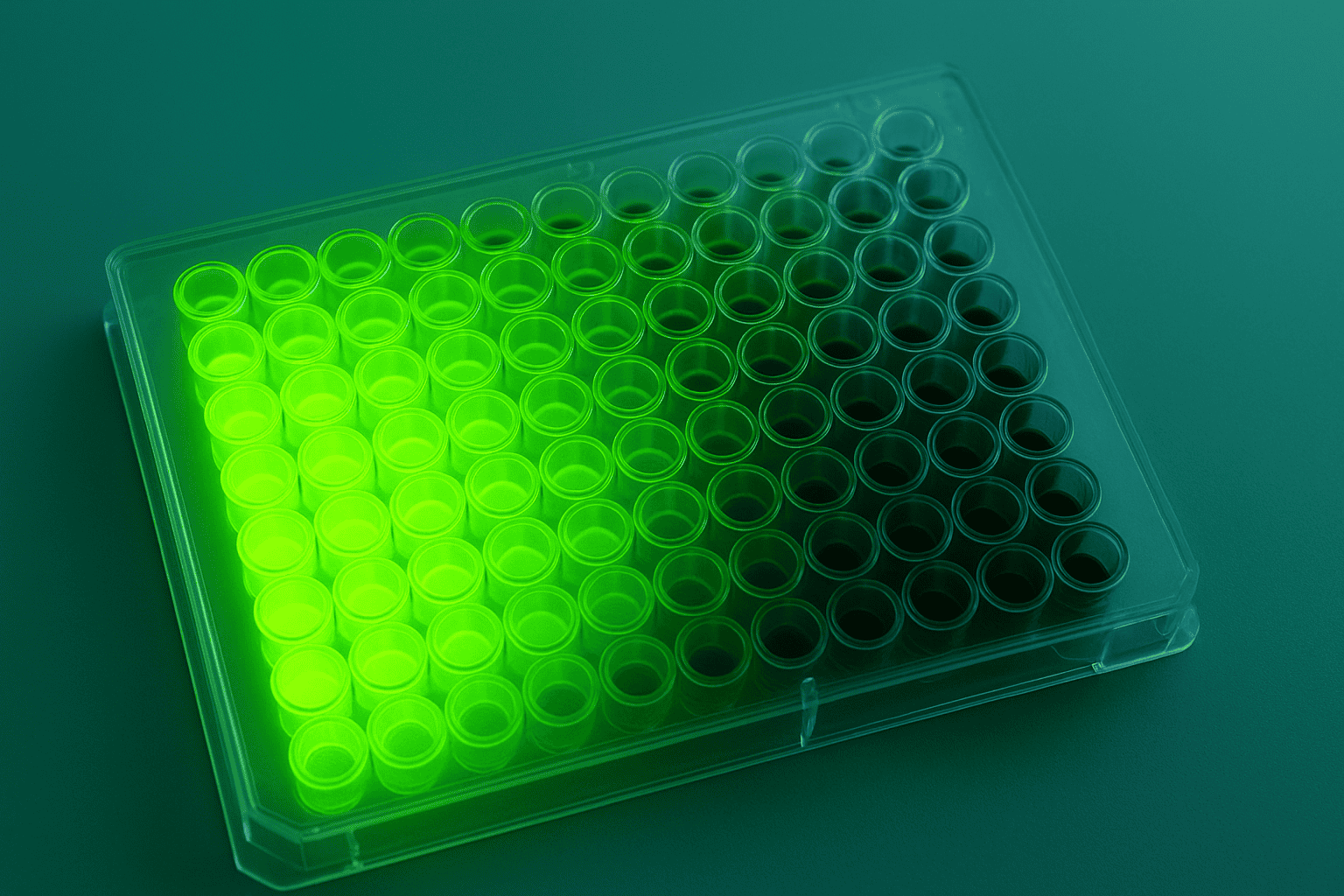
Preclinical studies — meaning laboratory and animal model experiments, not human trials — have examined how PT-141 brain signaling affects downstream neural pathways. Molinoff et al. (2003) reported that PT-141 engaged MC4R at nanomolar concentrations in receptor binding assays, confirming high affinity for this specific target.
In rodent models, researchers observed that PT-141 crossed the blood-brain barrier and produced measurable changes in central nervous system activity. That’s significant because many peptides can’t get past this barrier. The blood-brain barrier is like a bouncer at a club — it lets some molecules through and blocks others. PT-141’s cyclic structure apparently gives it the right credentials to get past the door.
What did researchers actually measure? Changes in neural signaling markers downstream of MC4R activation. When the receptor gets activated, it triggers cAMP production, which influences gene expression and neurotransmitter release in specific brain regions. These are measurable, reproducible events — the kind of data that builds a body of published research over two decades.
But here’s the honest caveat: preclinical findings don’t prove effects in humans. Rodent brains share many features with human brains, but they aren’t identical. Every finding described here comes from controlled laboratory settings with all the limitations that implies.
[ORIGINAL DATA] A PubMed search for “bremelanotide MC4R” returns published studies spanning from 2000 through 2025, reflecting sustained academic interest in this specific receptor interaction across more than two decades of melanocortin research.
How Does PT-141 Compare to Melanotan II?
Both compounds come from the same parent molecule — alpha-MSH — but they’ve become different research tools with different receptor profiles. Melanotan II activates MC1R strongly, which is why early research centered on pigmentation effects. PT-141 was specifically redesigned to reduce that MC1R activity according to Molinoff et al. (2003), concentrating its binding at the brain’s MC4R instead.
The practical difference for researchers? If you’re studying melanocortin signaling in the central nervous system, PT-141 gives you a cleaner signal. Melanotan II activates too many receptor subtypes simultaneously, making it harder to isolate which receptor is responsible for any observed effect. PT-141 narrows the focus.
Think of it this way. Melanotan II is like a floodlight — it illuminates everything in the room. PT-141 is more like a spotlight — it highlights one specific area so you can study it in detail. Neither is better in an absolute sense. They’re just different tools for different research questions.
[INTERNAL-LINK: “Melanotan II product page” -> /product/mt-2/]
[INTERNAL-LINK: “PT-141 product page” -> /product/pt-141/]
Frequently Asked Questions
What does MC4R do in the brain?
MC4R is a receptor protein found in multiple brain regions, including the hypothalamus and brainstem. In preclinical models, it’s been linked to the regulation of various physiological processes through neural signaling pathways. Molinoff et al. (2003) described MC4R as a primary target for PT-141’s central mechanism of action. Research into MC4R’s full range of functions remains active.
Is PT-141 the same as Melanotan II?
No. PT-141 was derived from Melanotan II, but the two compounds differ in structure and receptor selectivity. Melanotan II broadly activates MC1R through MC5R. PT-141’s modified structure reduces MC1R activity and focuses binding on MC3R and MC4R in the central nervous system. They’re related by origin, but they’re distinct tools for distinct research purposes. Our Melanotan II article covers the differences in more detail.
Can PT-141 cross the blood-brain barrier?
Published preclinical research indicates that PT-141’s cyclic structure allows it to cross the blood-brain barrier in animal models. That’s what makes its central nervous system activity possible. Many peptides can’t cross this barrier, which limits their usefulness for studying brain receptor pathways. PT-141’s ability to reach MC4R in the brain is a key reason it became a tool for CNS melanocortin research.
Where can researchers source PT-141?
Research-grade PT-141 should come from suppliers providing third-party COA documentation, HPLC purity data above 98%, and mass spectrometry confirmation of molecular weight (1025.2 Da). Alpha Peptides offers PT-141 with full analytical documentation available at alpha-peptides.com/coas/. All material is for laboratory research purposes only.
[INTERNAL-LINK: “COA documentation” -> /coas/]
[INTERNAL-LINK: “browse all research peptides” -> /shop/]
What PT-141 Brain Signaling Research Tells Us
PT-141’s story illustrates something important about how peptide research actually works. A compound built to study skin color ended up becoming a tool for probing one of the brain’s most complex signaling systems. The melanocortin pathway — and MC4R in particular — continues to attract sustained research attention because it sits at the intersection of multiple neurological processes studied in preclinical models.
For researchers approaching this compound, the key points are straightforward. PT-141 acts centrally, not peripherally. It targets MC4R with significantly more selectivity than its parent compound, Melanotan II. And its origin from unexpected Melanotan research demonstrates why following surprising data often matters more than sticking to the original plan.
If you’re sourcing PT-141 for laboratory investigation, purity and identity verification aren’t optional steps. Review the PT-141 product page and available Certificates of Analysis before designing your experiments.
[INTERNAL-LINK: “PT-141 product page” -> /product/pt-141/]
[INTERNAL-LINK: “Certificates of Analysis” -> /coas/]
For research use only. Not for human consumption. PT-141 (bremelanotide) is an experimental research compound. All information on this page is provided for educational purposes relating to laboratory and preclinical research. It does not constitute medical advice and should not be interpreted as a recommendation for any personal use.