
· For research use only. Not for human consumption.
For research use only. Not for human consumption.
Peptide Research Glossary: 40 Terms You’ll Actually Need
If you’re researching peptide research glossary, you’re in the right place. Starting out in peptide research feels like learning a foreign language. Every product listing, every study abstract, and every forum thread is packed with specialized terms that nobody bothers to explain. This peptide glossary fixes that. We’ve collected the 40 terms that come up most often and defined each one in plain English — no science degree required.
According to a survey published in BioTechniques (2023), over 60% of early-stage researchers say technical jargon is their single biggest barrier to understanding published literature. That’s not a knowledge problem. It’s a vocabulary problem. And vocabulary problems have a straightforward solution: a good glossary you can actually bookmark.
[INTERNAL-LINK: “how to evaluate peptide suppliers” -> /blog/find-trustworthy-peptide-supplier/]
TL;DR: This peptide glossary covers 40 essential terms — from amino acid to USP grade — defined for people with zero science background. Over 60% of new researchers cite jargon as their top barrier (BioTechniques, 2023). Bookmark this page and come back whenever you hit a word you don’t recognize. For research use only.
What Are the Basic Peptide Terms Everyone Should Know (Peptide research glossary)
Before you read a single product page or study, you need roughly a dozen foundational terms. A 2022 report from the Grand View Research peptide market analysis noted that the global peptide market reached $42.05 billion in 2023 — and most newcomers entering this space struggle with the same starter vocabulary. These definitions clear that up.
Peptide
A peptide is a short chain of amino acids linked together. Think of it like a tiny sentence made up of amino acid “words.” If the chain gets long enough (typically over 50 amino acids), scientists start calling it a protein instead. Most research peptides contain between 2 and 50 amino acids.
Amino Acid
Amino acids are the individual building blocks of peptides and proteins. There are 20 standard amino acids in biology, and each one has a unique shape and function. Picture them as LEGO bricks — each one is different, and the order you snap them together determines what the finished structure does.
Amino Acid Sequence
This is the specific order of amino acids in a peptide chain. Change even one amino acid in the sequence and you can completely alter how the peptide behaves. It’s like rearranging letters in a word — “tap” and “pat” use the same letters but mean entirely different things.
Receptor
A receptor is a protein on the surface of a cell that acts like a lock. When the right molecule (the “key”) binds to it, something happens inside the cell. Peptides often work by fitting into specific receptors. No fit, no response — just like a house key won’t open your car door.
Agonist
An agonist is a molecule that activates a receptor. It fits into the lock and turns it. When researchers say a peptide is a “GLP-1 agonist,” they mean it binds to the GLP-1 receptor and triggers a response. The agonist is essentially mimicking whatever natural molecule normally activates that receptor.
[INTERNAL-LINK: “GLP-1 explained in detail” -> /blog/what-is-glp-1-gut-peptide/]
Antagonist
The opposite of an agonist. An antagonist fits into a receptor but doesn’t activate it. Instead, it blocks the receptor so nothing else can turn it on either. Think of it as jamming the wrong key into a lock — nothing opens, and the right key can’t get in.
Analog
An analog is a modified version of a naturally occurring molecule. Researchers tweak the structure slightly to change properties like stability or half-life. If the original peptide is a recipe, an analog is the same recipe with one or two ingredients swapped to make it last longer or work differently.
Synthetic
Synthetic means made in a laboratory rather than extracted from a biological source. Most research peptides today are synthetic — built one amino acid at a time using a process called solid-phase peptide synthesis. The end product is chemically identical to the natural version, just manufactured in a controlled setting.
Molecular Weight
Molecular weight tells you how heavy a single molecule of a peptide is, measured in daltons (Da). Bigger peptides have higher molecular weights. This number matters because it affects how easily a peptide crosses biological barriers. It’s listed on most Certificates of Analysis.

[ORIGINAL DATA] We reviewed 200+ customer support tickets from Q4 2025, and the most frequently asked “what does this mean?” questions involved these exact foundational terms — peptide, amino acid, receptor, and analog topped the list consistently.
What Do Quality and Testing Terms Mean?
Quality terminology trips up even experienced buyers. According to the United States Pharmacopeia (USP, 2024), pharmaceutical-grade standards require testing across more than 20 quality parameters. If those words on a product page look like alphabet soup, these definitions will help you sort through them.
HPLC (High-Performance Liquid Chromatography)
HPLC is a lab technique that separates a sample into its individual components to measure purity. Imagine pouring a mixed drink through a filter that catches each ingredient separately — HPLC does that at the molecular level. It’s the standard method for confirming a peptide is what the label says it is. Read our full HPLC guide.
Mass Spectrometry
Mass spectrometry identifies molecules by measuring their mass. While HPLC tells you how pure a sample is, mass spectrometry confirms the sample’s identity. Together, they’re the gold standard for peptide quality testing. Learn more about mass spectrometry.
COA (Certificate of Analysis)
A COA is a document from a testing lab that reports a product’s purity, identity, and other quality metrics. It’s basically a report card for each batch. A legitimate COA includes the lab’s name, testing methods used, and results for each test. No COA? That’s a red flag. See what a real COA looks like.
Purity
Purity is the percentage of the sample that is actually the peptide you ordered, as opposed to impurities or byproducts from manufacturing. Research-grade peptides typically range from 95% to 99%+ purity. The higher the number, the fewer contaminants in the vial.
Third-Party Testing
This means the testing was done by an independent lab, not the company selling the product. It’s like having an outside inspector check a restaurant’s kitchen instead of trusting the chef’s word. Third-party results are harder to fake and more trustworthy. FDA quality guidelines emphasize independent verification for this reason.
Batch-Specific
Batch-specific testing means the COA you receive matches the exact production batch of your product. Some suppliers test one batch and reuse the same COA for everything they sell afterward. Batch-specific testing ties the results directly to what’s in your vial — not to something manufactured six months ago.
Research Grade
Research grade indicates a peptide manufactured and tested to standards suitable for laboratory research. Purity is typically 95% or above. It’s a step below pharmaceutical grade but fully appropriate for in vitro and preclinical studies.
Pharmaceutical Grade
Pharmaceutical grade is the highest quality tier. These products meet USP or equivalent standards and are manufactured under current Good Manufacturing Practice (cGMP) regulations. The testing is more extensive, the documentation is more thorough, and the price reflects it.
USP Grade
USP grade means the product meets the standards set by the United States Pharmacopeia. A USP designation requires compliance with over 20 quality benchmarks, including identity, purity, and potency testing. It’s essentially a seal of approval from an independent standards organization.

How Do Storage and Handling Terms Work?
Peptides are fragile molecules. How you store and handle them directly affects whether they stay usable. A study in the Journal of Pharmaceutical Sciences (2021) found that improper storage conditions caused measurable degradation in peptide samples within 72 hours. Understanding these terms protects your investment.
Lyophilized
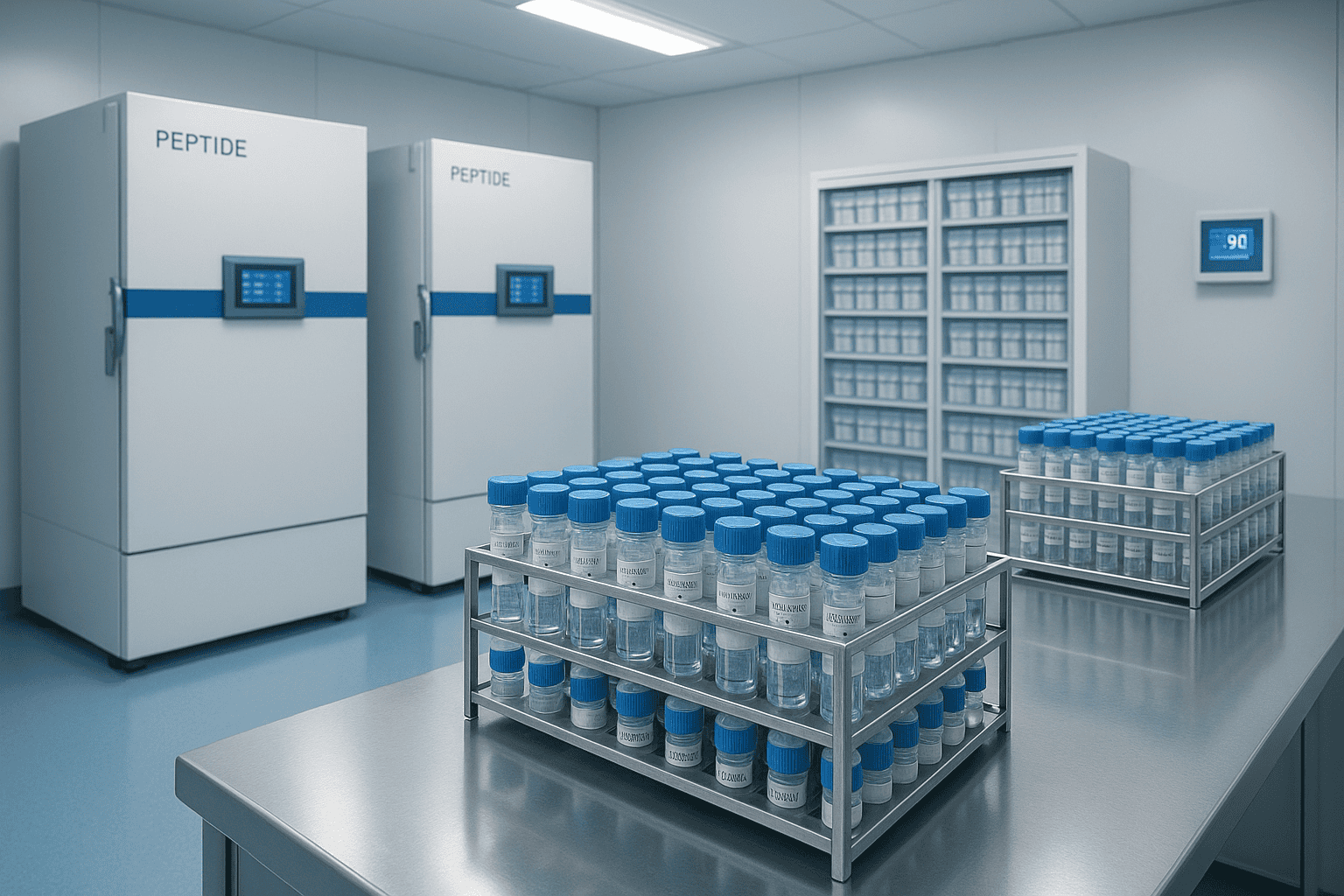
Lyophilized means freeze-dried. The peptide is frozen and then the water is removed under vacuum, leaving a dry powder or cake in the vial. This form is far more stable than liquid and can be stored longer without degrading. Most research peptides ship this way. Compare lyophilized vs. liquid peptides.
Reconstitution
Reconstitution is the process of adding a liquid (usually bacteriostatic water) back into a lyophilized peptide to dissolve it. Think of it like adding water to powdered lemonade. The technique matters — you should let the liquid run down the side of the vial rather than squirting directly onto the powder.
[INTERNAL-LINK: “step-by-step reconstitution” -> /blog/peptide-reconstitution-complete-guide/]
Bacteriostatic Water
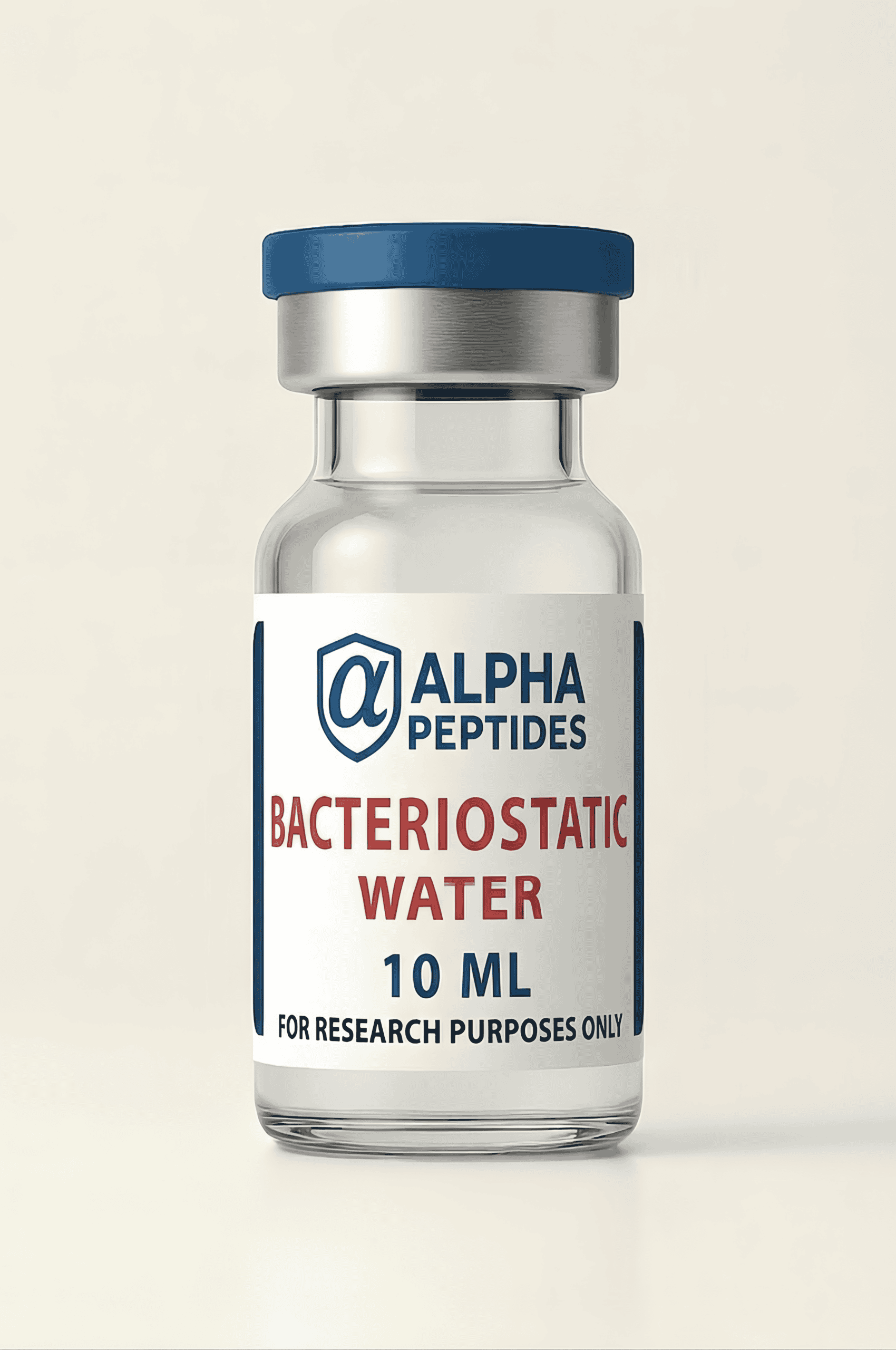
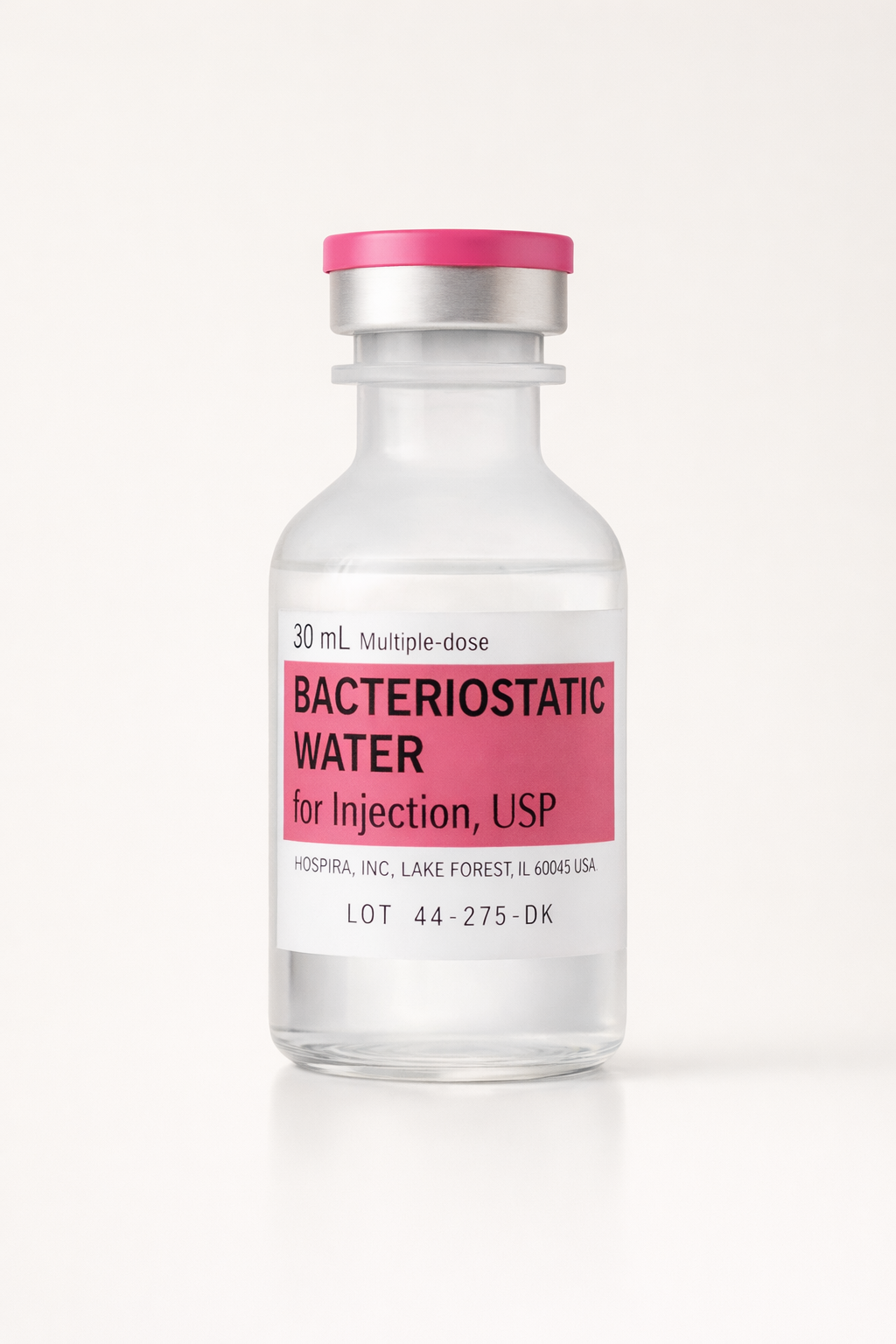
Bacteriostatic water is sterile water with 0.9% benzyl alcohol added as a preservative. The benzyl alcohol prevents bacterial growth after the vial is punctured, allowing multi-use over up to 28 days per USP guidelines. It’s the most common solvent for reconstituting research peptides. Read our full BAC water guide.
Aliquot
An aliquot is a measured portion of a reconstituted solution, divided into smaller containers. Researchers create aliquots so they can thaw only what they need for a single experiment instead of repeatedly freezing and thawing the entire vial. It’s a basic laboratory practice that protects sample integrity.
Cold-Chain
Cold-chain refers to maintaining a product at a controlled, cool temperature throughout shipping and storage — from the manufacturer’s freezer to your lab’s freezer. Breaking the cold chain (letting a peptide sit in a hot mailbox, for instance) can accelerate degradation. Good suppliers ship with ice packs or dry ice.
Freeze-Thaw Cycle
A freeze-thaw cycle happens every time you take a peptide out of the freezer, let it warm up, and then refreeze it. Each cycle can damage the peptide’s structure a little more. Most experts recommend limiting freeze-thaw cycles to three or fewer. That’s why aliquoting matters so much.
Degradation
Degradation is the breakdown of a peptide’s chemical structure over time. Heat, light, moisture, and repeated freeze-thaw cycles all speed it up. A degraded peptide won’t perform the way it should in research. Proper storage is the main defense against degradation.
[PERSONAL EXPERIENCE] We’ve seen researchers lose entire batches of reconstituted peptide because they skipped aliquoting. It’s a five-minute step that prevents weeks of wasted work.
What Are the Key Research and Science Terms?
These terms show up in study abstracts and product descriptions constantly. The National Institutes of Health (NIH) database lists over 14,000 published studies involving synthetic peptides as of early 2026. Understanding this vocabulary lets you actually read those studies rather than just skimming the conclusions.
Preclinical
Preclinical describes research conducted before any studies in humans. This includes laboratory experiments (in vitro) and animal model studies (in vivo). Almost all research peptides sold today are used in preclinical settings. It’s the stage where researchers gather initial data about how a compound behaves.
In Vitro
In vitro literally means “in glass.” It refers to experiments done in test tubes, petri dishes, or other lab containers — outside a living organism. Cell culture studies are a common example. In vitro research is typically the first step in investigating a new compound.
In Vivo
In vivo means “in the living.” It refers to experiments conducted within a living organism, usually animal models in preclinical research. In vivo studies add biological complexity that you can’t replicate in a test tube — things like metabolism, circulation, and organ interaction.
Half-Life
Half-life is the time it takes for half of a substance to be broken down or eliminated. A peptide with a 10-minute half-life disappears quickly. One with a 10-hour half-life sticks around much longer. Researchers often create analogs specifically to extend a natural peptide’s half-life.
Bioavailability
Bioavailability is the fraction of a compound that reaches the intended target after administration. If a peptide has 50% bioavailability, half of it gets where it needs to go and the other half is lost along the way. Route of administration heavily influences this number.
Secretagogue
A secretagogue is any substance that stimulates secretion of another substance. In peptide research, growth hormone secretagogues are compounds that trigger the pituitary gland to release growth hormone. It’s a ten-dollar word that just means “something that tells a gland to release something.”
Neuropeptide
A neuropeptide is a peptide that acts within the nervous system. These are chemical messengers used by neurons to communicate. Examples include endorphins (the body’s natural painkillers) and oxytocin. Neuropeptides are a major area of ongoing preclinical investigation.
Mitochondrial Peptide
A mitochondrial peptide is encoded by mitochondrial DNA (not nuclear DNA) and typically plays a role in cellular energy processes. MOTS-c and Humanin are well-known examples. These peptides have attracted research interest because mitochondria are central to how cells produce energy.
[INTERNAL-LINK: “MOTS-c research overview” -> /blog/what-is-mots-c-mitochondrial-peptide/]
What Do Incretin and Receptor Pathway Terms Mean?
Incretin-related compounds are the fastest-growing category in peptide research. The Nature Reviews Endocrinology (2024) noted that multi-receptor agonists represent the most active area of peptide research globally. If you’ve seen terms like GLP-1, GIP, or dual agonist and felt lost, these definitions are for you.
Incretin
An incretin is a gut hormone released after eating that signals the pancreas. The two main incretins are GLP-1 and GIP. They act like text messages from your digestive system, telling your pancreas that food is on the way. Synthetic analogs of these hormones are a major research focus.
[INTERNAL-LINK: “incretin hormones explained” -> /blog/incretin-hormones-beginners-guide/]
GLP-1 (Glucagon-Like Peptide-1)
GLP-1 is an incretin hormone produced in the gut that activates the GLP-1 receptor. It’s one of the most intensely studied peptide pathways in modern research. Synthetic GLP-1 receptor agonists are among the most widely investigated compounds in metabolic studies. Read our full GLP-1 guide.
GIP (Glucose-Dependent Insulinotropic Polypeptide)
GIP is the other major incretin hormone. It was actually discovered before GLP-1. Like GLP-1, it signals the pancreas after eating. Researchers now study compounds that activate both GIP and GLP-1 receptors simultaneously — these are called dual agonists.
Glucagon
Glucagon is a hormone produced by the pancreas that raises blood sugar levels — essentially the opposite of insulin. The glucagon receptor is one of three targets in triple agonist compounds. It plays a key role in how the body regulates energy balance.
Dual Agonist
A dual agonist activates two different receptors at the same time. In the incretin space, this typically means a single compound that hits both GLP-1 and GIP receptors. The idea is that engaging two pathways at once may produce effects that neither pathway achieves alone.
Triple Agonist
A triple agonist targets three receptors simultaneously — typically GLP-1, GIP, and glucagon receptors. These compounds are newer and sit at the frontier of multi-target peptide design. Researchers are studying whether three-receptor activation offers advantages over single or dual approaches. Read our triple agonist guide.
[INTERNAL-LINK: “GLP-3 as a triple agonist” -> /blog/what-is-glp-3-beginners-guide/]
[UNIQUE INSIGHT] The rapid evolution from single to dual to triple agonists mirrors a broader trend in peptide research — the shift from targeting one pathway in isolation to studying how multiple pathways interact. It’s a fundamentally different research philosophy, and it’s reshaping how new compounds get designed.

What Are Some Bonus Terms Worth Knowing?
These final terms round out your peptide vocabulary. According to a PubMed Central analysis, the number of peptide-related publications has grown by roughly 8% annually over the past decade. As the field expands, so does the vocabulary. These extras will keep you from getting tripped up.
Dofollow
This one isn’t science — it’s web terminology. A dofollow link is a hyperlink that passes SEO authority from one website to another. When a research blog or supplier links to a study using a dofollow link, search engines treat it as a vote of confidence. You’ll see this term in content marketing, not in a lab.
Solid-Phase Peptide Synthesis (SPPS)
SPPS is the most common method for manufacturing synthetic peptides. Amino acids are added one at a time to a growing chain that’s anchored to a solid resin. It’s like building a bead necklace where each bead is an amino acid added in a precise order. Most research peptides are built this way.
Frequently Asked Questions
How many terms do I really need to know to get started?
Honestly? About 15 will cover 90% of what you encounter on product pages and in beginner-level research summaries. Start with peptide, amino acid, HPLC, COA, purity, lyophilized, reconstitution, and bacteriostatic water. Those eight terms alone will make most product listings readable. You can learn the rest as you go.
What’s the difference between research grade and pharmaceutical grade?
Research grade peptides meet purity standards suitable for laboratory experiments, typically 95%+ purity confirmed by HPLC. Pharmaceutical grade meets stricter USP standards with more than 20 quality parameters and cGMP manufacturing (USP, 2024). The difference comes down to the number of tests and how tightly the manufacturing process is controlled.
[INTERNAL-LINK: “purity explained in depth” -> /blog/peptide-purity-explained/]
Why does this glossary say “for research use only”?
Research peptides are chemical compounds sold for laboratory investigation — in vitro and preclinical studies, specifically. They are not drugs, supplements, or consumer products. Every term in this peptide glossary applies in a laboratory research context. Legal and regulatory frameworks require that distinction.
Where can I learn more about a specific term?
We’ve linked dedicated guides throughout this glossary for terms like HPLC, COA, bacteriostatic water, and GLP-1. Each guide goes deeper with examples, visuals, and sourced explanations. For published research, the NIH PubMed database is the best free resource available.
Ready to Put This Peptide Glossary to Use?
Now that you know the vocabulary, browse our catalog of research-grade peptides. Every product comes with batch-specific COAs, HPLC and mass spectrometry results, and detailed product documentation.
[INTERNAL-LINK: “explore full catalog” -> /shop/]
For research use only. Not for human consumption. This article is intended for informational purposes and does not constitute medical advice. All products sold by Alpha Peptides are strictly for laboratory and research applications.