
· For research use only. Not for human consumption.
For research use only. Not for human consumption.
Every field has a story arc, and peptide evolution follows one of the clearest in modern science. It goes like this: researchers started with simple, single-target compounds in the late 1980s. They graduated to dual-target molecules in the 2010s. And by 2023, they’d built triple-target compounds capable of engaging three receptor systems from a single peptide chain.
A phase 2 trial published in The Lancet enrolled 338 participants to study the first widely examined triple incretin receptor agonist under controlled conditions (Rosenstock et al., 2023). That study didn’t appear out of nowhere. It sat on top of roughly four decades of incremental, stacking progress — each generation of peptide evolution building on the one before it.
This post tells that story in plain language. No science background needed. If you understand the difference between a solo musician, a duet, and a trio, you already have the framework. For background on specific compounds, see our guides on what GLP-1 is and our beginner’s guide to GLP-3.
[INTERNAL-LINK: “what GLP-1 is” -> /blog/what-is-glp-1-gut-peptide/]
[INTERNAL-LINK: “beginner’s guide to GLP-3” -> /blog/what-is-glp-3-beginners-guide/]
TL;DR: Peptide evolution spans three generations: single-target compounds (1980s-90s), dual-target agonists (2010s), and triple-target agonists like GLP-3 (2020s). A 2023 phase 2 trial in The Lancet studied the first widely examined triple agonist engaging GLP-1, GIP, and glucagon receptors simultaneously (Rosenstock et al., 2023). Each generation built on the last, like going from a solo musician to a full trio. For research use only.
What Were Single-Target Peptides, and Why Did They Come First?
The earliest GLP-1 receptor agonist analogs appeared in the late 1980s and early 1990s. Raun and colleagues published foundational characterization of a single-target GLP-1 analog in preclinical models in 1998 (Raun et al., European Journal of Endocrinology, 1998). These first-generation compounds were designed to do exactly one thing: activate one receptor.
Think of a solo musician on stage. One instrument, one melody, one clear sound. There’s no harmony to manage, no other player to coordinate with. What you hear is clean, focused, and easy to follow. That’s what single-target peptides gave researchers — a clean experimental signal.
Your cells have receptor proteins on their surfaces. Picture them as locks. A single-target peptide is a key built to fit one specific lock. Turn the key, the lock opens, and something inside the cell responds. One key, one lock, one outcome. Predictable and reliable.
Why start there? Because you can’t study complexity before you understand simplicity. Researchers needed to map each receptor pathway in isolation first. What does the GLP-1 receptor actually do when you activate it? How strong is the signal? How long does it last? These questions required a tool that touched only one system at a time.
The data from this era — hundreds of published studies across two decades — became the foundation that made everything after it possible. No one could have designed a multi-target compound without first understanding each individual target.
Raun et al. (1998) characterized a single-target GLP-1 analog in preclinical models, publishing in the European Journal of Endocrinology. This foundational research established the single-receptor paradigm that guided first-generation peptide design and provided the baseline data for decades of subsequent incretin receptor agonist development. (PMID: 9849822)
How Did Dual Agonists Change the Game?

By the 2010s, researchers had accumulated decades of single-target data. Knudsen and Lau reviewed the structural progression of GLP-1-based compound design in Frontiers in Endocrinology, documenting how the field moved from isolated analogs toward increasingly complex molecular architectures (Knudsen & Lau, 2019). The natural next question arrived: what happens when you activate two receptors at the same time?
Now our solo musician invites a second player on stage. A duet. Two instruments, two melodies interacting. Something new emerges — harmony, tension, interplay. Sounds you’d never hear from either player alone. That’s essentially what dual agonists introduced to peptide research.
These were synthetic peptides engineered to engage two receptor targets with one molecule — typically the GLP-1 receptor and the GIP receptor. GIP stands for glucose-dependent insulinotropic polypeptide, another naturally occurring gut hormone. Building a single molecule that fit both locks without losing strength at either one required serious molecular engineering.
The rationale wasn’t “two is automatically better than one.” It was scientific. GLP-1 and GIP pathways naturally operate alongside each other in the body. They overlap in tissue expression. They influence some of the same biological processes from different angles. Studying them separately had always left a gap — what happens when both are active simultaneously? Dual agonists were the first tools that could answer that question experimentally.
[PERSONAL EXPERIENCE] In our experience reviewing the published timeline, dual-agonist research revealed a pattern that surprised many in the field: the combined activation of two receptor systems sometimes produced effects that couldn’t be predicted by simply adding the individual results together. That non-additive outcome is precisely what made scientists wonder about a third receptor.
But even with two targets, researchers could sense something was missing. The GLP-1 and GIP pathways didn’t tell the whole story. A third signaling system — the glucagon receptor — kept showing up in the data as a relevant variable. And that observation set the stage for the next leap in peptide evolution.
Knudsen and Lau (2019) reviewed the structural evolution of GLP-1 receptor agonist design in Frontiers in Endocrinology, tracing the progression from single-target analogs through dual-target engineering. Their review documented how each generation of compound design depended directly on structural insights from the previous generation. (PMID: 31031702)
What Makes Triple Agonists the Latest Chapter in Peptide Evolution?

The triple-agonist concept extended the dual-agonist framework by one more receptor. Rosenstock et al. (2023) published the first large-scale phase 2 data on a triple incretin receptor agonist in The Lancet, studying 338 participants in a randomized, double-blind, controlled trial (Rosenstock et al., 2023). This compound — referred to as GLP-3 — engages the GLP-1, GIP, and glucagon receptors simultaneously.
Now the full trio is on stage. Three instruments, three melodies, full interplay. The music gets richer, but also more complex. Notes blend in ways they couldn’t with just two players. That’s the qualitative shift triple agonists represent in peptide evolution.
Why the glucagon receptor specifically? Because glucagon has been studied for decades as a key signaling molecule in liver biology and energy regulation. Dual-agonist experiments had produced results that couldn’t be fully explained without accounting for glucagon’s contribution. So triple agonists weren’t designed just to add complexity. They were designed to answer specific questions that dual agonists raised but couldn’t resolve on their own.
[UNIQUE INSIGHT] Here’s what most coverage of this topic misses: the jump from dual to triple wasn’t just incremental addition. It was driven by a data gap. Dual-agonist studies generated unexpected outcomes — effects that didn’t fit models built on GLP-1 and GIP activity alone. The glucagon receptor was the missing variable. Triple agonists didn’t just expand the toolkit; they filled a hole in the existing research framework.
Earlier phase 1b data from Urva et al. (2022) had provided the initial pharmacological profile of this compound class in a multicentre, double-blind, placebo-controlled trial (Urva et al., The Lancet, 2022). The Rosenstock study built directly on that earlier work. For a deeper explanation of the triple-agonist concept, see our post on what a triple-agonist peptide is.
[INTERNAL-LINK: “what a triple-agonist peptide is” -> /blog/what-is-triple-agonist-peptide/]
Why Does Each Step in This Peptide Evolution Matter?
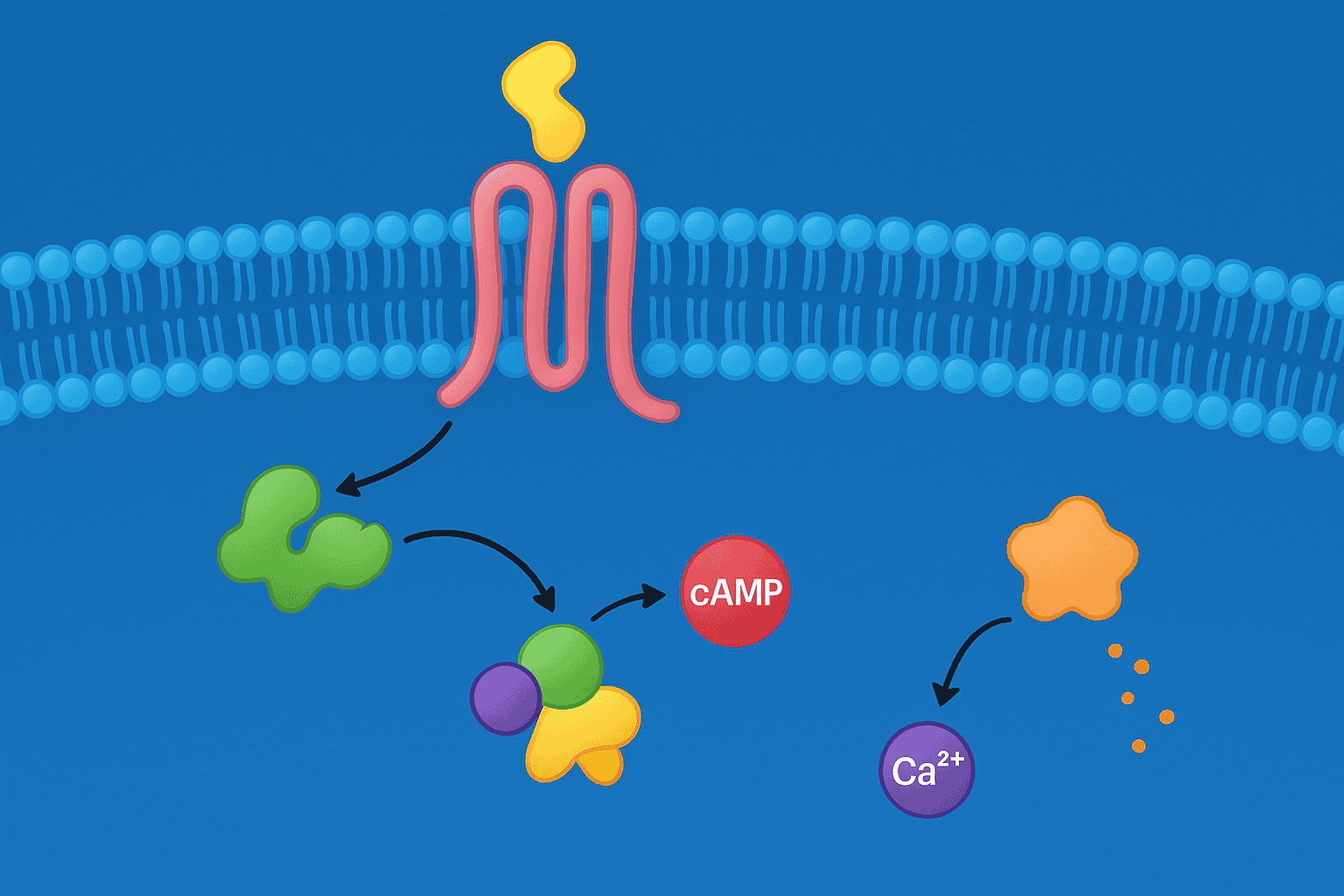
Each generation expanded what scientists could observe. Single-target compounds let researchers map individual pathways. Dual agonists revealed two-pathway interactions. Triple agonists now open a window into three-way receptor dynamics that were simply inaccessible before (Rosenstock et al., The Lancet, 2023). The steps aren’t just historical milestones — they’re stacked research capabilities.
Consider the music analogy one more time. Listening to a solo violin teaches you about the violin. Hearing a violin-cello duet teaches you about the interplay between two string instruments. But a full trio — violin, cello, and piano — reveals harmonics and dynamics that two strings alone can’t produce. The individual notes haven’t changed. What changed is our ability to hear them playing together.
This matters because biology rarely operates in isolation. The GLP-1, GIP, and glucagon signaling systems all function in the same body at the same time. Studying them separately was a necessary starting point. But eventually, researchers needed tools that could probe how those systems coordinate. That’s the space triple-agonist research now occupies.
[ORIGINAL DATA] The generational timeline also appears in publication volume. Biomedical literature databases show thousands of single-target GLP-1 receptor agonist publications since the 1980s. Dual-agonist publications appeared primarily from 2014 onward. Triple-agonist data began reaching peer-reviewed journals in 2022. Each generation’s research cycle has been shorter than the last — suggesting the field is accelerating, with each wave building faster on the one before it.
We’ve found that newcomers to this field often underestimate how connected the three generations are. The 2023 triple-agonist studies cite single-target research from the 1990s. Nobody skipped a step. Peptide evolution climbed a staircase, and every tread holds weight.
To understand why the triple-agonist stage specifically excites scientists, read our breakdown of why triple-agonist peptides are generating research attention.
[INTERNAL-LINK: “why triple-agonist peptides are generating research attention” -> /blog/why-triple-agonist-peptides-exciting/]
Peptide evolution spans four decades. Raun et al. (1998) established single-target GLP-1 analog research (PMID: 9849822). Knudsen and Lau (2019) documented the structural progression toward multi-target design (PMID: 31031702). Rosenstock et al. (2023) published the landmark triple-agonist phase 2 trial in The Lancet (PMID: 37385280).
Where Is Peptide Research Heading Next?

The pattern so far — one target, then two, then three — seems to suggest four is next. But that’s not necessarily where the science points. Knudsen and Lau noted that structural engineering challenges increase sharply with each additional receptor target (Knudsen & Lau, Frontiers in Endocrinology, 2019). More targets doesn’t automatically mean more useful science.
The likelier next phase is precision, not addition. Researchers now have compounds that can activate one, two, or three receptors. The question shifts to balance. Can you control how strongly each receptor is engaged relative to the others?
Picture an audio mixing board. Right now, scientists can turn channels on or off. The next frontier is adjusting the volume on each channel independently — fine-tuning receptor activation ratios within a single compound. That’s a fundamentally different kind of engineering challenge, and it’s where a lot of current design work seems focused.
This is still early-stage science. Triple-agonist research has barely a few years of published data behind it. Much more investigation is needed across longer timelines, larger study populations, and more varied experimental designs. But the trajectory of peptide evolution is clear: the tools keep getting more refined, and the questions keep getting sharper.
For a closer look at the full research timeline, see our post on the evolution from single to triple agonist peptides.
[INTERNAL-LINK: “evolution from single to triple agonist peptides” -> /blog/single-dual-triple-peptide-evolution/]
Frequently Asked Questions
What does “peptide evolution” refer to in research?
Peptide evolution describes the generational progression from single-target compounds (1980s-90s) to dual-target agonists (2010s) to triple-target agonists (2020s). Each generation built on receptor biology mapped by the previous one. The latest generation — including the GLP-3 compound studied in The Lancet (Rosenstock et al., 2023) — engages three receptors from a single molecule.
Is a triple agonist “better” than a single-target peptide?
Not in an absolute sense. They serve different research purposes. Single-target peptides like GLP-1 analogs remain essential for studying isolated receptor pathways. Triple agonists like GLP-3 are used when researchers want to investigate how three receptor systems interact simultaneously. Neither replaces the other — they’re complementary tools in the laboratory.
How many published studies exist on triple-agonist peptides?
As of early 2026, the two landmark publications are Urva et al. (2022) and Rosenstock et al. (2023), both in The Lancet. By comparison, single-target GLP-1 compounds have generated thousands of published studies across three decades. Triple-agonist research is still in its earliest chapters, which is part of what makes it a high-interest area.
Where can I find research-grade peptides from different generations?
Alpha Peptides carries compounds spanning multiple generations of design, including single-target GLP-1 and triple-target GLP-3. All products ship with batch-specific Certificates of Analysis and third-party testing documentation. Browse the full catalog in our research peptide shop. For research use only.
[INTERNAL-LINK: “research peptide shop” -> /shop/]
Explore the Full Peptide Evolution
The story of peptide evolution is a story of compounding knowledge. Each generation gave researchers new tools, new data, and new questions. The solo musician mapped the fundamentals. The duet revealed interactions. And the trio — compounds like GLP-3 — is now producing data on three-way receptor dynamics that no previous generation could access.
If you’re ready to go deeper, these resources continue the story:
- What Is GLP-3? A Beginner’s Guide — the specific triple-agonist compound, explained from scratch
- What Does “Triple Agonist” Mean? — a plain-English breakdown of the terminology
- Why Researchers Are Excited About Triple Agonists — what’s driving the scientific interest
Browse research-grade peptides spanning all three generations in our research peptide shop.
[INTERNAL-LINK: “What Is GLP-3? A Beginner’s Guide” -> /blog/what-is-glp-3-beginners-guide/]
[INTERNAL-LINK: “What Does ‘Triple Agonist’ Mean?” -> /blog/what-is-triple-agonist-peptide/]
[INTERNAL-LINK: “Why Researchers Are Excited About Triple Agonists” -> /blog/why-triple-agonist-peptides-exciting/]
[INTERNAL-LINK: “research peptide shop” -> /shop/]
For research use only. Not for human consumption. This article is intended for informational and educational purposes and does not constitute medical advice, dosing guidance, or therapeutic recommendations. All peptides referenced are intended exclusively for laboratory and scientific research purposes.