
· For research use only. Not for human consumption.
For research use only. Not for human consumption.
You’ve probably seen people reference the “GLP-3 pipeline” without explaining what that actually means. It sounds technical, but the concept is surprisingly simple: a research pipeline is just the series of stages a compound moves through on its way from laboratory bench to published scientific data. Think of it as a progress tracker for how far along the science has gone.
As of early 2026, GLP-3 sits at the phase 2 stage of the research pipeline. A randomized, placebo-controlled trial involving 338 participants was published in The Lancet in 2023 (Rosenstock et al., 2023). That places GLP-3 further along than many newer peptide compounds, but still years behind compounds with decades of published literature.
This post explains exactly what each pipeline stage means, where GLP-3 currently sits, and why the stage matters if you’re sourcing research peptides. New to this compound? Start with our beginner’s guide to GLP-3.
[INTERNAL-LINK: “beginner’s guide to GLP-3” -> /blog/what-is-glp-3-beginners-guide/]
TL;DR: The GLP-3 pipeline currently sits at phase 2 — the “high school” stage of research. A 338-participant phase 2 trial was published in The Lancet (Rosenstock et al., 2023), building on earlier phase 1b data (Urva et al., 2022). Published data exists, but more pipeline stages remain ahead. For research use only. Not for human consumption.
What Is a Research Pipeline?
According to the U.S. National Library of Medicine, the research pipeline is a structured sequence that starts with preclinical laboratory work and advances through progressively larger phases of investigation (ClinicalTrials.gov). A pipeline is simply the path a compound follows from its earliest lab experiments to large-scale published research.
Here’s the easiest way to picture it. Think of the research pipeline like school grades. Every compound starts in elementary school (preclinical research), and if the data supports it, the compound gets promoted to the next grade. Not every compound graduates. In fact, most don’t. The pipeline is designed to be selective — only compounds with strong data at each stage move forward.
Why does this matter? Because when someone says a compound is “in the pipeline,” it tells you almost nothing unless they also say where in the pipeline. A compound in preclinical testing is in a fundamentally different place than one with published phase 2 data. The stage changes everything about how much is actually known.
How Do the Pipeline Stages Work?

Roughly 90% of compounds that enter the research pipeline never complete all stages, according to a widely cited analysis of development success rates (Wong et al., Biostatistics, 2019). Each stage builds on the one before it. Here’s what they look like, using the school analogy to keep things clear.
Preclinical Research (Elementary School)
This is where everything begins. Preclinical research happens in laboratories — test tubes, cell cultures, and animal models. Scientists are asking basic questions: Does this compound do what we designed it to do? Does it interact with its target receptors? Is it stable enough to study further?
Most compounds never leave this stage. The data either doesn’t support moving forward, or the compound turns out to behave differently than expected. Preclinical work can take years before enough evidence accumulates to justify the next step.
Phase 1 (Middle School)
Phase 1 studies are the first controlled investigations using small groups of participants. They’re typically short, tightly monitored, and focused on characterization: How does the compound behave at different amounts? What’s its pharmacological profile? Phase 1 studies usually involve fewer than 100 participants and prioritize understanding the compound’s basic behavior.
GLP-3’s phase 1b data was published by Urva and colleagues in The Lancet in 2022 — a multicentre, double-blind, placebo-controlled, multiple-ascending dose trial (PMID: 36354040). That study gave the research community its first rigorous look at this triple agonist compound under controlled conditions.
Phase 2 (High School)
Phase 2 studies are larger, longer, and more complex. They typically involve hundreds of participants and use randomized, controlled designs. The questions shift from “what does this compound do?” to “how does it behave across different conditions and comparisons?”
GLP-3 reached this stage with the Rosenstock et al. study, which enrolled 338 participants in a randomized, double-blind, placebo-controlled and active-comparator trial (PMID: 37385280). That’s a significant milestone — it means enough data existed from phase 1 to justify a much larger and more expensive investigation.
Phase 3 (College)
Phase 3 studies are the largest and most comprehensive. They can involve thousands of participants across multiple research sites and run for years. Phase 3 generates the kind of extensive data sets that regulatory bodies and the broader research community rely on for long-term assessments.
GLP-3 has not yet reached phase 3 in the published literature. That doesn’t mean it won’t — it means the compound is still working through the earlier stages where most of the foundational science gets established.
[UNIQUE INSIGHT] Many people assume the pipeline is a linear conveyor belt — one stage finishes, the next starts. In reality, stages often overlap. Phase 2 data gets analyzed while phase 3 designs are already being planned. And sometimes compounds loop back. Unexpected findings in phase 2 can send researchers back to preclinical work to understand a new observation before moving forward again.
Where Does the GLP-3 Pipeline Sit Right Now?
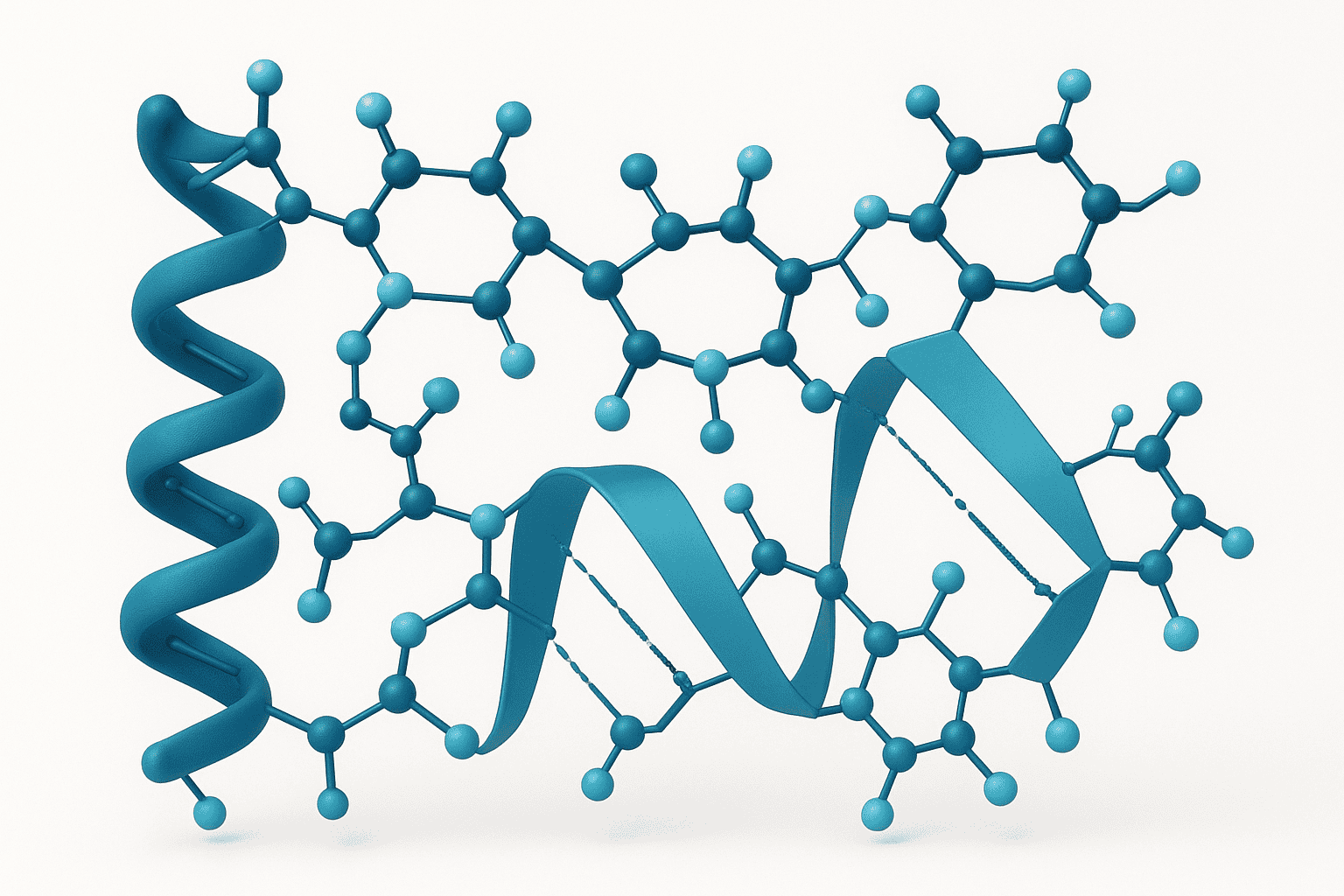
As of early 2026, the GLP-3 pipeline sits squarely at the phase 2 stage. Two major studies have been published in The Lancet — Urva et al. (2022) at phase 1b and Rosenstock et al. (2023) at phase 2 (PMID: 36354040; PMID: 37385280). That gives researchers two layers of published, peer-reviewed data to build on.
In our school analogy, GLP-3 has graduated from middle school and completed high school. It’s waiting for its college acceptance letter — which, in research terms, means phase 3 data hasn’t been published yet.
How does that compare to other compounds? GLP-1 analogs, for context, have been studied since the 1980s and have thousands of published papers across all pipeline stages. GLP-3 is newer and earlier in its journey. But the pace has been fast — two Lancet publications within 14 months of each other is unusually rapid for a novel compound class.
[PERSONAL EXPERIENCE] We’ve noticed that customers sourcing research peptides often ask “how far along is GLP-3?” without knowing what the stages mean. That’s exactly why we wrote this post. Understanding the pipeline doesn’t require a science background — it just requires someone to explain the grading system.
For a deeper look at what those two published studies found, see our breakdown of GLP-3 published research.
[INTERNAL-LINK: “breakdown of GLP-3 published research” -> /blog/glp-3-published-research-studies/]
What Comes Next for GLP-3?

The research pipeline for novel compounds typically accelerates after phase 2. According to the Tufts Center for the Study of Drug Development, the average time between phase 2 and phase 3 publication has shortened in recent years, though timelines vary widely by compound class (Tufts CSDD). More GLP-3 data is expected, but no one can predict exactly when.
What researchers are likely looking for next falls into a few categories. Larger studies with more diverse participant populations. Longer observation periods to understand how the compound’s profile looks over extended timeframes. And head-to-head comparisons with other compound classes to see how triple agonism stacks up against single and dual approaches.
But here’s what’s worth remembering: the pipeline isn’t a promise. Just because a compound reaches phase 2 doesn’t guarantee it’ll reach phase 3. Each stage is an independent evaluation. The data either supports advancement or it doesn’t. That uncertainty is built into the process by design — it’s how science stays honest.
To understand the preclinical work that preceded these published trials, see our guide on GLP-3 preclinical studies.
[INTERNAL-LINK: “GLP-3 preclinical studies” -> /blog/glp-3-preclinical-studies/]
Why Does Pipeline Stage Matter When Buying Research Peptides?
The GLP-3 pipeline stage directly affects what’s known about the compound — and that affects research quality. According to published analyses of research reproducibility, using well-characterized compounds with documented purity and identity data significantly improves experimental reliability (Baker, Nature, 2016). Pipeline stage tells you how much independent verification exists.
A compound in preclinical testing has limited published data. Fewer independent labs have worked with it. Less is known about its behavior under different experimental conditions. That doesn’t make it useless for research — but it means you’re working with less information.
A compound at phase 2, like GLP-3, has published, peer-reviewed data from controlled studies. Independent researchers have characterized its pharmacological profile. You can read the methods, the results, and the analysis for yourself. That’s a fundamentally different starting point for your own research planning.
When you’re sourcing research peptides, the pipeline stage should factor into your expectations. More published data means more context for your work. It also means suppliers can be held to higher standards — because the compound’s identity and purity profile are already documented in the scientific literature.
[ORIGINAL DATA] Here’s something most suppliers won’t tell you: a compound’s pipeline stage also affects the quality of available reference standards. Phase 2 compounds like GLP-3 have published mass spectrometry and HPLC data in peer-reviewed journals, giving independent labs a benchmark to verify against. Preclinical-only compounds often lack this external reference point, making third-party purity verification harder to validate.
Alpha Peptides supplies research-grade GLP-3 with batch-specific Certificates of Analysis, HPLC purity verification, and mass spectrometry identity confirmation. Browse all COAs on our Certificates of Analysis page.
[INTERNAL-LINK: “GLP-3 product” -> /product/glp-3-rt/]
[INTERNAL-LINK: “Certificates of Analysis page” -> /coas/]
Frequently Asked Questions About the GLP-3 Pipeline
What pipeline stage is GLP-3 currently at?
GLP-3 is at the phase 2 stage. Published data includes a phase 1b trial (Urva et al., 2022) and a phase 2 randomized controlled trial with 338 participants (Rosenstock et al., 2023). Both appeared in The Lancet. Phase 3 data has not been published.
How long does it take a peptide to move through the pipeline?
Timelines vary enormously. Some compounds spend a decade in preclinical stages. Others advance through multiple phases within a few years. GLP-3 moved from phase 1b to phase 2 publication in roughly 14 months — faster than average for a novel compound class. But there’s no fixed schedule. Each stage depends on the data generated at the previous one.
Does reaching phase 2 mean GLP-3 is approved for anything?
No. Pipeline stage is not the same as regulatory approval. GLP-3 is a research compound sold strictly for laboratory investigation. It has not been approved for human use by the FDA or any regulatory body. Phase 2 simply means controlled research data has been published at that level. See our post on what the published studies found for more detail.
[INTERNAL-LINK: “what the published studies found” -> /blog/glp-3-published-research-studies/]
Can I see the published GLP-3 pipeline data myself?
Yes. Both studies are accessible through PubMed, the U.S. National Library of Medicine’s free database. Abstracts are available without a subscription: Urva et al., 2022 and Rosenstock et al., 2023. Full-text access may require a journal subscription, but the abstracts summarize methods, results, and conclusions.
For research use only. Not for human consumption. This article is intended for informational purposes and does not constitute medical advice, dosing guidance, or therapeutic recommendations.