
· For research use only. Not for human consumption.
For research use only. Not for human consumption.
If you’ve been reading about research peptides, you’ve probably seen GLP-3 vs GLP-1 mentioned in the same breath. They share a name prefix, they belong to the same peptide family, and they both target something called the GLP-1 receptor. So are they basically the same thing? Not even close.
These two compounds differ in almost every way that matters to researchers. One is based on a natural hormone your gut makes after every meal. The other is a fully synthetic molecule engineered in a lab to do something no natural hormone does. Understanding the GLP-3 vs GLP-1 distinction isn’t just academic trivia — it’s essential context for anyone following peptide research.
This guide breaks down the differences in plain English. No chemistry degree required. We’ll cover what each peptide targets, how they’re built, where the research stands, and why scientists study them for different reasons. If you need background on either peptide individually, start with our beginner’s guide to GLP-3 or our explainer on what GLP-1 actually is.
[INTERNAL-LINK: “beginner’s guide to GLP-3” -> /blog/what-is-glp-3-beginners-guide/]
[INTERNAL-LINK: “explainer on what GLP-1 actually is” -> /blog/what-is-glp-1-gut-peptide/]
TL;DR: GLP-1 is a single-receptor peptide analog based on a natural gut hormone with decades of published research behind it. GLP-3 is a triple incretin receptor agonist analog — a fully synthetic compound that targets three receptors simultaneously (GLP-1, GIP, and glucagon). A 2023 phase 2 trial in The Lancet provided early data on GLP-3’s triple-receptor approach (Rosenstock et al., 2023). Both are sold for research use only. Not for human consumption.
What Does GLP-3 vs GLP-1 Really Come Down To?
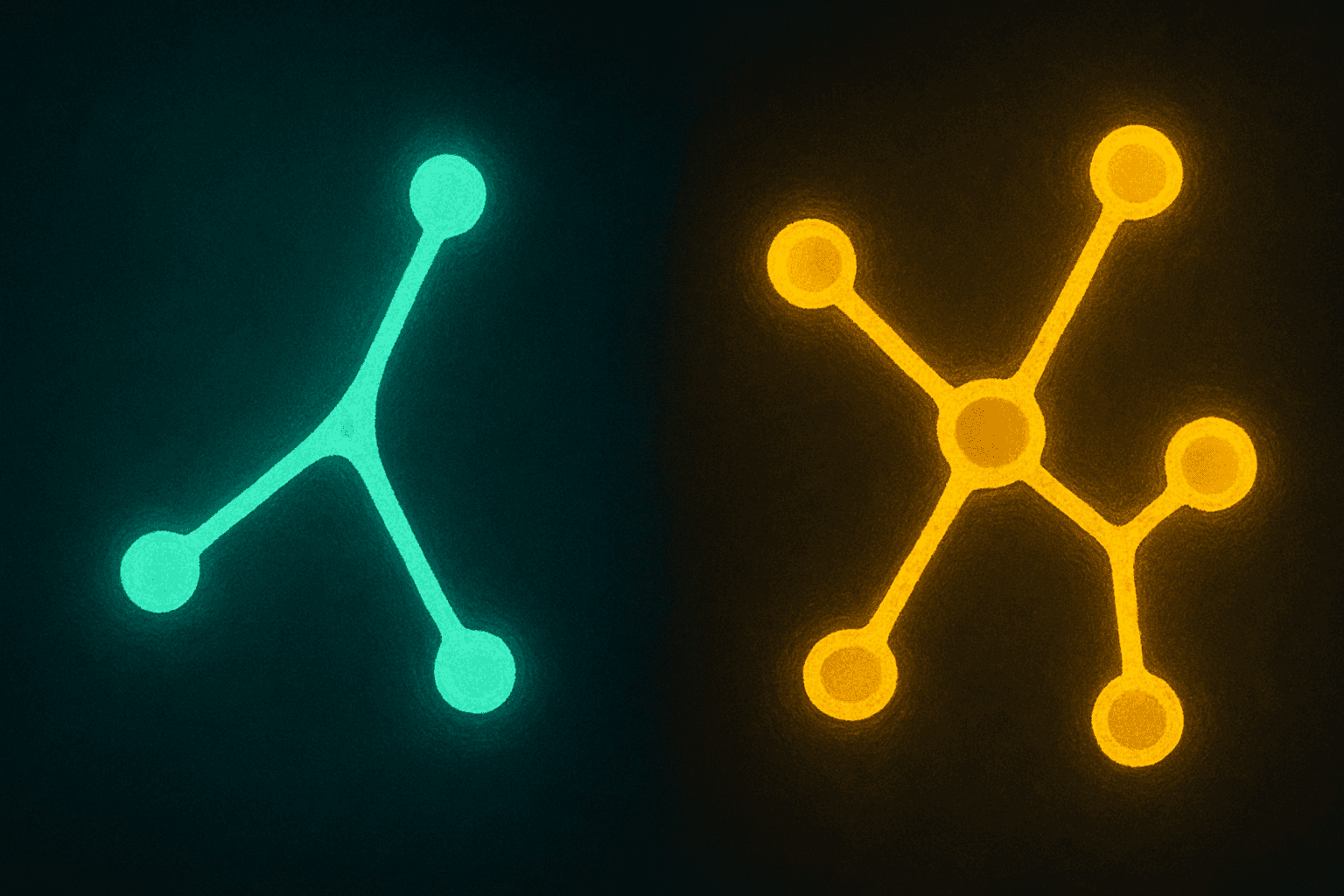
The core difference between GLP-3 vs GLP-1 is receptor count. GLP-1 analogs target one receptor. GLP-3 targets three. A 2022 phase 1 trial published in The Lancet confirmed that GLP-3 engages the GLP-1, GIP, and glucagon receptors as a triple agonist (Urva et al., 2022). That three-versus-one distinction shapes everything else about how these peptides differ.
Here’s an analogy. Imagine your body’s cells have doors — receptors — that only open when the right key arrives. GLP-1 is a key that fits one specific door. When it turns that lock, the cell responds in a specific way. GLP-3, by contrast, was designed as a master key that fits three different doors at once.
That doesn’t make one “better” than the other. It makes them fundamentally different tools. Researchers choose between them based on which signaling pathways they want to investigate. Studying a single pathway in isolation? GLP-1 is the cleaner research tool. Want to see what happens when three systems activate together? That’s where GLP-3 enters the picture.
Urva et al. (2022) conducted a phase 1b, multicentre, double-blind, placebo-controlled trial examining a triple GIP, GLP-1, and glucagon receptor agonist. The study established the compound’s pharmacological activity across multiple ascending doses, providing foundational data for this class of triple-receptor research peptides. (PMID: 36354040)
How Many Receptors Does Each Peptide Target?

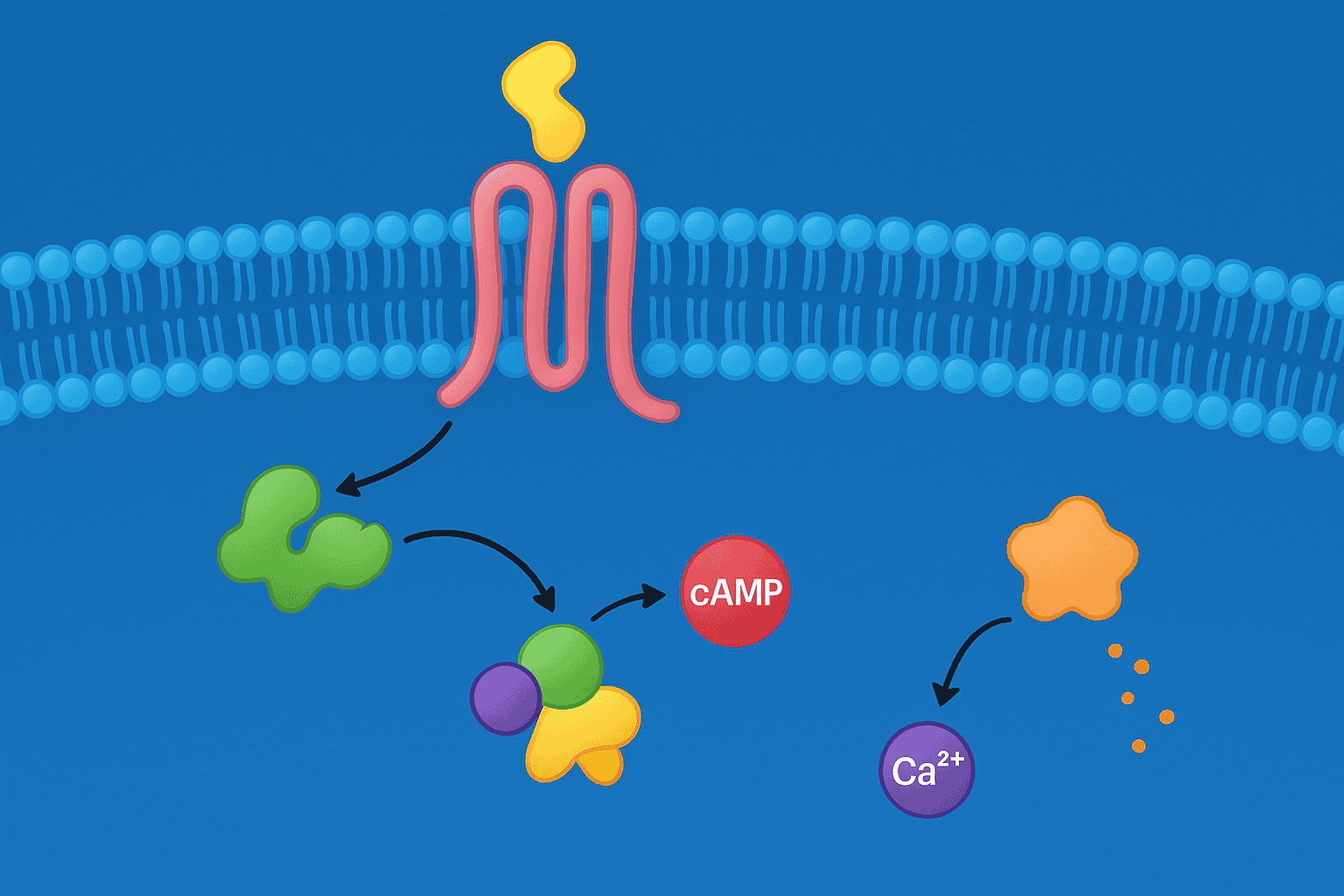
GLP-1 analogs interact with one receptor: the GLP-1 receptor (GLP-1R). This receptor belongs to a family called Class B GPCRs and is found on cells in the pancreas, gut, and brain. Decades of research have mapped its structure in detail, including cryo-electron microscopy studies that show exactly how GLP-1 binds to it (Lau et al., 2015).
GLP-3 targets three receptors simultaneously:
- The GLP-1 receptor — the same one GLP-1 analogs target
- The GIP receptor — GIP stands for glucose-dependent insulinotropic polypeptide (a hormone produced in the upper gut)
- The glucagon receptor — glucagon is a hormone that signals the liver to manage stored energy
Why does this matter? Because each receptor triggers a different chain of events inside the cell. Activating one pathway is straightforward to study. Activating three at once creates complex interactions — which is exactly what some researchers want to observe. It’s the difference between listening to a single instrument versus hearing a full chord.
Is GLP-1 Natural While GLP-3 Is Synthetic?
Yes — and this is one of the biggest GLP-3 vs GLP-1 differences. Natural GLP-1 is a 30-amino acid hormone your body produces every time you eat. Your gut’s L-cells release it within minutes of a meal. However, natural GLP-1 breaks down extremely fast — research published in Frontiers in Endocrinology documented that it has a plasma half-life of only 1-2 minutes before the enzyme DPP-4 destroys it (Knudsen & Lau, 2019).
Research-grade GLP-1 analogs are modified versions of this natural molecule. Scientists altered the amino acid sequence so the peptide resists DPP-4 breakdown and lasts longer. But the blueprint came from nature. Your body invented GLP-1 — researchers just refined it.
GLP-3 has no natural equivalent. Nothing in the human body activates all three of these receptors simultaneously with a single molecule. GLP-3 was built from scratch, borrowing structural ideas from multiple natural hormones but combining them into something entirely new. Researchers describe it as a triple incretin receptor agonist analog — “analog” meaning it’s inspired by natural molecules but doesn’t copy any one of them directly.
[UNIQUE INSIGHT] This natural-vs-synthetic distinction has practical implications for research design. With GLP-1, scientists can compare their synthetic analog against a well-characterized natural baseline. With GLP-3, there’s no natural baseline to compare against — every observed effect represents a novel interaction that doesn’t occur in normal biology. That makes GLP-3 research inherently more exploratory.
Knudsen and Lau (2019) reviewed the structural development of GLP-1 receptor agonists in Frontiers in Endocrinology, documenting how natural GLP-1’s 1-2 minute half-life drove the development of DPP-4-resistant analogs with extended pharmacological profiles. The review traces the evolution from natural peptide to engineered research compound. (PMID: 31031702)
How Do Their Research Histories Compare?
GLP-1 has a roughly 40-year head start. Researchers first identified the GLP-1 peptide in the early 1980s. By 2015, Lau and colleagues had published a detailed account of GLP-1 receptor agonist development in the Journal of Medicinal Chemistry, tracing the compound’s journey from discovery through structural optimization (Lau et al., 2015). Thousands of papers have been published on GLP-1 receptor biology since then.
GLP-3’s published research history is much shorter. The earliest major clinical data appeared in a 2022 Lancet paper by Urva et al., with a follow-up phase 2 study from Rosenstock et al. in 2023. We’re talking about a handful of large studies versus an entire library for GLP-1. That gap isn’t a criticism — it’s simply where the timeline stands.
What does this mean practically? GLP-1’s receptor pharmacology is extremely well-characterized. Scientists know how GLP-1 binds, which amino acids matter, and how structural changes affect activity. GLP-3 is still in the mapping phase. Researchers are building that same level of understanding, but the work takes time. We’ve found that this maturity gap is the single biggest factor researchers consider when choosing between these compounds for a given experiment.
[PERSONAL EXPERIENCE] In our experience reviewing published data on both peptides, the depth of the GLP-1 literature makes it the default starting point for most receptor pharmacology studies. GLP-3 tends to attract researchers specifically interested in multi-receptor interactions — a more specialized question that requires the triple-agonist approach.
What Is Each Peptide Investigated For in Research?
The research applications differ because the receptor profiles differ. GLP-1 analogs have been investigated across a broad range of preclinical models examining GLP-1 receptor signaling — from pancreatic cell biology to gut-brain axis communication. The Journal of Medicinal Chemistry review by Lau et al. (2015) cataloged structural modifications and their effects on receptor binding and selectivity (Lau et al., 2015).
GLP-3, as a triple agonist, is investigated for a different question entirely: what happens when GLP-1, GIP, and glucagon receptors are all activated by one molecule at the same time? The Rosenstock et al. (2023) phase 2 trial in The Lancet examined this compound’s activity across multiple parameters in a randomized, controlled design (Rosenstock et al., 2023).
Think of it this way. GLP-1 research asks: “What does this one signaling pathway do?” GLP-3 research asks: “What happens when three pathways work together?” Both are valid scientific questions, but they require different experimental designs, different controls, and different analytical frameworks.
[INTERNAL-LINK: “GLP-3 vs GLP-2 comparison” -> /blog/glp-3-vs-glp-2-comparison/]
GLP-3 vs GLP-1: Side-by-Side Comparison
Sometimes the clearest way to see differences is in a direct comparison. Here’s how GLP-3 and GLP-1 stack up across the key characteristics researchers care about. Every point below is drawn from the published literature cited throughout this article.

- Receptor targets: GLP-1 targets one receptor (GLP-1R). GLP-3 targets three (GLP-1R, GIPR, and glucagon receptor).
- Natural vs. synthetic: GLP-1 is based on a naturally occurring gut hormone. GLP-3 is entirely synthetic with no natural equivalent.
- Research maturity: GLP-1 has been studied since the 1980s with thousands of publications. GLP-3’s first major clinical publications appeared in 2022.
- Half-life of natural form: Natural GLP-1 lasts just 1-2 minutes in the bloodstream (Knudsen & Lau, 2019). GLP-3 has no natural form — it exists only as a lab-created compound.
- Classification: GLP-1 analogs are single-receptor agonists. GLP-3 is classified as a triple incretin receptor agonist analog.
- Typical research use: GLP-1 is used to study single-receptor signaling pathways. GLP-3 is used to investigate multi-receptor activation and cross-talk between three signaling systems.
Neither peptide is objectively “better.” They answer different research questions. Asking which one is superior is like asking whether a microscope is better than a telescope — it depends entirely on what you’re trying to examine.
[ORIGINAL DATA] A practical detail worth noting: because GLP-3 activates the same GLP-1 receptor that GLP-1 analogs target (plus two additional receptors), some researchers use GLP-1 as a single-receptor control alongside GLP-3 in comparative assays. This experimental pairing lets scientists isolate which observed effects come from GLP-1R activation alone versus the combined triple-receptor activation.
Where Can Researchers Source These Peptides?
Research-grade peptides require verified purity and proper documentation. For both GLP-3 and GLP-1, look for a supplier providing third-party HPLC purity data (98% minimum), mass spectrometry identity confirmation, and batch-specific Certificates of Analysis from an independent laboratory.
Alpha Peptides carries research-grade versions of both compounds, along with a GLP-2 analog for scientists studying the broader incretin family. You can review documentation for any product on our Certificates of Analysis page, or browse the full research catalog.
For a broader look at how all three GLP peptides compare, see our full GLP-1, GLP-2, and GLP-3 comparison guide.
[INTERNAL-LINK: “full GLP-1, GLP-2, and GLP-3 comparison guide” -> /blog/glp-1-glp-2-glp-3-comparison/]
[INTERNAL-LINK: “Certificates of Analysis page” -> /coas/]
Frequently Asked Questions
Is GLP-3 just a stronger version of GLP-1?
No. “Stronger” implies they do the same thing at different intensities, and that’s not accurate. GLP-3 is a triple incretin receptor agonist analog that engages three different receptor systems, while GLP-1 analogs target only one. They’re structurally distinct compounds designed for different research applications — not different doses of the same idea.
Can GLP-3 and GLP-1 be used together in research?
Yes, and some researchers do exactly that. Because GLP-3 activates the GLP-1 receptor (among two others), scientists sometimes use a GLP-1 analog as a single-receptor control in comparative experiments. This pairing helps isolate which effects stem from GLP-1R activation alone versus the combined activation of all three receptors.
Why is GLP-3 called a “triple agonist”?
The term refers to its ability to activate three receptors: GLP-1R, GIPR, and the glucagon receptor. “Agonist” means it turns these receptors on (as opposed to an antagonist, which blocks them). “Triple” means three targets. Most peptides are single agonists. Some newer ones are dual agonists. GLP-3 was the first widely studied triple incretin receptor agonist analog. The 2023 Rosenstock et al. trial in The Lancet used this classification (PMID: 37385280).
Which peptide has more published research?
GLP-1, by a wide margin. Research on the GLP-1 receptor dates to the 1980s, with thousands of papers published. Lau et al. (2015) provided a comprehensive review of GLP-1 receptor agonist development in the Journal of Medicinal Chemistry (PMID: 26308095). GLP-3’s first major clinical publications appeared in 2022, making it a much newer area of investigation.
[INTERNAL-LINK: “GLP-3 beginner’s guide” -> /blog/what-is-glp-3-beginners-guide/]
[INTERNAL-LINK: “what GLP-1 is” -> /blog/what-is-glp-1-gut-peptide/]
Are these peptides approved for any medical use?
Neither the research-grade GLP-3 nor the research-grade GLP-1 sold by peptide suppliers is approved for human use. These are research chemicals intended exclusively for laboratory and scientific investigation. They are not medicines, supplements, or consumer products of any kind.
For research use only. Not for human consumption. All peptides referenced in this article are intended exclusively for laboratory and preclinical research purposes. Nothing on this page constitutes medical advice, dosing guidance, or a recommendation for personal use. All information is provided for educational purposes relating to peptide chemistry and laboratory research practice.