
· For research use only. Not for human consumption.
For research use only. Not for human consumption.
What is GLP-3, and why does it keep showing up in research headlines? If you’ve been following peptide science — even casually — you’ve probably noticed this name gaining traction fast. But most of the coverage assumes you already have a chemistry background. This guide doesn’t.
GLP-3 is a synthetic research peptide designed to interact with three different receptor targets in the body at the same time. That’s unusual. Most peptides are built to hit one target. Some newer ones hit two. GLP-3 hits three — which is why researchers call it a “triple agonist.” We’ll explain exactly what that means in plain English below. This is particularly relevant for what is glp-3 research.
No jargon without explanation, no medical claims, no dosing advice. Just the science of what GLP-3 is, how it was designed, and why the research community considers it significant. For a look at its two molecular relatives, see our guides on what GLP-1 is and what GLP-2 is.
TL;DR: GLP-3 is a synthetic peptide that acts as a triple incretin receptor agonist analog — meaning it was designed to engage three receptor targets (GLP-1, GIP, and glucagon receptors) simultaneously. Published research in The Lancet has examined its activity in early-phase studies (Rosenstock et al., 2023). It is sold strictly for laboratory research purposes. For research use only. Not for human consumption.
What Is GLP-3? The Basics
GLP-3 is a synthetic peptide — a short chain of amino acids made in a lab. If you’re not sure what a peptide is, think of it like a tiny protein fragment. Proteins are the workhorses of your body, and peptides are smaller versions that can carry specific biological signals.
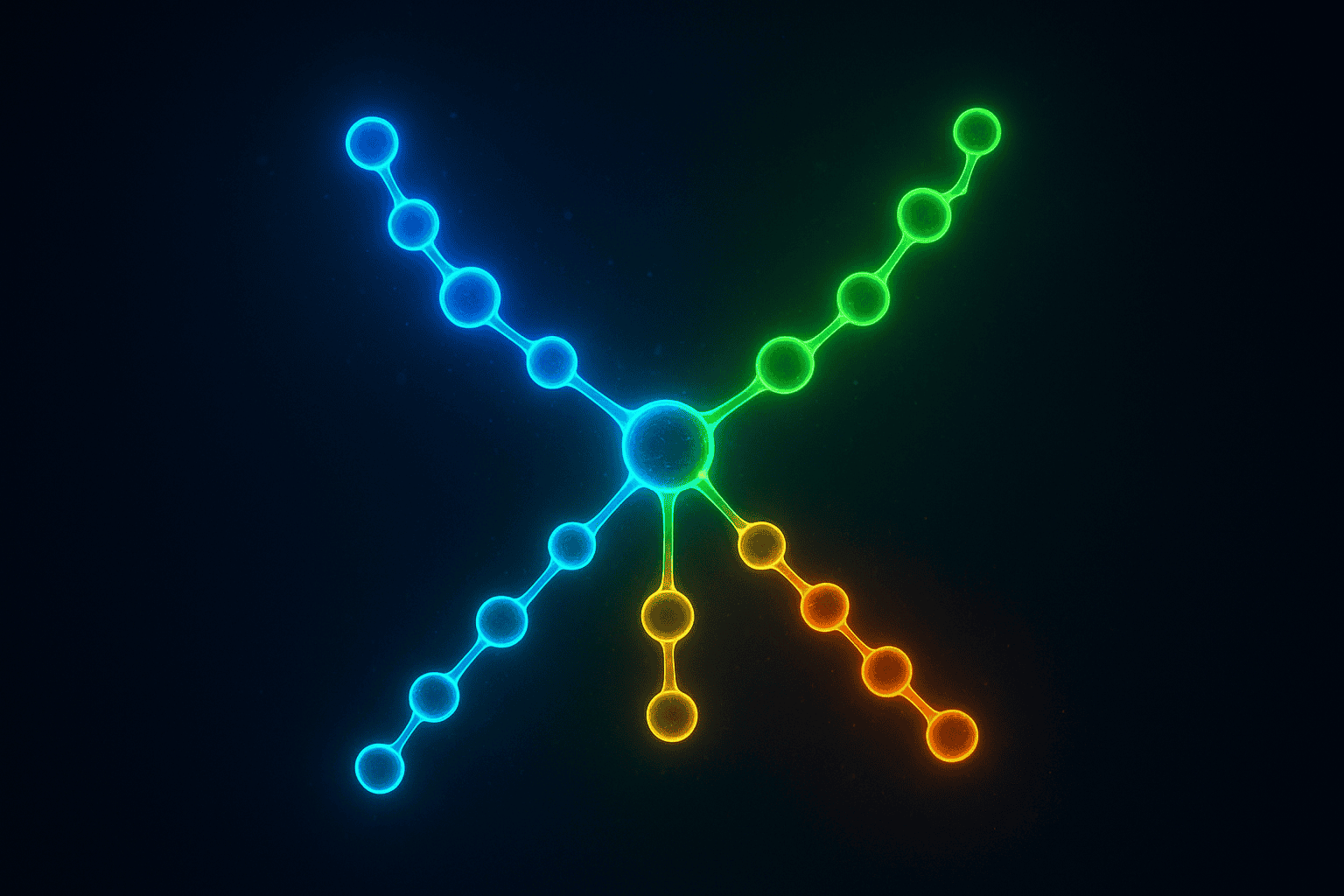
What makes GLP-3 unusual is its design. Most research peptides interact with a single receptor. A receptor is like a lock on the surface of a cell, and a peptide is the key that fits into it. When the key fits, it triggers a chain reaction inside the cell. GLP-3 was engineered to be a master key — it fits into three different locks simultaneously.
Those three “locks” are:
- The GLP-1 receptor — found on cells in the pancreas, gut, and brain. This is the same receptor that GLP-1 peptides target.
- The GIP receptor — found primarily on pancreatic cells and fat tissue. GIP stands for glucose-dependent insulinotropic polypeptide (don’t worry, we’ll just call it GIP).
- The glucagon receptor — found on liver cells and other tissues. Glucagon is a hormone your body naturally produces to regulate energy.
Because it hits all three, researchers classify GLP-3 as a “triple incretin receptor agonist analog.” That’s a mouthful, so let’s break it down: “triple” means three targets, “incretin” refers to the family of gut hormones it mimics, “receptor agonist” means it activates those receptors, and “analog” means it’s a lab-made version inspired by natural molecules.
In a 2023 phase 2 study published in The Lancet, Rosenstock and colleagues investigated this triple agonist compound in a randomized, double-blind, placebo-controlled trial. The study examined multiple aspects of the compound’s activity across different research parameters. (PMID: 37385280)
How Is GLP-3 Different From GLP-1 and GLP-2?

The names are similar, but these three peptides are quite different. Think of them as three siblings from the same family who chose very different careers.
GLP-1 is a naturally occurring hormone your gut produces after eating. It signals to the pancreas, the stomach, and the brain. Researchers have studied it since the 1980s, and it’s the basis for some well-known pharmaceutical compounds. Alpha Peptides sells a research-grade GLP-1 analog — you can see it here.
GLP-2 is GLP-1’s sibling — literally produced by the same cell at the same time. But instead of signaling outward to the brain and pancreas, GLP-2 signals inward to the intestinal wall. It’s studied primarily in gut biology research. We carry a GLP-2 analog as well.
GLP-3 is the newest of the three. Unlike GLP-1 and GLP-2, which each target one receptor, GLP-3 was deliberately designed to target all three receptor types at once. It doesn’t occur naturally — it’s entirely synthetic, created by researchers who wanted to see what would happen when all three signaling pathways were activated simultaneously.
Why Are Researchers Interested in GLP-3?

The short answer: because nothing like it existed before. For decades, researchers studied these three receptor systems separately. Then dual-agonist compounds (targeting two receptors) started appearing. GLP-3 was the next logical step — a compound that could engage all three systems in one molecule.
This is significant from a research perspective because it lets scientists study how these three signaling systems interact when activated together, rather than one at a time. It’s like the difference between studying each instrument in an orchestra individually versus hearing them play together.
A 2022 study published in The Lancet by Urva and colleagues examined this triple agonist approach in a phase 1b multiple-ascending dose trial, providing some of the earliest published data on how this class of compound behaves in controlled research settings.
Urva et al. (2022) conducted a multicentre, double-blind, placebo-controlled, randomised trial examining the triple GIP, GLP-1, and glucagon receptor agonist. The study reported on the compound’s pharmacological profile across multiple ascending doses. (PMID: 36354040)
What Does GLP-3 Look Like? (The Physical Product)

If you order research-grade GLP-3, it arrives as a small vial containing white powder. This isn’t a pill, a liquid, or a capsule — it’s a freeze-dried (lyophilized) peptide.
Freeze-drying is how most research peptides are preserved. The process removes all water from the compound, which dramatically slows degradation. Think of it like how instant coffee is made — the liquid is removed so the product stays stable on the shelf much longer.
Before use in a research setting, the powder is typically reconstituted (mixed back into liquid form) using bacteriostatic water. If you’re curious about that process, we have a dedicated guide on what bacteriostatic water is and how it’s used.
Every vial of GLP-3 from Alpha Peptides comes with a Certificate of Analysis (COA) showing the purity, identity, and test results from independent laboratory analysis. You can view all our COAs on our Certificates of Analysis page.
Is GLP-3 Safe? What We Know (and Don’t Know)

Here’s where we need to be straightforward: GLP-3 is a research compound. It is not approved for human use by the FDA or any regulatory body. It is sold strictly for laboratory and scientific research purposes.
The published literature on this triple agonist class is still in its early stages. Two major studies have been published in The Lancet (Rosenstock et al., 2023 and Urva et al., 2022), but the compound continues to be investigated in ongoing research programs.
What this means for you: if you’re purchasing GLP-3, it should be for legitimate research purposes only. Not for self-administration, not for clinical use, and not as a supplement. This isn’t just a legal disclaimer — it reflects the current state of the science.
How to Source Research-Grade GLP-3
If you’re sourcing GLP-3 for laboratory research, quality matters enormously. A low-purity compound can produce unreliable results and waste your research budget. Here’s what to look for:
- Third-party HPLC testing — confirms purity, typically 98%+ for research grade
- Mass spectrometry verification — confirms molecular identity
- Batch-specific COA — not a generic template, but results for your actual batch
- U.S.-based supplier — easier accountability, faster shipping, no customs risk
- Cold-chain shipping — peptides degrade in heat; look for insulated packaging
Alpha Peptides offers research-grade GLP-3 with all of the above. Every order ships with a batch-specific COA, cold-chain packaging, and is backed by U.S.-based customer support.
Frequently Asked Questions About GLP-3
What does GLP-3 stand for?
GLP-3 refers to a triple incretin receptor agonist analog — a synthetic peptide that engages the GLP-1, GIP, and glucagon receptors simultaneously. The “GLP” naming follows the convention of the GLP peptide family, though GLP-3 is entirely synthetic and does not occur naturally in the body.
Is GLP-3 the same as GLP-1?
No. GLP-1 targets one receptor (the GLP-1 receptor). GLP-3 targets three receptors (GLP-1, GIP, and glucagon). They are structurally different compounds with different research applications. See our GLP-3 vs GLP-1 comparison for a full breakdown.
Can I buy GLP-3 for personal use?
No. GLP-3 is sold for laboratory and scientific research purposes only. It is not approved for human consumption, and Alpha Peptides sells it exclusively for research use.
What purity should I look for in research-grade GLP-3?
Research-grade GLP-3 should be 98% or higher purity as verified by HPLC testing. Always request a batch-specific Certificate of Analysis. You can learn more about what purity means in our guide on what 99% purity actually means.
How should I store GLP-3?
Lyophilized (powder) GLP-3 should be stored at -20°C for long-term storage. Once reconstituted, store at 2-8°C (standard refrigerator temperature) and use within a reasonable timeframe. See our GLP-3 storage guide for full details.
For research use only. Not for human consumption. This article is intended for informational purposes and does not constitute medical advice, dosing guidance, or therapeutic recommendations.